Product Engineering Since
2018
Years of experience across backend, SaaS, web, and mobile systems give us the foundation to turn RAG capabilities into complete, usable software products.
 DapkeSocial video app with live streaming and PK battles.
 Lika Real EstateProperty discovery platform for listings and leads.
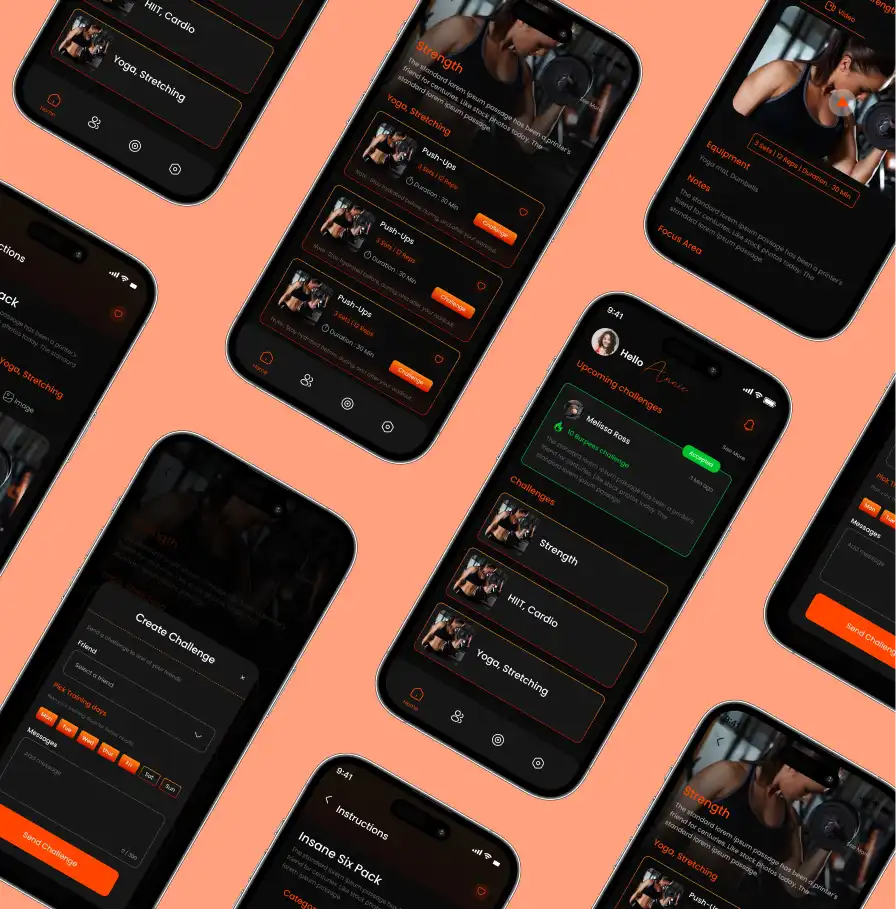
 BurpoutSocial fitness challenges that keep people moving.
 ChatLivoConnected customer communication SaaS workspace.
 EmoTalesAI storytelling adventures designed for children.
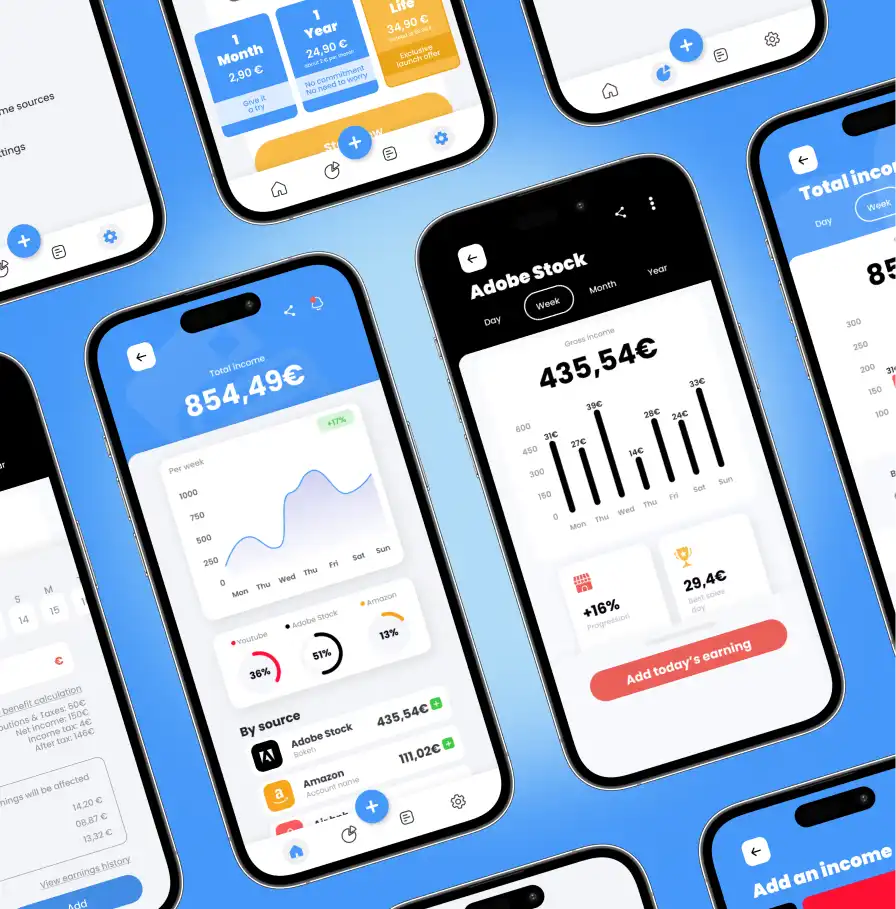
 EarnifyTrack Income from Multiple Sources with Analytics & Tax Planning.
Primocys is a RAG development company that designs and builds Retrieval-Augmented Generation systems connecting AI applications with approved business knowledge. We handle ingestion, retrieval, vector or hybrid search, metadata, permissions, reranking, citations, evaluation, and the application layer—not just the connection between an LLM and a vector database.
Discuss My RAG Project

Our RAG development services cover the engineering behind reliable AI systems—from knowledge preparation and chunking to retrieval, filtering, reranking, context assembly, citations, and evaluation. These capabilities help RAG systems perform reliably beyond a controlled demo.
Prepare content from supported documents, websites, databases and APIs by extracting useful text, cleaning repeated noise, preserving source metadata and creating a reliable path for updates, deletions and re-indexing.
Split knowledge around headings, sections, records and semantic boundaries instead of relying on one arbitrary character count. The goal is to keep enough context for retrieval without returning oversized or unrelated passages.
Attach tenant, source, category, date, ownership and access metadata so retrieval can respect the same business boundaries as the application. Permission filtering belongs in the retrieval path, not only in the prompt.
Choose between semantic, keyword and hybrid retrieval, with metadata filtering or query transformation where useful. Retrieval strategy is selected around the actual question patterns and knowledge structure.
Reorder candidate results, remove weak or duplicate evidence and assemble a focused context window before generation. Better context selection can matter more than simply increasing the number of retrieved chunks.
RAG requires more than connecting an LLM to a vector database. Our product engineering foundation helps us build the ingestion, retrieval, application, and deployment layers needed for reliable AI systems.
2018
Years of experience across backend, SaaS, web, and mobile systems give us the foundation to turn RAG capabilities into complete, usable software products.
We build and operate AI-powered products, gaining practical experience with production releases, user access, subscriptions, integrations, and the operational requirements of real applications.

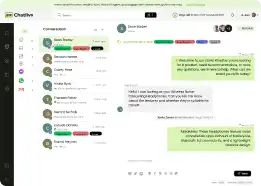
AI-Powered Live Chat for Businesses

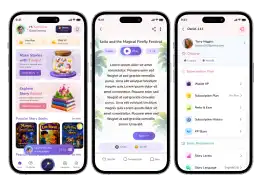
AI Stories & Learning Companion for Kids
We cover the layers around your AI model, from knowledge ingestion and retrieval to permissions, APIs, application integration, evaluation, and deployment.
We move from use-case discovery and data review to architecture, implementation, evaluation, deployment, and ongoing improvement—so your RAG system is built for real workflows, not just a demo.
From startups to enterprises, Primocys builds production-grade RAG systems with strong governance and measurable retrieval accuracy.













RAG is not one feature or one database. The architecture depends on where your knowledge lives, how frequently it changes, how users are allowed to access it and what the application should do when reliable evidence is missing. We design the complete retrieval workflow around those constraints.
Design and build a retrieval pipeline around your business knowledge, product workflow, users and application architecture.
Connect approved internal documentation, policies and business information to AI assistants with role-aware retrieval.
Ground chatbot responses in approved company knowledge and provide fallback or human handoff when evidence is insufficient.
Give tool-using agents relevant business context before they make decisions or execute approved actions.
Build tenant-aware knowledge features where each organization or workspace can search only its own permitted data.
Review weak retrieval, chunking, metadata, citations, permissions or evaluation without automatically rebuilding the whole system.
These are products we designed, built and continue to operate ourselves — not concept mockups. Here’s how our engineering holds up once real users depend on it daily.
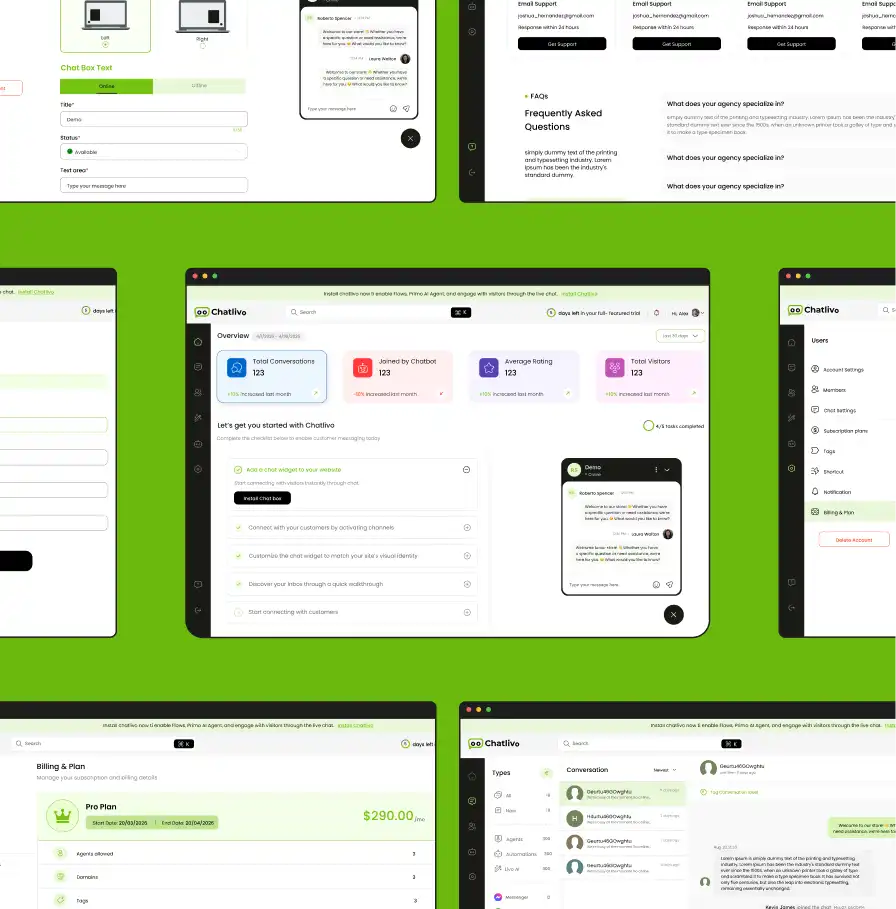
Businesses had to pick between costly enterprise chat platforms with weak AI or bare-bones free widgets with none at all. Conversations were spread thin across the website and several channel plugins — five separate inboxes, no unified context. None of these tools could genuinely interpret a question; they simply handed it off to a human agent.
We consolidated five separate channels into one unified inbox. The built-in AI assistant is trained on the business’s own website content and custom FAQs, keeping every reply grounded in what the company actually communicates. It’s available on both web and mobile, so no conversation slips through.
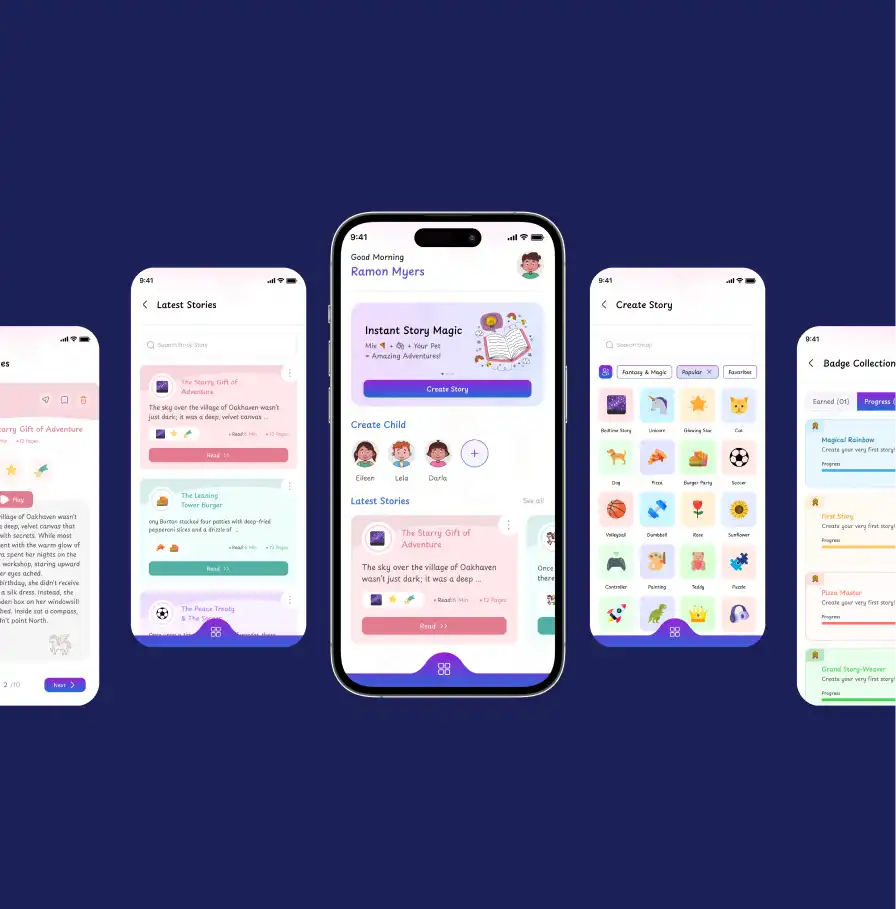
Parents wanted a bedtime story built around their own child, not another recycled template played out night after night — but inventing something original at the end of a tiring day isn’t easy. With most apps limited to a single language, families still struggled to find stories that felt genuinely personal.
EmoTales runs on a simple mechanic: a child taps a few emojis, and AI turns that selection into a fully illustrated bedtime story in under a minute, complete with narration in the family’s chosen language and a selection of AI voices — English, Hindi, Spanish and more.
Most fitness apps hand out the same one-size-fits-all workout to every user, disregarding fitness level, goals or the equipment actually available. A plan that doesn’t fit the person kills motivation quickly, and truly adaptive coaching stayed locked behind expensive personal trainers.
Burpout runs on an AI coaching engine that builds a fully personalized workout in under 30 seconds, tailored to the user’s goals, fitness level and available equipment. It works across iOS and Android, so training isn’t limited to one device.
Property platforms carrying large catalogs tend to slow down as listings pile up — heavy images, sluggish search, weak mobile speed — driving serious buyers away before they ever schedule a tour. Lika needed to scale past 100K listings without any of that drag.
We engineered a real estate app built for scale: optimized image delivery, fast search and filtering, and a lightweight mobile front end that keeps listings loading in under 3 seconds even against a catalog of 100K+ properties.

Creators wanted a live-streaming platform where going live actually turned into earnings, not just view counts. Most social apps bolt live video on as an afterthought with no real monetization loop, and real-time interaction between creators often lags too much to feel genuinely live.
Dapke is a high-performance social app delivering sub-2-second live streaming latency, head-to-head PK battles between creators, and virtual gifts that convert straight into real revenue — running cross-platform on both iOS and Android.

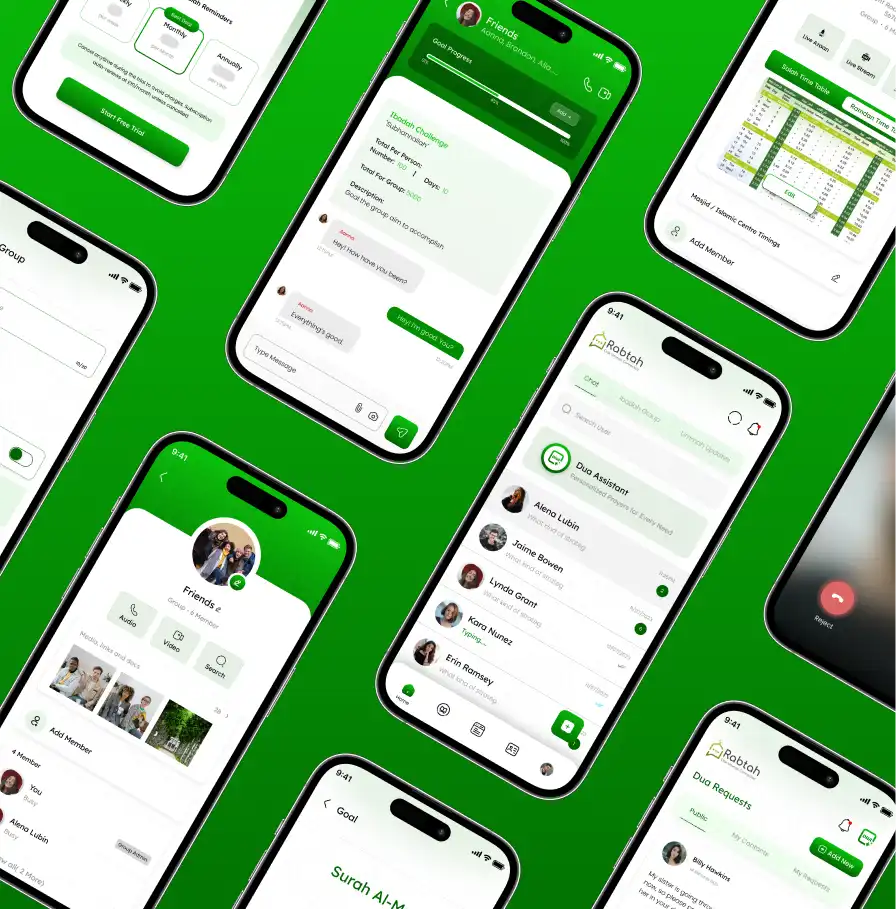
This was an already-established community messaging app, not a ground-up build — it needed to keep growing without disrupting what existing members relied on. Group admins wanted finer control over prayer and Masjid timings, members needed announcements and reminders that held up offline or after a restart, and live Azaan had to keep playing even once the app moved to the background.
We enhanced the Ummah and Ibadah Group modules with more granular prayer, timing and admin controls, brought in MediaSoup for live Azaan, live streaming and audio/video calling with background audio, and added Apple Pay donations alongside iOS subscription logic tied to real plan-based permissions. We also fixed the underlying state and navigation issues that made chat, groups and reminders feel unreliable across sessions.
Creators, freelancers, online sellers and independent professionals typically earn from several platforms at once but have no straightforward way to track that income, work out taxes, or see the full picture in one place. Existing finance apps felt overbuilt for something as routine as personal income tracking.
Earnify is an iPhone app built around multi-source income management: analytics dashboards, recurring income tracking, tax planning, premium subscriptions and CSV/PDF exports, all wrapped into a simple personal-finance workflow.
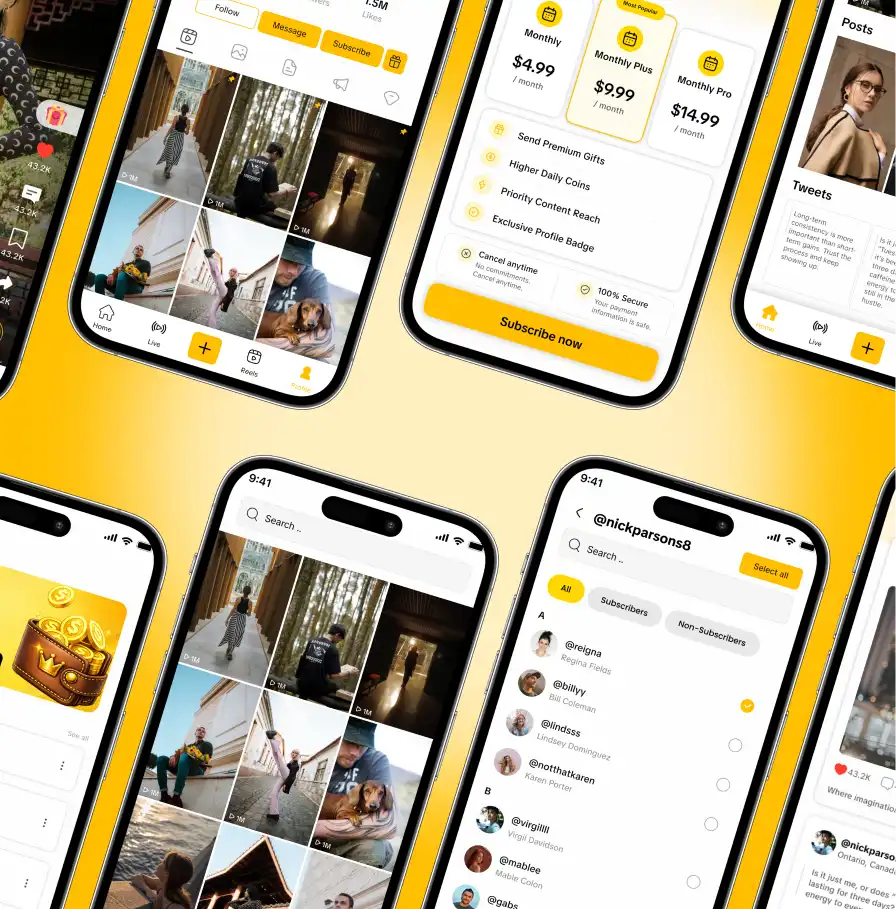
Creators wanted one place to build an audience and get paid for it, instead of stitching together a social platform, a separate payment link and a standalone livestream tool. Regular users, creators and staff each needed different access levels, and payouts had to flow through a controlled, auditable process rather than an ad-hoc one.
We built Pudym as a community-driven creator monetization platform where approved creators earn through monthly Support Plans, one-time support, campaigns and Gifts. Creators get a wallet with income history and a withdrawal pipeline, a web-based Creator Studio for content and payouts, and live streaming with real-time viewer support — all backed by a role-based admin panel for moderation and platform control.
A useful RAG system has two connected workflows: preparing knowledge for retrieval and answering a query with the right context. The quality of the final answer depends on what happens before the model call, especially parsing, chunking, metadata, retrieval and context selection.

Approved knowledge enters through one or more supported sources.

Extract useful text and structure while removing content that should not enter the knowledge layer.

Break content into retrievable units and preserve fields such as source, product, tenant, department or document type.

Create the searchable representation required by the selected retrieval architecture.

Apply the user’s identity, filters and query logic before retrieval.

Find candidate content using the retrieval method that best fits the data and query pattern.
Prioritize the strongest evidence and keep only the context worth sending to the model.
Generate the answer from the user’s request plus selected retrieved context.
Show sources where appropriate, avoid unsupported answers and retain operational information for evaluation.
These approaches are not interchangeable. RAG is usually strongest when the application needs changing or permission-sensitive knowledge. Fine-tuning is more relevant when the goal is to change model behavior, while long-context prompting can be enough for smaller, simpler knowledge sets.
| Requirement | RAG | Fine-Tuning | Long Context |
|---|---|---|---|
| Use changing business knowledge | Strong fit | Not primary purpose | Possible for smaller sets |
| Update knowledge frequently | Re-index / sync content | May require retraining | Send updated context |
| Provide source citations | Strong fit | Not inherent | Possible |
| Change model style or behavior | Limited | Strong fit | Limited |
| Large private knowledge base | Strong fit | Not primary purpose | Depends on size and cost |
| Tenant / role filtering | Strong architecture fit | Must be external | Must be external |
A RAG system should be tested as a retrieval product, not only as a prompt. We use representative questions and known source material to inspect whether the right evidence is found, whether the final answer stays grounded and whether access rules remain intact.
Did the system retrieve information that genuinely supports the user’s question?
How much of the retrieved context was actually useful rather than noise?
Is the generated answer supported by the retrieved evidence?
Do references point to the correct supporting source?
Does the system respond safely when evidence is missing or weak?
Is restricted or cross-tenant content excluded from retrieval?
How long does query processing, retrieval, reranking and generation take?
What do embeddings, storage, reranking and model calls cost at expected usage?
A useful RAG use case begins with a clear knowledge problem: people cannot find the right information quickly, the AI needs private context, or a product needs traceable answers from a controlled source. We design the retrieval layer around that problem.
From retrieval pipelines to production chatbots — here’s what founders say after building their RAG system with Primocys.






We needed audio/video calls for patient consultations, live streaming for health seminars, and an Instagram-style photo/video feed for our medical community. Primocys delivered every feature, production-ready and on schedule. Their deep understanding of healthcare workflows stood out — they didn’t just build features, they built the right experience. Patient engagement and retention have grown significantly since launch.
Primocys developed my mobile application from scratch, handling everything from initial design to final deployment. They managed the entire project, demonstrating great flexibility by incorporating all my feedback and retakes. Beyond development, they successfully guided me through the App Store and Google Play submission process and are currently managing the app’s ongoing maintenance.
Our B2B and B2C platform helps Nigerian manufacturers sell at wholesale prices and suppliers offer competitive retail pricing, with a strong focus on Made in Africa products and easy local and international distribution. The app has received excellent user reviews for its design and unique features. Communication with the Primocys team was smooth in an agile setup, even beyond office hours when needed. Their mobile app development expertise is excellent—highly professional and reliable.
We hired Primocys to develop a highly complex and specialized mobile application, and they delivered outstanding results. The app includes advanced features such as timeline mixers, classifieds, payments, advertisements, GPS functionality, and more. Their technical skills, timely delivery, availability, and the personal attention Arpan Sagar brings to each project truly stand out. The team stays focused and committed from start to finish—an excellent experience overall.
The dating app was delivered successfully and approved by both Apple App Store and Google Play. Our users are highly impressed with the design, UI, and overall functionality. The project was well planned with clear milestones, and all modules were delivered on time. The team is talented, patient, and flexible, accommodating multiple scope revisions as requirements evolved. Their 24/7 development and support availability made the entire process smooth and reliable.
Great team with excellent communication and a strong commitment to on-time delivery. They developed a fully customized mobile app for both Android and iOS, perfectly matching our requirements. The entire process was smooth and professional, with clear updates at every stage. They are reliable, skilled, and very easy to work with. We’re continuing our partnership on more projects, and choosing them has been one of the best business decisions I’ve made.
We do not lock RAG development to one LLM, framework or vector database. The stack is matched to content type, data volume, access model and cost.
Our AI development process keeps things simple and transparent, from understanding your idea and planning the right solution to building, testing, launching, and improving it with you.
Retrieval quality alone doesn’t make a RAG product production-ready. Auth, tenant isolation, APIs, user roles, admin controls, document management, citations and monitoring all decide whether real users can trust it. Primocys engineers those product layers alongside the retrieval pipeline.
Book a Discovery Call
We treat ingestion, metadata, search, reranking and evidence quality as first-class engineering work instead of focusing only on prompts and model output.
Tenant, workspace, role and document access rules can be enforced in the retrieval path so users search only knowledge the application allows them to access.
Representative queries help reveal missed evidence, weak chunks, incorrect ranking, citation problems and insufficient-answer cases before launch.
Web, mobile, backend, SaaS, APIs and cloud infrastructure can be built around the RAG layer when the project needs more than a standalone retrieval service.
Incremental syncs, re-indexing and deletion handling keep the knowledge base aligned with your live sources, so answers are not built on documents that changed or were removed months ago.
Query logs, weak-evidence alerts, latency tracking and embedding, reranking and model-call spend are monitored together so retrieval quality and operating cost stay predictable in production.
Weak RAG systems are usually fixed by targeting a few critical layers, not a rebuild. We diagnose whether the issue is extraction, chunking, retrieval, reranking or permissions.
Inspect ingestion, cleaning, chunking, embeddings, indexes, retrieval and reranking.
Test representative questions against known sources and identify where evidence is being lost.
Keep what is working and define only the changes required for reliability, permissions, cost and maintainability.
Review embedding, reranking and model-call costs alongside query latency to find where spend and speed can both improve.
From clinical documentation search to legal contract intelligence — we build RAG systems with the compliance, security, and retrieval accuracy each industry actually needs.
RAG cost depends mainly on data and product architecture. A small assistant with one clean source differs sharply from a multi-tenant SaaS platform needing several connectors, role-aware search, reranking, citations and continuous synchronization.
The number, size and structure of documents, pages, records or databases that must be prepared and indexed.
Clean PDFs are different from dynamic websites, APIs, tables, scans or several inconsistent data sources.
Vector search, hybrid retrieval, reranking, query transformation and metadata filtering add different levels of scope.
Role-based or tenant-specific retrieval requires additional application and data architecture.
Representative test sets, groundedness checks, citation quality and fallback behavior require dedicated engineering.
The chatbot, agent, SaaS, mobile or internal application around the RAG service affects the complete project scope.
Straight answers. Don’t see yours? Ask us directly →
Get a clear, practical plan for your RAG project. Primocys helps you assess your data, choose the right retrieval architecture, define permissions and integrations, and estimate the effort needed to build a reliable production-ready RAG solution.
GET YOUR FREE RAG PROJECT CONSULTATION
Contact Us
Hear from our clients and why 1200+ businesses trust Primocys

"Our B2B and B2C platform helps Nigerian manufacturers sell at wholesale prices and suppliers offer competitive retail pricing, with a strong focus on Made in Africa products and easy local and international distribution. The app has received excellent user reviews for its design and unique features. Communication with the Primocys team was smooth in an agile setup, even beyond office hours when needed. Their mobile app development expertise is excellent—highly professional and reliable."
"The dating app was delivered successfully and approved by both Apple App Store and Google Play. Our users are highly impressed with the design, UI, and overall functionality. The project was well planned with clear milestones, and all modules were delivered on time. The team is talented, patient, and flexible, accommodating multiple scope revisions as requirements evolved. Their 24/7 development and support availability made the entire process smooth and reliable."
" We hired Primocys to develop a highly complex and specialized mobile application, and they delivered outstanding results. The app includes advanced features such as timeline mixers, classifieds, payments, advertisements, GPS functionality, and more. Their technical skills, timely delivery, availability, and the personal attention Arpan Sagar brings to each project truly stand out. The team stays focused and committed from start to finish—an excellent experience overall."
" Great team with excellent communication and a strong commitment to on-time delivery. They developed a fully customized mobile app for both Android and iOS, perfectly matching our requirements. The entire process was smooth and professional, with clear updates at every stage. They are reliable, skilled, and very easy to work with. We’re continuing our partnership on more projects, and choosing them has been one of the best business decisions I’ve made."
AWARDS
TRUSTED BY GLOBAL BRANDS