“Our prototype works, but there’s no user management or
billing.”
01
 DapkeSocial video app with live streaming and PK battles.
 Lika Real EstateProperty discovery platform for listings and leads.
 BurpoutSocial fitness challenges that keep people moving.
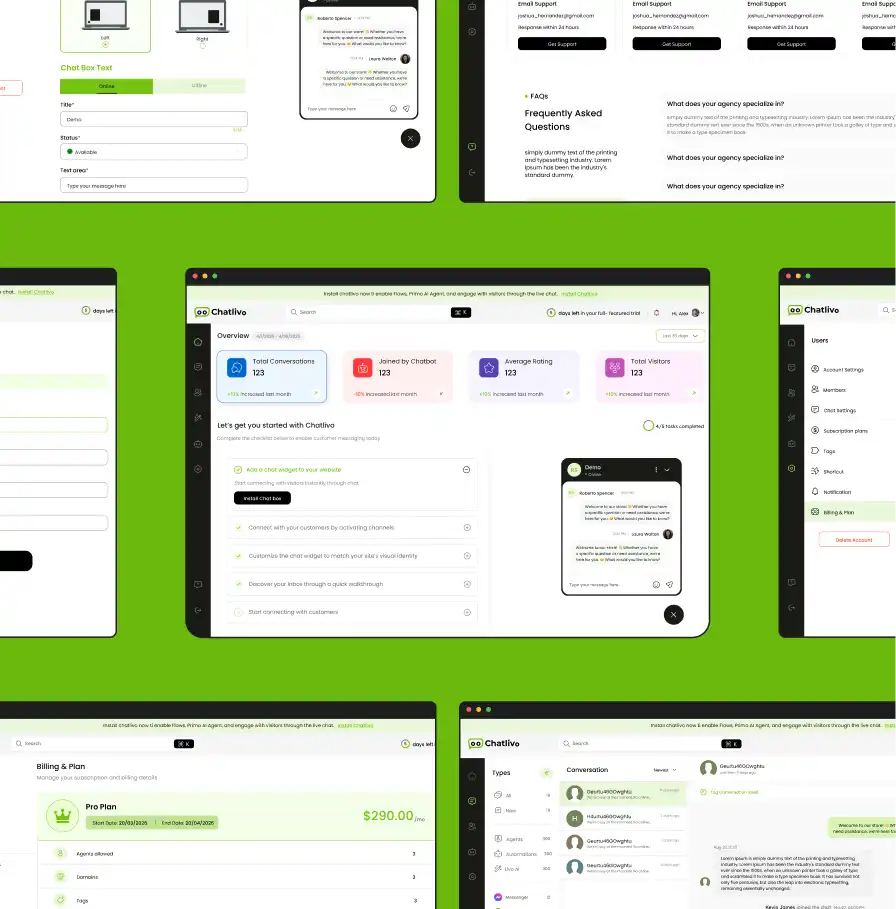
 ChatLivoConnected customer communication SaaS workspace.
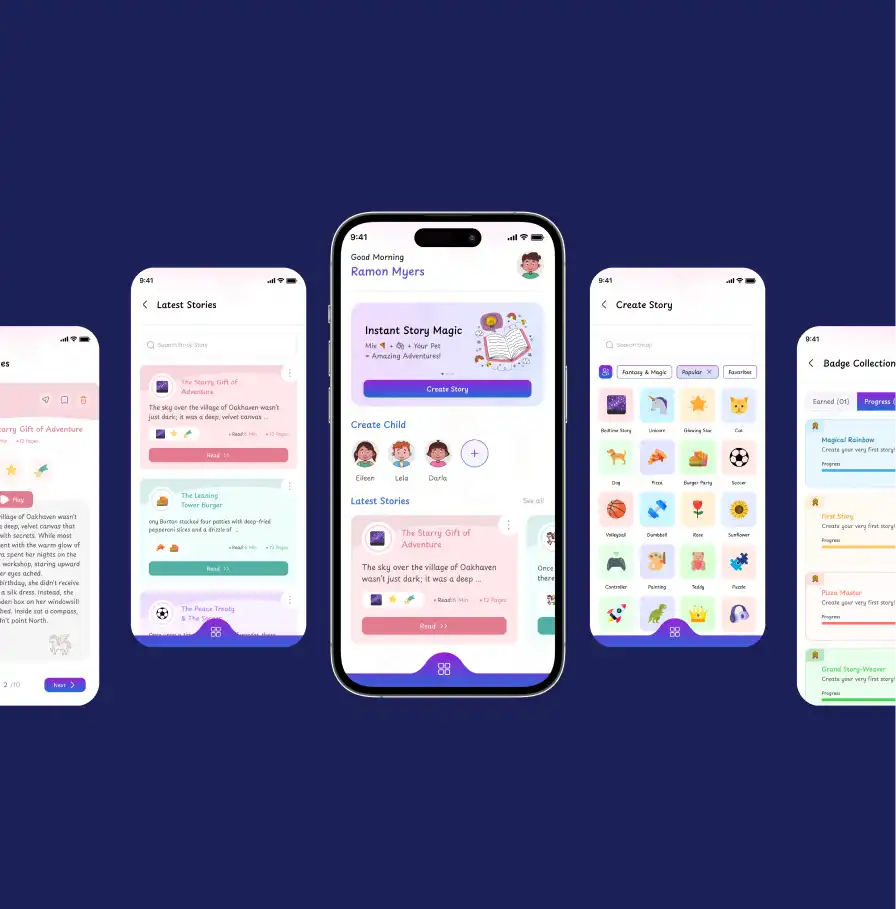
 EmoTalesAI storytelling adventures designed for children.
 EarnifyTrack Income from Multiple Sources with Analytics & Tax Planning.
A working AI demo isn’t automatically a SaaS business. As an AI SaaS Development Company, we turn AI models into scalable products with multi-tenancy, subscriptions, usage tracking, credits, admin panels, analytics, RAG, agent workflows, and secure cloud infrastructure. From MVPs to enterprise platforms, our team handles AI architecture, web/mobile development, billing, and deployment—helping startups and businesses launch AI software customers can buy and use.
Discuss My AI SaaS Product



These aren’t just AI problems. They’re product, billing, infrastructure and AI engineering problems at the same time.
Eight recurring product shapes we see most often — the right one depends on what your customers are actually paying for.
Support, research, or productivity assistants sold as a subscription.
Customers upload approved data and interact with it through AI, tenant by tenant.
Workflow-oriented SaaS where agents perform approved multi-step tasks.
Text, document, image, or structured content generation where genuinely useful.
Customers configure their own AI-powered workflows inside your product.
Natural-language querying and insight generation over customer data.
Industry-specific AI software — legal, healthcare, real estate, HR — compliance scoped per project, never assumed.
Turn an internal AI tool or workflow into a customer-facing subscription product.
Most AI SaaS products serve multiple organizations or users from one platform. Architecture may need tenant-aware authentication, organization/workspace management, tenant-level configuration, data isolation, usage tracking, billing, permissions, API keys, and limits.
Docs A, Vector namespace A — scoped entirely to this tenant’s own data and configuration.
Docs B, Vector namespace B — kept fully isolated from every other tenant on the platform.
Possible data isolation strategies can include row-level isolation, schema-based separation, or separate databases, depending on requirements — no single approach is correct for every product.
AI SaaS economics differ from conventional SaaS. A $49 customer who generates $70 in model and infrastructure cost isn’t a pricing problem you want to discover three months after launch — usage tracking, credits, and billing all need to be designed together, not bolted on separately.
Tracking can include requests, tokens, model usage, embeddings, image generations, audio minutes, document processing, and agent runs, depending on the product — then broken down by tenant, feature, model, and plan.
API calls made
Input/output tokens
By model breakdown
Images generated
Audio consumed
Doc processed
The right unit depends on what customers understand. Messages, documents, minutes, generations, or credits can sometimes be better customer-facing units than raw tokens.
A recurring pool included with the plan.
Enforced caps or warnings near the ceiling.
Pay-as-you-go or purchasable credit packs.
Different limits per AI feature.
Premium models consume at a different rate.
No plan pool, direct billing for usage.
Predictable recurring revenue — works well when usage is fairly consistent across customers.
Customers pay in proportion to what they consume — fits highly variable AI cost per customer.
A base subscription plus usage on top — often the practical answer for AI-heavy products.
Billing platforms can include Stripe Billing, Paddle, Chargebee, Razorpay, or RevenueCat for mobile scenarios, depending on your project, country, and business model — mentioned as examples, not implied partnerships. Illustrative example only: a Growth plan might include 5 users and 10,000 AI credits; specific figures shown are not published Primocys pricing.
These are different technologies solving different problems, even though they often show up in the same product. Here’s how each works as a SaaS feature, not just as a technique.
Retrieval-augmented generation: knowledge retrieval, embeddings, and vector search, scoped per tenant. When a customer asks a question, the system retrieves relevant content from their own uploaded documents and generates a cited, grounded answer.
Product concerns beyond retrieval itself: document management, ingestion status, per-tenant usage, citations, deletion, and re-indexing — Tenant B must never retrieve Tenant A’s content.
A different concern from RAG: tool calling, multi-step reasoning, and taking approved actions across systems. The product questions matter as much as the agent itself — which tools can each tenant enable, which actions require approval, how is agent usage billed, and what happens when a tool fails.
Per-tenant tool permissions and workflow templates.
Logs, retry/failure state, and visibility into what the agent did.
Approval gates for higher-risk actions, usage tracked per execution.
Text, document, image, audio, or structured content generation, where it’s genuinely the product’s job — often combined with RAG for grounding or agents for multi-step content workflows, rather than used as a standalone feature.
Optimization should balance quality, latency, and cost — not simply choose the cheapest model. We don’t promise a specific cost-reduction percentage; the right architecture depends on your product.
Providers: OpenAI, Anthropic, Google Gemini, open-source/open-weight models, or specialized models — chosen per use case, not by default. Considerations: quality, latency, cost, privacy, context length, tool use, multimodal capabilities, and availability. Patterns: single-model architecture, a fallback provider, task-specific routing, or premium-vs-standard tiers — the right pattern depends on the product.
AI quality needs a definition your product team can measure, not a demo where five prompts looked good. We don’t promise 99% accuracy, zero hallucinations, or perfect agent completion for any given system.
Which side of that line an action sits on depends on your business rules — full autonomy isn’t the design goal for every action. In the product, this usually shows up as approval queues, visible agent execution status, and a usage/credit indicator so users understand what the AI is doing and what it’s costing them, not just a chat window with no visibility into either.
Ongoing conversation and output review helps catch failure patterns that a one-time evaluation misses.
We don’t just build SaaS for clients — Chatlivo and EmoTales are our own AI SaaS products in production, backed by 8+ years of engineering across 30+ countries.
















Illustrative stack: Next.js/React, Node.js/NestJS or Python/FastAPI, PostgreSQL, Redis, pgvector/Pinecone/Weaviate/Qdrant, S3-compatible storage, Docker, and AWS/Azure/Google Cloud — not every SaaS product uses every layer.
Web · Mobile · API
Auth · Organizations · RBAC · Billing · Plans · Usage · Admin
LLM · RAG · Agents · Evaluation · Guardrails
Vector · Database · Files · CRM · APIs
Cloud · Queues · Monitoring · Logging
Security and compliance requirements — tenant isolation, RBAC, SSO, encryption, secret management, retention, audit logging — are designed according to the product, customer market, and deployment environment. We don’t automatically claim SOC 2, HIPAA, GDPR, or ISO certification.
One admin layer to operate the business, and the metrics to understand whether it’s working. Analytics visibility doesn’t automatically increase retention or revenue — it’s a starting point for decisions, not a guarantee.
See how the product is actually being used.
Track AI usage and credits alongside revenue.
Manage every tenant, workspace, and user role from one place.
Configure tiers, entitlements, and upgrade/downgrade paths.
Track consumption per tenant against allotted credits.
Adjust model choices and routing without a code deploy.
Roll out features gradually and see which ones stick.
Surface failures early so support can act before customers notice.
Flag unusual usage patterns before they become a billing problem.
Keep a record of key actions and monitor overall system status.
A web dashboard, a mobile companion app, or a mobile-first AI SaaS product, depending on where your users actually work — connected to the tools already in their stack.
For mobile: App Store subscriptions, Play Billing, RevenueCat where appropriate, push notifications, voice, and camera/image input.
Potential integrations include a REST API, webhooks, API keys, OAuth, and connections to CRM, Slack, Teams, Google Workspace, Microsoft 365, Zapier, n8n, Make, and industry-specific systems — both customer-accessible APIs and internal tool-calling APIs.
The goal is not to build every enterprise feature on day one. It’s to make deliberate architecture decisions so successful MVP features don’t require a complete rewrite later.
/ New Product
Primocys handles product discovery, UX, AI architecture, SaaS architecture, development, billing, admin, and deployment — scoped first to validate the core customer problem.
/ Existing Prototype
Primocys can add authentication, multi-tenancy, billing, security, usage limits, admin, monitoring, reliability, customer-facing UX, and production infrastructure around what you’ve already built.
As the product grows past MVP: organizations, team members, RBAC, multiple plans, usage-based limits, credits, API access, multiple AI workflows, advanced admin, SSO, audit logs, and model routing — added when the product actually needs them, not upfront by default.
We won’t recommend building a SaaS business around a feature that a standard tool already solves well.
// Build
// Buy / Integrate
We won’t recommend building a SaaS business around a feature that a standard tool already solves well.
AI and SaaS Products We’ve Built Ourselves — real products we designed, engineered, and shipped end-to-end, not case studies borrowed from someone else’s portfolio.
Generated by Kids Worldwide
AI Creation Time
Instant Story Personalization
iOS & Android Ready
Automated Lead Engagement
Multi-Flow Chatbot Automation
Live Chat & Handoff
Built & Run by Primocys
Building an AI SaaS product means solving product, billing, infrastructure, and AI engineering problems together — not as separate vendors handing off work to each other.
Discuss My AI SaaS Product
not separate vendors handing off between AI work and SaaS work, with gaps falling between the two.
designed around real users and workflows, not a thin wrapper around a model endpoint.
organizations, workspaces, roles, and data isolation built in from the start, not retrofitted later.
pricing and cost controls planned alongside the architecture, not bolted on after launch.
grounded retrieval, tool-calling agents, and model selection handled by engineers who build this regularly.
a consistent product experience across web dashboard and mobile app, built by the same team.
experience that spans well beyond AI, across production software of real scale and complexity.
support that continues past launch as your product grows and real usage patterns emerge.
Our AI SaaS development process turns an idea into a reliable, production-ready product that customers can pay for and rely on, scaled with real usage over time.
For an existing AI prototype, the process is: audit → feasibility and architecture review → commercialization plan → implementation → evaluation and QA → production deployment.
Cost depends on product complexity, AI workflow, RAG or agent requirements, web/mobile scope, multi-tenancy, billing, integrations, admin, security requirements, expected AI usage, and infrastructure.
Scope-based estimate.
Scope-based estimate.
Technical discovery required.
A scoped first version to validate the core product.
End-to-end build from idea to production.
An ongoing team for an evolving product roadmap.
Take an existing prototype the rest of the way.
Also available: Ongoing AI SaaS Development & Maintenance.
From AI assistants to RAG platforms and agent-driven products, we build AI SaaS software that handles real usage, real billing, and real customers — scoped to your actual product, not a generic template.
 Photo & Video Sharing App
 On-Demand Application
 Business Listing App
 Automotive
 Real Estate
 Education
 Healthcare & Fitness
 Ecommerce & Shopping
 Banking & Finance
 Food & Restaurant
Media & Social
Food & Restaurant
Media & Social
 Hotel Booking
 Sports
Whether you need a full product built from scratch or one capability added to what you already run, Primocys covers the full stack — from AI engineering to SaaS architecture to mobile delivery.
General SaaS architecture and product engineering, covering user management, billing, multi-tenancy, and the infrastructure a subscription product actually needs to run reliably at scale.
Explore SaaS DevelopmentCustom AI software built for your specific use case — not a generic wrapper around a model API, but engineering that solves the actual problem your business is trying to fix.
Explore AI DevelopmentDeep retrieval-augmented generation engineering — grounding responses in your approved documents, FAQs, and policies, with citations and a defined fallback when information is missing.
Explore RAG DevelopmentMulti-step, tool-using AI agents that plan, call APIs, and complete real tasks end-to-end, built with permission rules and human checkpoints where the action actually matters.
Explore AI Agent DevelopmentAdding AI to software you already run, without a rebuild — connected to your existing data, systems, and workflows so the AI layer fits the product you already have.
Explore AI Integration ServicesConnecting AI to business workflows — approvals, notifications, data synchronization, and manual processes that get automated with proper error handling and oversight.
Explore AI Automation ServicesConversational assistants for support and sales — grounded in your data, connected to your systems, with a clear handoff to a human when the conversation needs one.
Explore AI Chatbot DevelopmentiOS, Android, and Flutter development — native or cross-platform, built to give your product a real mobile experience instead of a stretched web widget.
Explore Mobile App DevelopmentNeed an AI SaaS Product Built Fast? Subtext: Get a free 60-minute consultation with a senior AI architect. Fixed price + timeline delivered in 48 hours.
Contact Us




Our B2B and B2C platform helps Nigerian manufacturers sell at wholesale prices and suppliers offer competitive retail pricing, with a strong focus on Made in Africa products and easy local and international distribution. The app has received excellent user reviews for its design and unique features. Communication with the Primocys team was smooth in an agile setup, even beyond office hours when needed. Their mobile app development expertise is excellent—highly professional and reliable.
We hired Primocys to develop a highly complex and specialized mobile application, and they delivered outstanding results. The app includes advanced features such as timeline mixers, classifieds, payments, advertisements, GPS functionality, and more. Their technical skills, timely delivery, availability, and the personal attention Arpan Sagar brings to each project truly stand out. The team stays focused and committed from start to finish—an excellent experience overall.
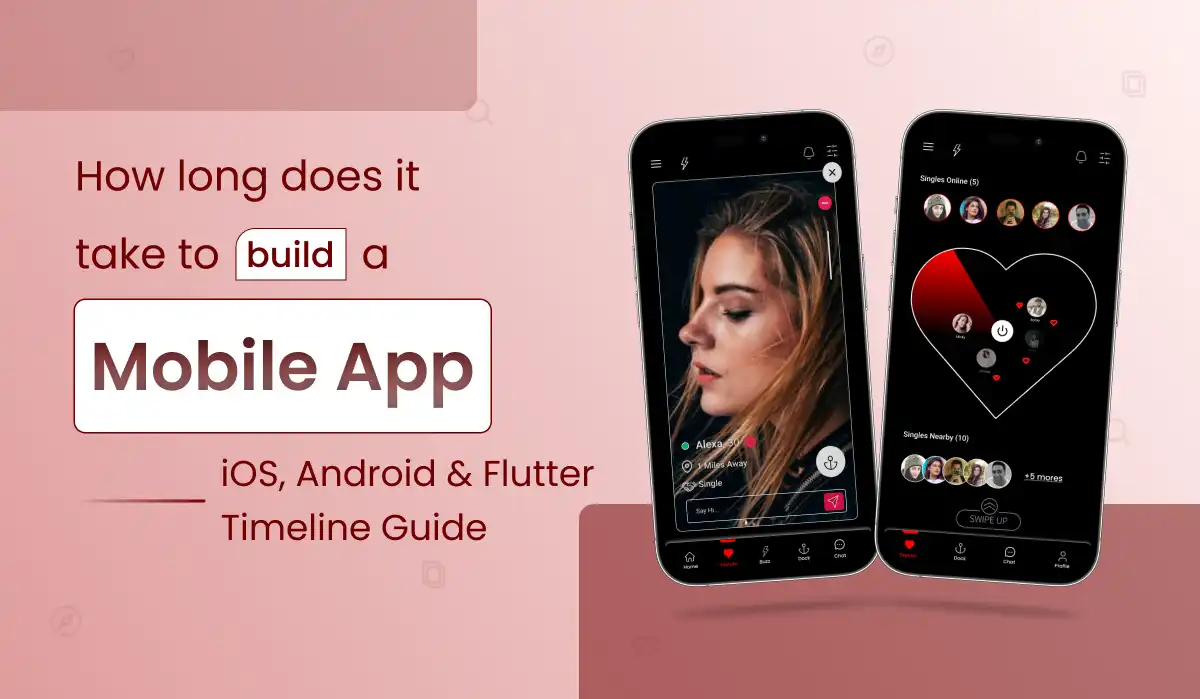
The dating app was delivered successfully and approved by both Apple App Store and Google Play. Our users are highly impressed with the design, UI, and overall functionality. The project was well planned with clear milestones, and all modules were delivered on time. The team is talented, patient, and flexible, accommodating multiple scope revisions as requirements evolved. Their 24/7 development and support availability made the entire process smooth and reliable.
Great team with excellent communication and a strong commitment to on-time delivery. They developed a fully customized mobile app for both Android and iOS, perfectly matching our requirements. The entire process was smooth and professional, with clear updates at every stage. They are reliable, skilled, and very easy to work with. We’re continuing our partnership on more projects, and choosing them has been one of the best business decisions I’ve made.
Have a project in mind? Get straight answers on our AI SaaS process, architecture choices, timelines, and pricing — then book a free discovery call .
Share where you are — an idea, a working prototype, or an existing AI feature that needs to become a sellable product. Our team will scope the architecture, billing, and multi-tenancy your product actually needs, not a generic starting point.
Get My AI SaaS Estimate →
Services to help businesses establish and enhance their online presence.
Contact Us
Hear from our clients and why 1200+ businesses trust Primocys

"Our B2B and B2C platform helps Nigerian manufacturers sell at wholesale prices and suppliers offer competitive retail pricing, with a strong focus on Made in Africa products and easy local and international distribution. The app has received excellent user reviews for its design and unique features. Communication with the Primocys team was smooth in an agile setup, even beyond office hours when needed. Their mobile app development expertise is excellent—highly professional and reliable."
"The dating app was delivered successfully and approved by both Apple App Store and Google Play. Our users are highly impressed with the design, UI, and overall functionality. The project was well planned with clear milestones, and all modules were delivered on time. The team is talented, patient, and flexible, accommodating multiple scope revisions as requirements evolved. Their 24/7 development and support availability made the entire process smooth and reliable."
" We hired Primocys to develop a highly complex and specialized mobile application, and they delivered outstanding results. The app includes advanced features such as timeline mixers, classifieds, payments, advertisements, GPS functionality, and more. Their technical skills, timely delivery, availability, and the personal attention Arpan Sagar brings to each project truly stand out. The team stays focused and committed from start to finish—an excellent experience overall."
" Great team with excellent communication and a strong commitment to on-time delivery. They developed a fully customized mobile app for both Android and iOS, perfectly matching our requirements. The entire process was smooth and professional, with clear updates at every stage. They are reliable, skilled, and very easy to work with. We’re continuing our partnership on more projects, and choosing them has been one of the best business decisions I’ve made."
AWARDS
TRUSTED BY GLOBAL BRANDS