What is a food delivery app and how does it work?
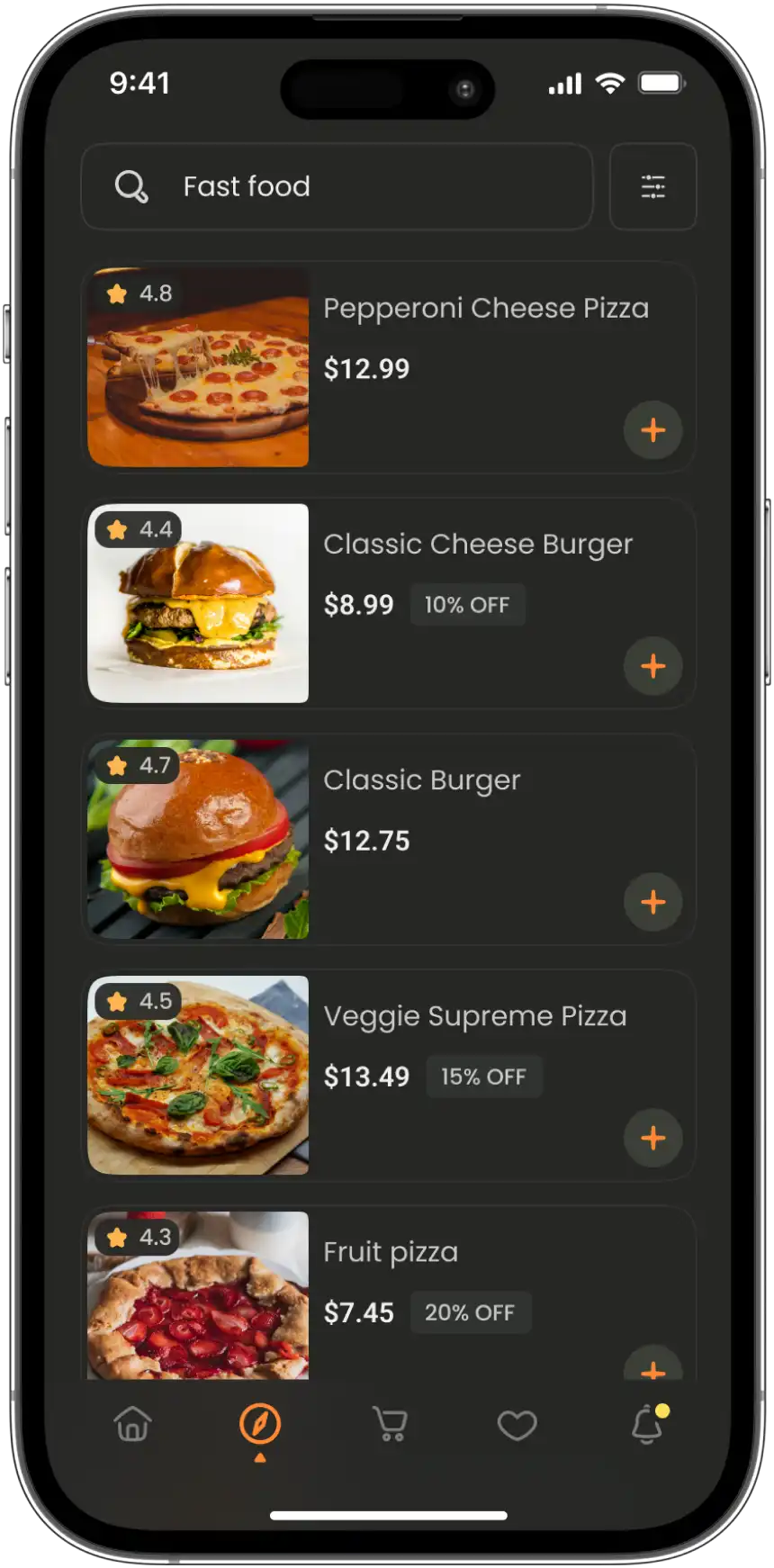
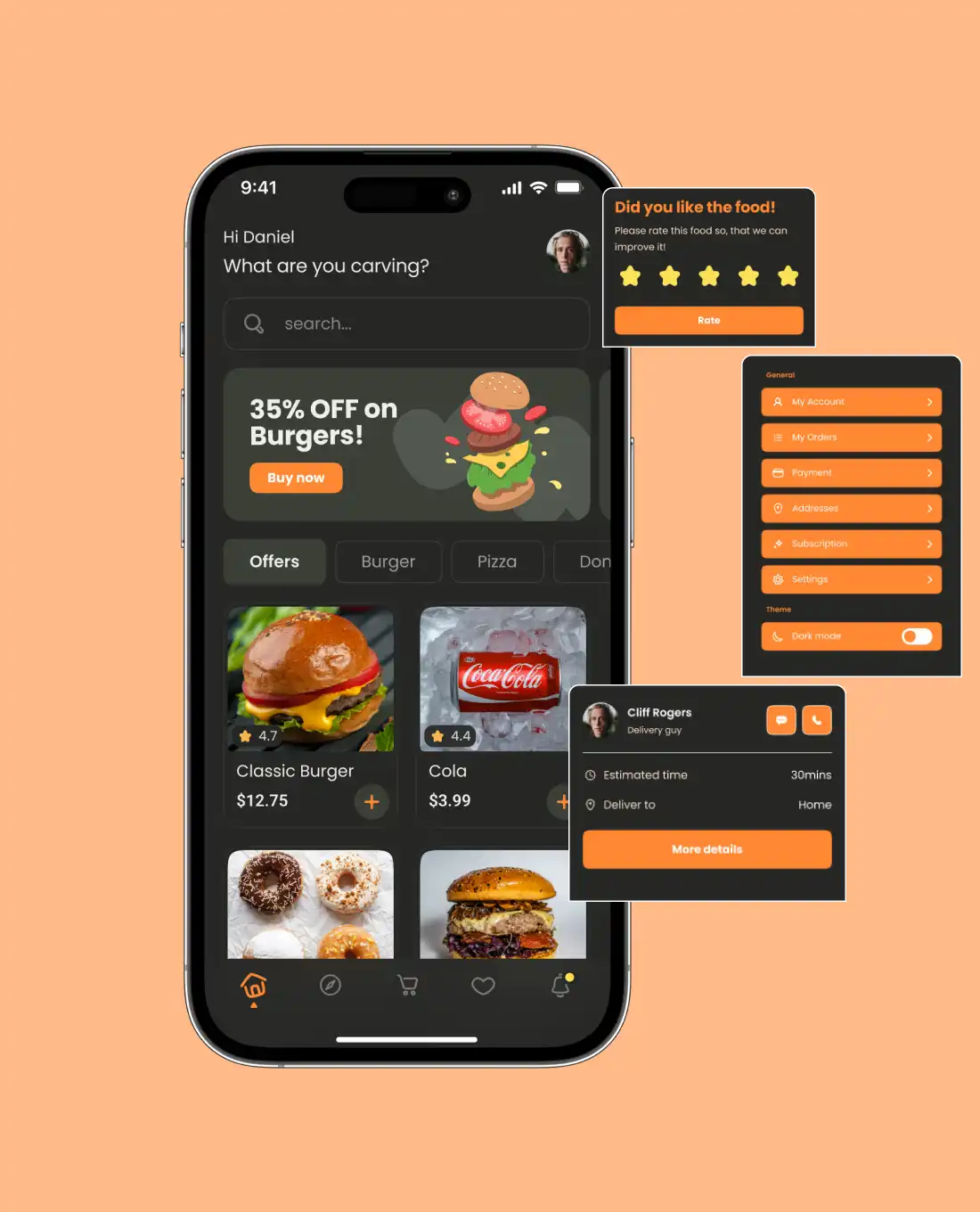
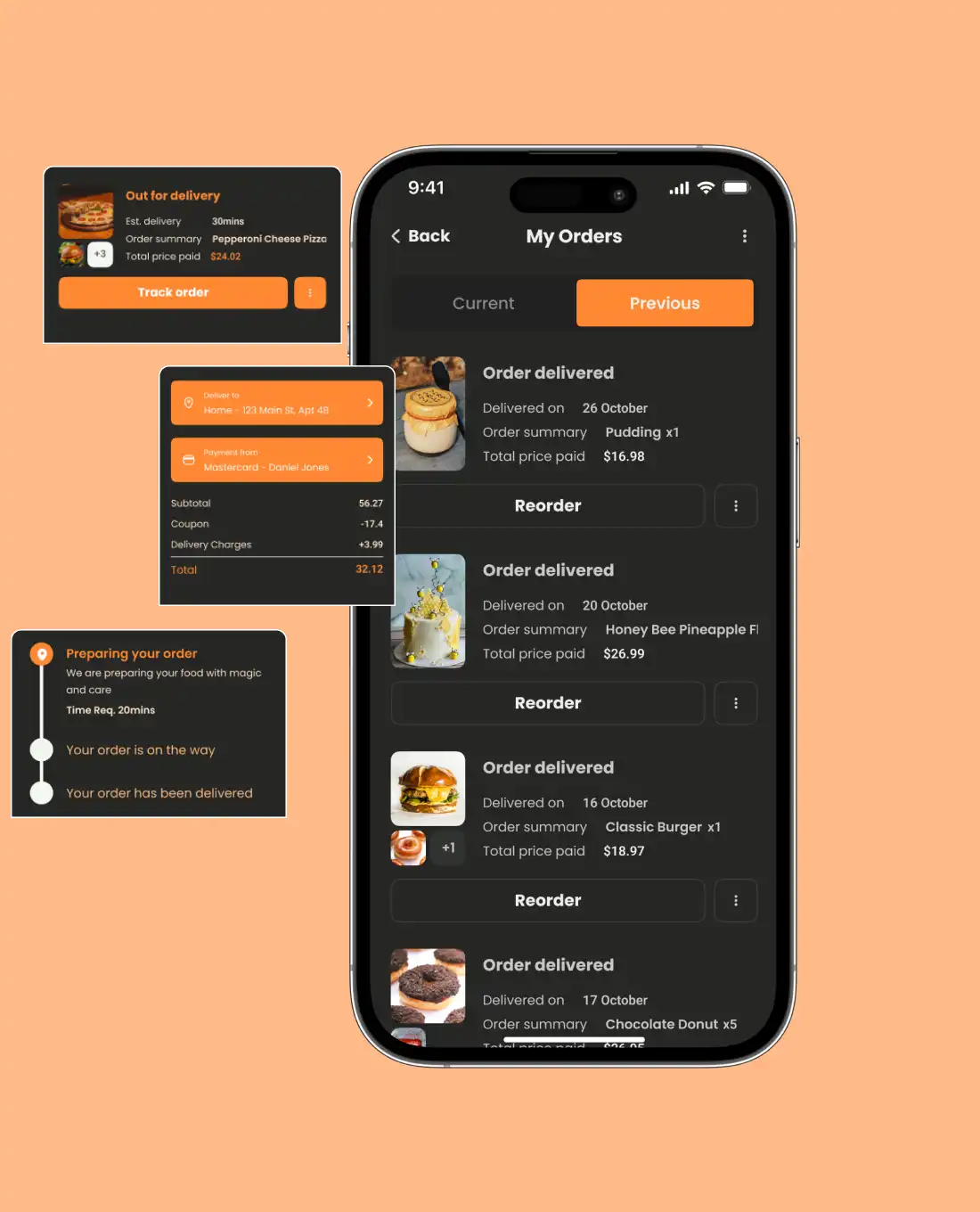
A food delivery app connects three people at once — your customer, your restaurant partner, and your delivery driver. The customer browses menus and orders in-app, the restaurant gets the order instantly on their dashboard, and the driver gets dispatched automatically. Everything — payments, tracking, and updates — happens in real time. Think Uber Eats or Zomato, but built under your brand and tailored to your business model.
How much does food delivery app development cost in 2026?
Food delivery app development costs range from $3,000 for our pre-built clone script with custom branding to $80,000+ for a fully custom multi-vendor enterprise platform. A clone-based MVP costs $3,000–$5,000 (6–10 weeks), a mid-complexity custom build costs $5,000–$8,000 (12–18 weeks), and an enterprise multi-city marketplace with custom AI dispatch costs $8,000–$10,000+ (18–26 weeks). Final pricing depends on restaurant onboarding scope, payment gateways, AI features, and number of supported cities. Use our app cost calculator for a personalized estimate.
How long does it take to develop a food delivery app like Uber Eats?
Using our pre-built food delivery clone script, you can launch in 6–10 weeks with full custom branding and your own restaurant onboarding. A fully custom food delivery app takes 12–18 weeks for mid-complexity builds and 18–26 weeks for enterprise multi-city platforms with custom AI dispatch, cloud kitchen support, and advanced marketplace features.
Can you build a food delivery app like Uber Eats, Zomato, or DoorDash?
Yes. We build custom food delivery apps modeled on Uber Eats, Zomato, DoorDash, Swiggy, Grubhub, Deliveroo, and similar platforms — with real-time order tracking, multi-restaurant marketplaces, AI-driven dispatch, dynamic delivery zones, in-app chat, multi-gateway payments, driver tracking, and full admin dashboards. Each build is fully customized for your brand, market, and business model.
Does a food delivery app support multi-restaurant and multi-vendor operations?
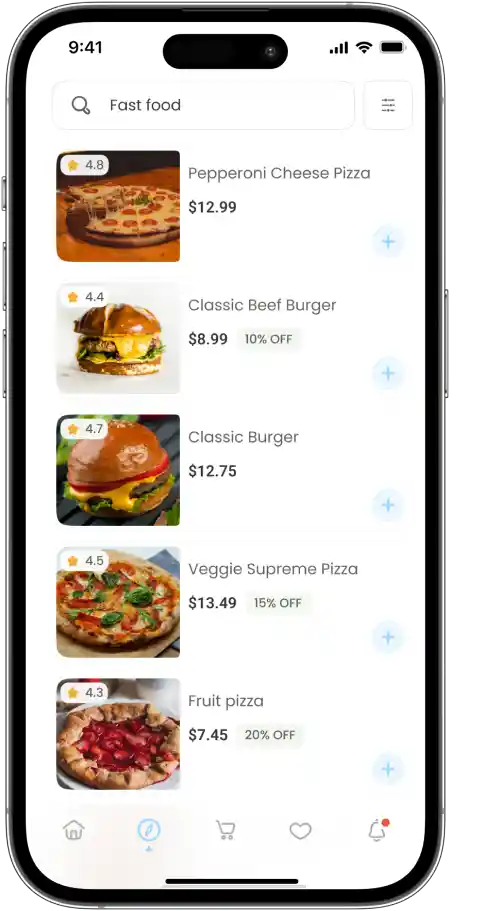
Yes. Our food delivery apps support multi-vendor and multi-city marketplaces with restaurant onboarding workflows, individual restaurant dashboards, separate commission structures, multi-cuisine categorization, city-specific delivery zones, and centralized admin oversight. You can manage hundreds or thousands of restaurants from a single platform with restaurant-level analytics and payouts.
Can an existing restaurant POS system be integrated with the food delivery app?
Yes. We integrate food delivery apps with major restaurant POS systems including Square, Toast, Lightspeed, Petpooja, Shopify POS, Clover, and custom POS systems via REST APIs or webhooks. This enables automated order injection, real-time inventory sync, menu updates, kitchen display system integration, and unified reporting across in-store and online orders.
Is the food delivery app available for Android and iOS?
Yes — we build for both, and your customers won’t need to choose. We typically use Flutter or React Native to launch on Android and iOS simultaneously, which keeps your timeline fast and your budget efficient. If your app needs deep device integrations or premium performance, we also build fully native apps. Either way, your customers, restaurants, and drivers all get a smooth experience on any device.
How is real-time GPS tracking implemented in a food delivery app?
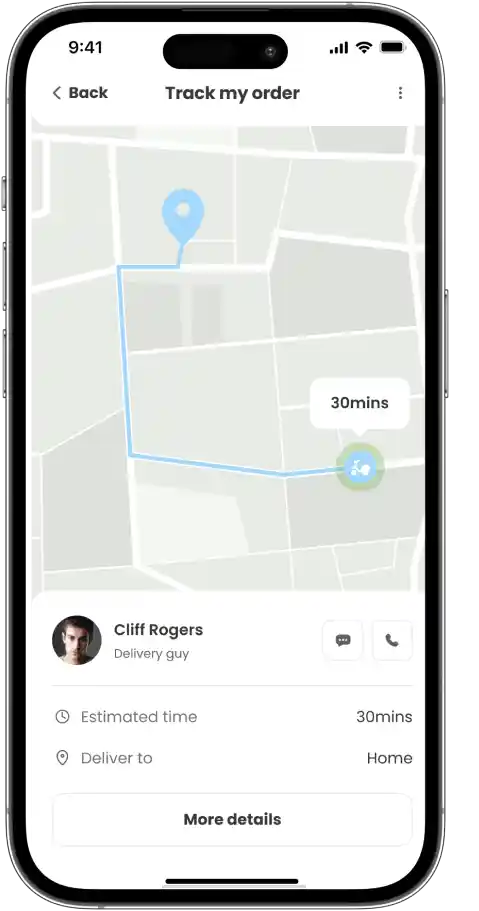
Real-time GPS tracking uses Google Maps Platform APIs and Mapbox SDK for live driver location, route optimization, geofencing for delivery zones, distance-based pricing, and accurate ETA calculations. Driver location is broadcast every 5–15 seconds via WebSockets (Socket.io) to customer and restaurant apps. We use pay-as-you-go mapping infrastructure with $200 monthly free credit from Google — most early-stage food delivery apps pay $0 in mapping fees for their first 10,000+ deliveries.
What payment gateways do you integrate in food delivery apps?
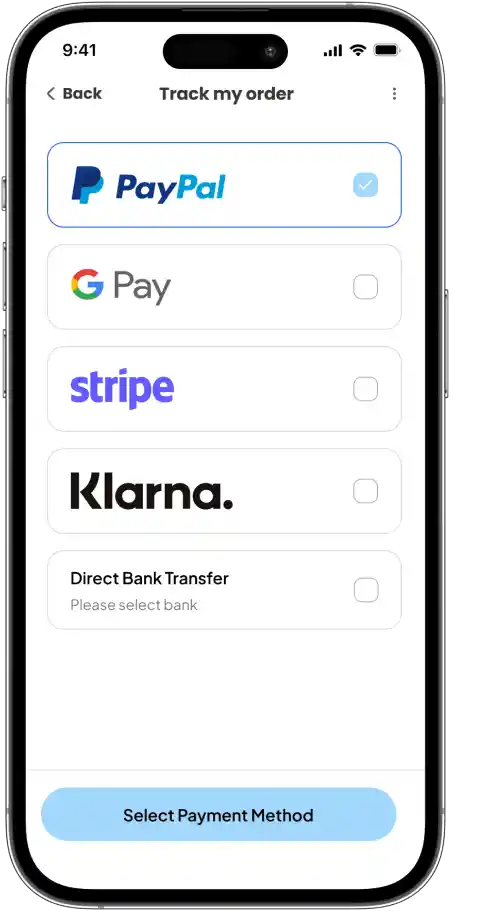
We integrate Stripe, Razorpay, PayPal, Square, Adyen, PayU, UPI (BHIM, Google Pay, PhonePe), Apple Pay, Google Pay, and cash-on-delivery workflows. We also build digital wallet systems with in-app credits, refund automation, restaurant payout schedules, commission deductions, and driver payout management. All payments are PCI-DSS compliant with multi-currency support for international launches.
How do food delivery apps make money?
Food delivery apps earn through six primary revenue streams: (1) restaurant commission fees (typically 15–35% per order); (2) customer delivery charges; (3) restaurant subscription plans for premium placement; (4) in-app advertising and featured restaurant listings; (5) surge pricing during peak hours and bad weather; and (6) cloud kitchen partnerships and white-label restaurant brands. Most successful platforms combine all six streams for sustainable margins.
Does Primocys integrate AI features in food delivery apps?
Yes. We integrate AI throughout the food delivery platform — including AI-driven driver-to-order matching, demand forecasting and surge pricing, personalized restaurant and dish recommendations, route optimization for batched deliveries, AI chatbots for customer support, automatic fraud detection on payments and reviews, predictive ETA calculations, and computer vision for menu digitization from restaurant images.
Will I own the source code after the food delivery app is delivered?
Yes, 100%. Clients retain full ownership of source code, design assets, App Store and Play Store accounts, signing keys, restaurant data, and all infrastructure credentials upon final payment. Code is delivered via your private GitHub or GitLab repository with full commit history. We sign NDAs before any technical conversation.