“Our sales stages don’t match how our team actually sells.”
01
 DapkeSocial video app with live streaming and PK battles.
 Lika Real EstateProperty discovery platform for listings and leads.
 BurpoutSocial fitness challenges that keep people moving.
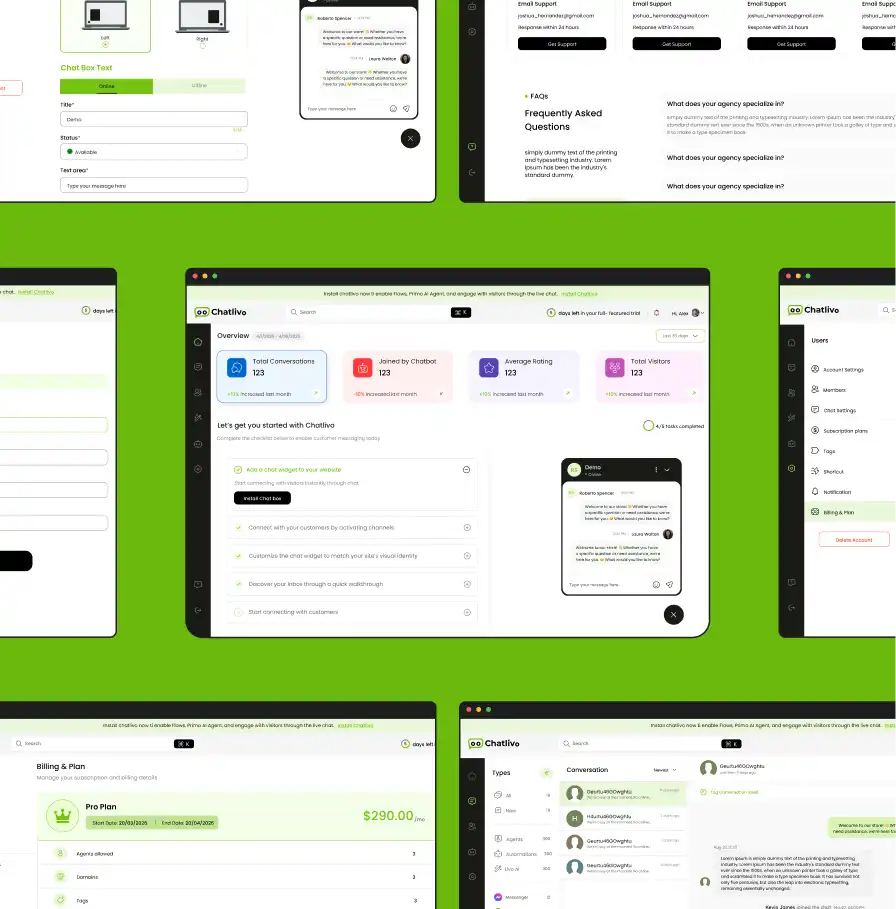
 ChatLivoConnected customer communication SaaS workspace.
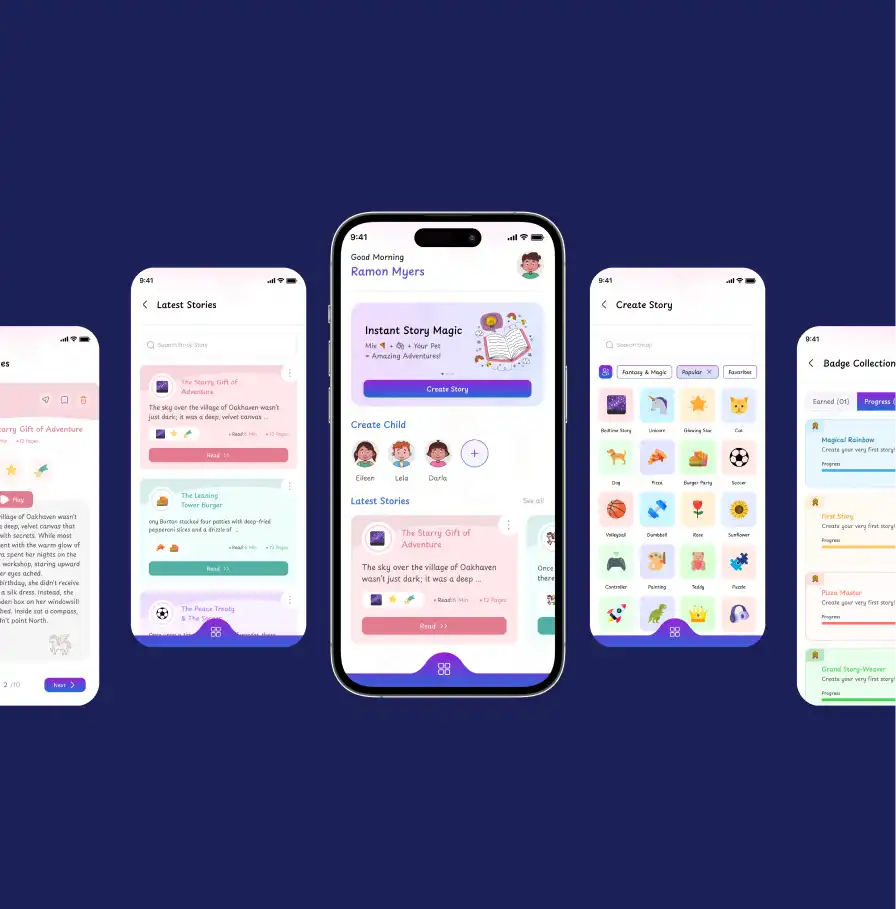
 EmoTalesAI storytelling adventures designed for children.
 EarnifyTrack Income from Multiple Sources with Analytics & Tax Planning.
Your sales process shouldn’t have to change just because your CRM can’t handle it. Primocys builds custom CRM software around the way your team actually captures leads, manages customers, follows up, approves deals, handles support, tracks activity, and reports performance — from the customer database and pipelines to workflow automation, Microsoft 365/email integrations, dashboards, permissions, and mobile access. We build the CRM around your operations, not the other way around.
Discuss My CRM Requirements


This is where a custom CRM can make more sense than customizing around a rigid, off-the-shelf platform’s limitations.
Your sales or service process is genuinely different, you need deep integration with internal systems, per-seat licensing is becoming expensive at your scale, or you need specific automation, permissions, or reporting a generic tool can’t support well.
Your process is fairly standard, you need something running in days rather than weeks, or you don’t yet have the internal clarity on process to justify custom software.
We won’t recommend building a custom CRM if a configured off-the-shelf platform genuinely solves your problem.
What Goes Into a Custom CRM — records, pipelines, automation, communication tracking, reporting, access control, and support.
A single customer record instead of data scattered across five tools.
Stages that match how your team actually sells, not a generic template.
Follow-ups, reminders, approvals, and status changes triggered automatically.
Emails, calls, and meetings logged against the right record.
Pipeline visibility and performance reporting built around your actual metrics.
Permissions that match your org structure, not a flat one-size-fits-all model.
Proposals, contracts, and quotes attached to the right deal.
Optional support workflows tied to the same customer record as sales.
A generic CRM forces your business into someone else’s object model. A custom CRM is built around your actual entities and relationships.
Relationships and custom fields are modeled around your business — one company with multiple contacts and deals, deals linked to specific products or services, custom object types for what your business actually tracks (properties, projects, cases, assets), not forced into a rigid contact/company/deal template that doesn’t fit.
Standard deterministic automation that handles rule checks, approvals, and notifications — so your team doesn’t have to do it manually every time.
Examples: assign leads based on rules, trigger follow-up tasks, send internal notifications, require approval before a deal is marked won, auto-update related records, and enforce required fields before a stage change. This is standard deterministic automation. Where genuinely useful, AI can be layered on top — see the AI Capabilities section below — but AI is not required to get real workflow value from a custom CRM.
Optional, not required — lead scoring, AI drafts, call summaries, and more. A well-built custom CRM works great with or without AI on top.
AI-assisted ranking to help reps focus on the leads most likely to convert.
Suggested email or message drafts based on deal context, reviewed by the rep before sending.
Automatic summaries logged against the customer record.
“Show me deals stuck for 30+ days” instead of building a filter manually.
AI-assisted completion of missing contact or company information from available sources.
Combine with broader AI automation across your systems for end-to-end workflow coverage.
Possible integration categories: Microsoft 365/Outlook, Google Workspace, email/calendar sync, accounting (QuickBooks, Xero), payments (Stripe, Razorpay), marketing tools, telephony/calling, e-signature (DocuSign), support/helpdesk, ERP, and custom internal APIs.
 Microsoft 365
 Google Workspace
 QuickBooks / Xero
 Stripe / Razorpay
 DocuSign
 Telephony
 Marketing Platforms
 Helpdesk / Support
 ERP Systems
 Internal APIs
Integration scope depends on your team’s existing tools, API availability, and authentication requirements — not every system listed above may be needed for your specific CRM.
Migrating from Salesforce, HubSpot, Zoho, spreadsheets, or another system raises real concerns: what happens to historical data, custom fields, attachments, and users during the transition.
Export current data from your existing CRM.
Map fields & relationships to the new structure.
Validate & test data before switching over.
Go live once everything’s validated and ready.
We don’t promise 100% automated migration for every data type — some cleanup and manual review is usually part of a responsible migration, and we tell you where that’s likely upfront rather than after the fact.
Wherever you’re starting from, we assess the current setup honestly and build a plan that protects your data, your team’s time, and what’s already working.
We review what’s working, what isn’t, and plan a migration that doesn’t lose historical data. This includes auditing existing fields, workflows, integrations, and user permissions, then mapping a transition path that keeps your team productive during the switch, not after months of disruption.
We turn a working spreadsheet-based process into real, structured software. That means proper data validation, user roles, automated workflows, and reporting — the parts a spreadsheet can’t handle at scale — while preserving the logic your team already relies on day to day.
Common production gaps in AI-assisted or no-code CRM prototypes: proper database design, authentication and permissions, data integrity, integrations, performance at real scale, and security review. We can take over development or work alongside your existing team.
Architecture depends on your scale, integration needs, and existing systems — confirmed during discovery, not assumed by default.
A web dashboard for office use, a mobile app for field sales and service teams, and offline access where connectivity is unreliable.
See our mobile app development services →See how businesses use custom-built CRMs to streamline sales, service, and operations — and achieve measurable, real-world business results.
Generated by Kids Worldwide
AI Creation Time
Instant Story Personalization
iOS & Android Ready
Automated Lead Engagement
Multi-Flow Chatbot Automation
Live Chat & Handoff
Built & Run by Primocys
Choosing the wrong CRM partner costs you months of rework and lost data. Primocys builds around your actual business process, ships full-stack under one accountable team, and hands over complete source-code ownership — so you get a CRM that fits, not one you outgrow.
Talk to Our CRM Team
we map how your team actually works before any code is written, so the CRM fits the process instead of forcing a new one.
frontend, backend, and infrastructure handled by one accountable team, not separate vendors managing different pieces.
hands-on experience connecting with the business tools you already use, so the CRM works with your stack, not against it.
AI capability is available where it genuinely helps, but never baked in as a requirement for the CRM to work well.
real experience moving off existing CRMs, spreadsheets, and prototypes without losing historical records.
consistent delivery across web and mobile, built and maintained by the same team instead of separate handoffs.
full source-code and configuration handover, subject to project agreement, so you retain control of what we build.
deep overall software and product engineering experience behind every CRM we build, not just a single project’s worth.
Our CRM development process turns your actual sales and service workflow into a reliable, production-ready application built around how your team really works.
Cost depends on data model complexity, number of modules (sales, support, marketing), automation and business rules, integrations, mobile app scope, migration complexity, permissions/security requirements, and expected user count. We don’t publish fixed prices — every project gets a scope-based estimate after discovery.
From sales teams to service operations, Primocys builds custom CRMs tailored to how your business actually works. Get a free consultation and see what’s possible.
 Photo & Video Sharing App
 On-Demand Application
 Business Listing App
 Automotive
 Real Estate
 Education
 Healthcare & Fitness
 Ecommerce & Shopping
 Banking & Finance
 Food & Restaurant
Media & Social
Food & Restaurant
Media & Social
 Hotel Booking
 Sports



Our B2B and B2C platform helps Nigerian manufacturers sell at wholesale prices and suppliers offer competitive retail pricing, with a strong focus on Made in Africa products and easy local and international distribution. The app has received excellent user reviews for its design and unique features. Communication with the Primocys team was smooth in an agile setup, even beyond office hours when needed. Their mobile app development expertise is excellent—highly professional and reliable.
We hired Primocys to develop a highly complex and specialized mobile application, and they delivered outstanding results. The app includes advanced features such as timeline mixers, classifieds, payments, advertisements, GPS functionality, and more. Their technical skills, timely delivery, availability, and the personal attention Arpan Sagar brings to each project truly stand out. The team stays focused and committed from start to finish—an excellent experience overall.
The dating app was delivered successfully and approved by both Apple App Store and Google Play. Our users are highly impressed with the design, UI, and overall functionality. The project was well planned with clear milestones, and all modules were delivered on time. The team is talented, patient, and flexible, accommodating multiple scope revisions as requirements evolved. Their 24/7 development and support availability made the entire process smooth and reliable.
Great team with excellent communication and a strong commitment to on-time delivery. They developed a fully customized mobile app for both Android and iOS, perfectly matching our requirements. The entire process was smooth and professional, with clear updates at every stage. They are reliable, skilled, and very easy to work with. We’re continuing our partnership on more projects, and choosing them has been one of the best business decisions I’ve made.
Have a project in mind? Get straight answers on our CRM development process, architecture choices, timelines, and pricing — then book a free discovery call .
Share your sales process, current pain points, and what your CRM should actually do. We’ll map out a scope, architecture, and estimate — built around your business, not a template.
Discuss My CRM Project →
Services to help businesses establish and enhance their online presence.
Contact Us
Hear from our clients and why 1200+ businesses trust Primocys

"Our B2B and B2C platform helps Nigerian manufacturers sell at wholesale prices and suppliers offer competitive retail pricing, with a strong focus on Made in Africa products and easy local and international distribution. The app has received excellent user reviews for its design and unique features. Communication with the Primocys team was smooth in an agile setup, even beyond office hours when needed. Their mobile app development expertise is excellent—highly professional and reliable."
"The dating app was delivered successfully and approved by both Apple App Store and Google Play. Our users are highly impressed with the design, UI, and overall functionality. The project was well planned with clear milestones, and all modules were delivered on time. The team is talented, patient, and flexible, accommodating multiple scope revisions as requirements evolved. Their 24/7 development and support availability made the entire process smooth and reliable."
" We hired Primocys to develop a highly complex and specialized mobile application, and they delivered outstanding results. The app includes advanced features such as timeline mixers, classifieds, payments, advertisements, GPS functionality, and more. Their technical skills, timely delivery, availability, and the personal attention Arpan Sagar brings to each project truly stand out. The team stays focused and committed from start to finish—an excellent experience overall."
" Great team with excellent communication and a strong commitment to on-time delivery. They developed a fully customized mobile app for both Android and iOS, perfectly matching our requirements. The entire process was smooth and professional, with clear updates at every stage. They are reliable, skilled, and very easy to work with. We’re continuing our partnership on more projects, and choosing them has been one of the best business decisions I’ve made."
AWARDS
TRUSTED BY GLOBAL BRANDS