
Making AI Input Simple
Emoji selection gives children a visual way to direct the story without exposing them to a complex prompt-writing interface.
 DapkeSocial video app with live streaming and PK battles.
 Lika Real EstateProperty discovery platform for listings and leads.
 BurpoutSocial fitness challenges that keep people moving.
 ChatLivoConnected customer communication SaaS workspace.
 EmoTalesAI storytelling adventures designed for children.
 EarnifyTrack Income from Multiple Sources with Analytics & Tax Planning.
EmoTales is an AI-powered storytelling app built around a simple creative interaction: children choose a small set of emojis and the app turns those choices into a story. Primocys developed the product for iOS and Android, connecting AI generation, narration, translation, child profiles, favorites, streaks, badges and subscription workflows into one mobile experience.
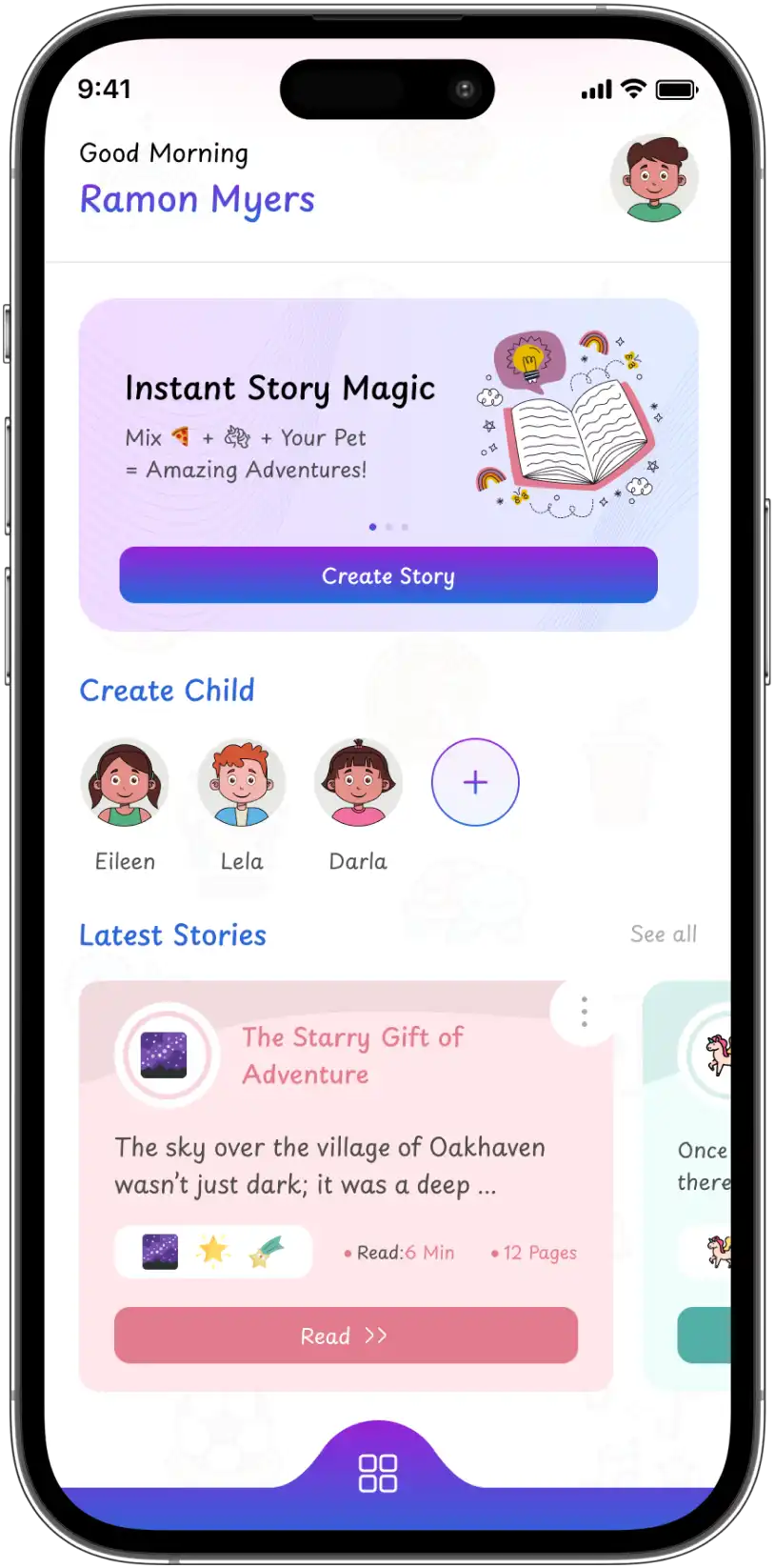
EmoTales was built around a child-friendly input model rather than a traditional AI prompt box. The child makes a small creative choice by selecting emojis, while the application handles the more complex work behind the scenes: building the AI request, generating the story, presenting it in the app and making it available for narration, translation or later reading.
Children start with visual choices instead of needing to write a detailed prompt.
The selected emojis become the input to the application’s AI storytelling workflow.
Generated stories can be consumed in more than one format through narration and translation.
Profiles, favorites, streaks, badges and story categories give the product structure beyond a one-time generation screen.
The product needed to make AI feel simple for a child while giving the app real structure for repeat use — separating the creative action from the technical complexity, and building supporting systems for profiles, narration, translation, subscriptions and app operations.
Primocys built the complete mobile product and platform — onboarding, story creation, AI integration, narration, translation, profiles, gamification, subscriptions, backend and admin — keeping the child’s experience simple while the product stays maintainable behind the scenes.
Structuring onboarding, child profiles, story creation and the reading experience around short, understandable mobile actions.
Building the iOS and Android application from one cross-platform mobile codebase.
Connecting emoji selections to backend story-generation logic and returning the generated content to the mobile app.
Giving children the option to listen to generated stories in addition to reading them.
Supporting translation as a separate action on generated content so stories can be consumed in additional languages.
Keeping child-specific story activity, favorites and progress organized within the family experience.
Adding lightweight gamification around continued use without turning the product into a generic game.
Supporting recurring plans and the XP-based usage model used by AI-powered actions.
Supporting users, content workflows, usage logic, product settings and operational management behind the mobile app.
Behind every simple emoji tap lies a maze of AI generation, content safety checks, narration, translation, and usage costs most storytelling apps never fully solve.
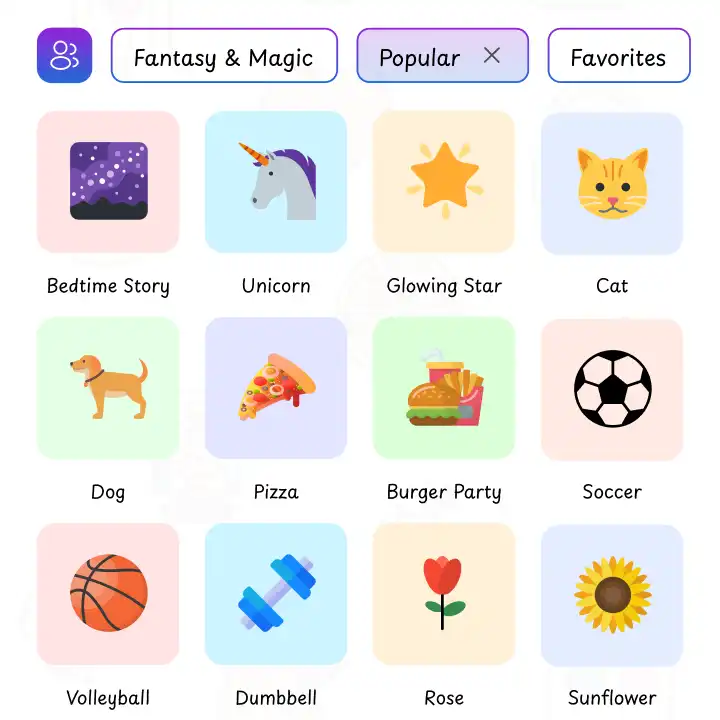
Emoji selection gives children a visual way to direct the story without exposing them to a complex prompt-writing interface.
The mobile client should not talk directly to the model provider. Generation requests, usage logic and content handling belong behind the application’s backend.
Story generation, narration and translation are not free operations, so usage needs to connect cleanly with plan and credit logic.
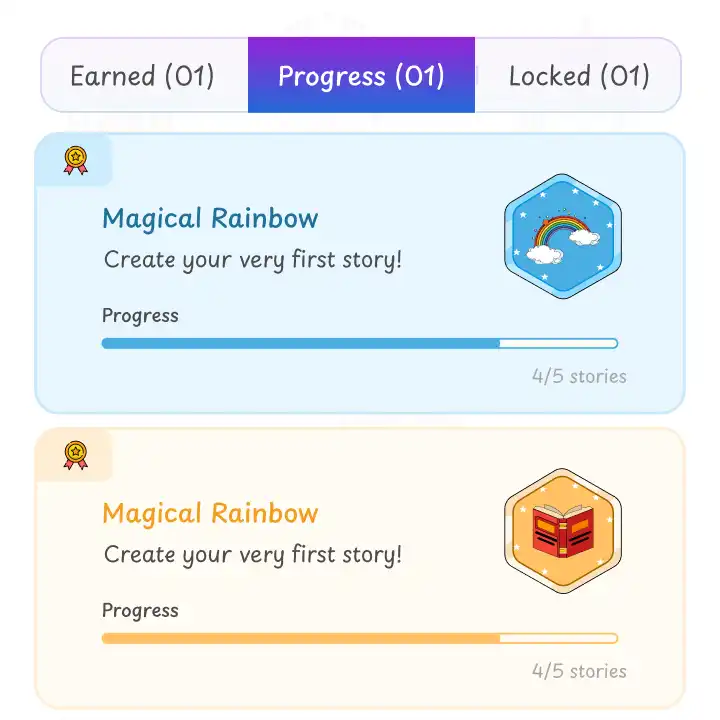
Favorites, story history, narration, translation, streaks and badges help turn a single AI output into a broader product experience.
EmoTales separates the child-facing mobile app from AI orchestration, user data, subscriptions and admin controls — so the app stays focused on story creation and reading, while backend services handle generation, usage rules and integrations.
Onboarding, child profiles, emoji selection, story reading, narration, translation, favorites, streaks and badges.
Authentication, profiles, story records, usage logic, subscriptions, credits and application-level business rules.
Prepares the story-generation request, sends it to the configured AI provider and returns the generated result through the application workflow.
Supporting services handle additional AI or mobile features such as narration, translation and notifications.
User data, stories, progress, subscriptions and operational controls are maintained separately from the child-facing interface.
The architecture supports the complete storytelling and product management lifecycle. Child-facing story creation connects with backend services for AI orchestration, narration, translation, and the administrative controls that support day-to-day product operations.
The feature set is centered on the storytelling loop rather than a generic collection of EdTech features. Each capability helps the child create, consume, revisit or build progress around stories generated from their own emoji choices.
Children select a small set of emojis that become the creative input for a new story.
The application sends the child’s selections through a backend AI workflow and returns the resulting story to the mobile app.
Generated stories can be played as audio so children are not limited to reading text on screen.
A generated story can be translated through a separate app action when the feature is available to the user.
Families can keep story activity and progress organized by individual child profile.
Stories a child wants to revisit can be saved instead of disappearing into a one-time generation flow.
Continued use is reflected through a simple streak mechanic inside the product.
Progress can unlock visual rewards that add a light gamification layer around storytelling activity.
Story discovery and multi-part experiences give children additional ways to continue beyond a single generated story.
Every design decision was made through a dual lens: is this delightful and intuitive for a young child, and does it give parents confidence and control?
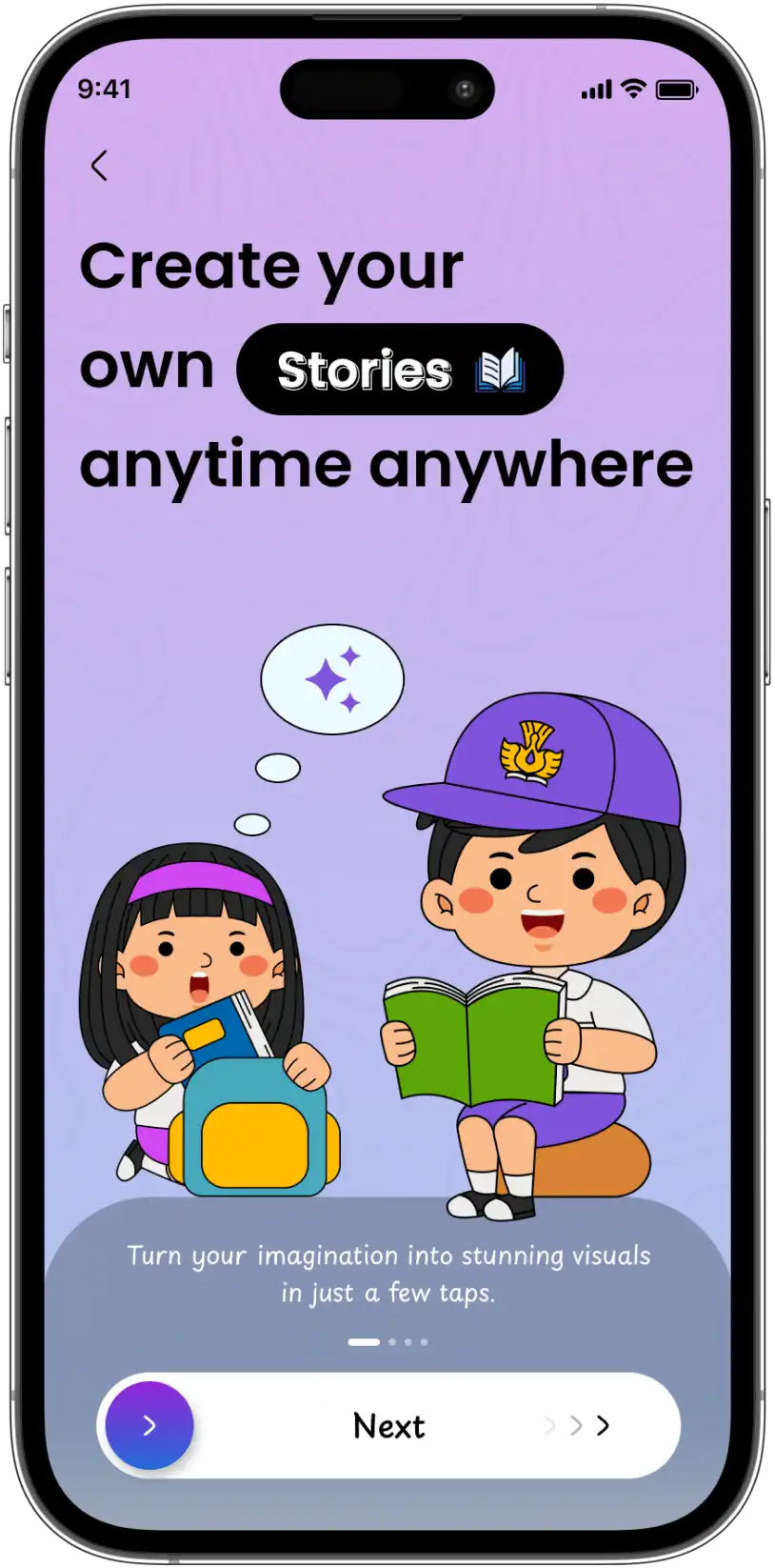
Parent downloads the app, creates a family account, sets up one or more child profiles with age, language preference, and content settings. Child picks a fun avatar to call their own.
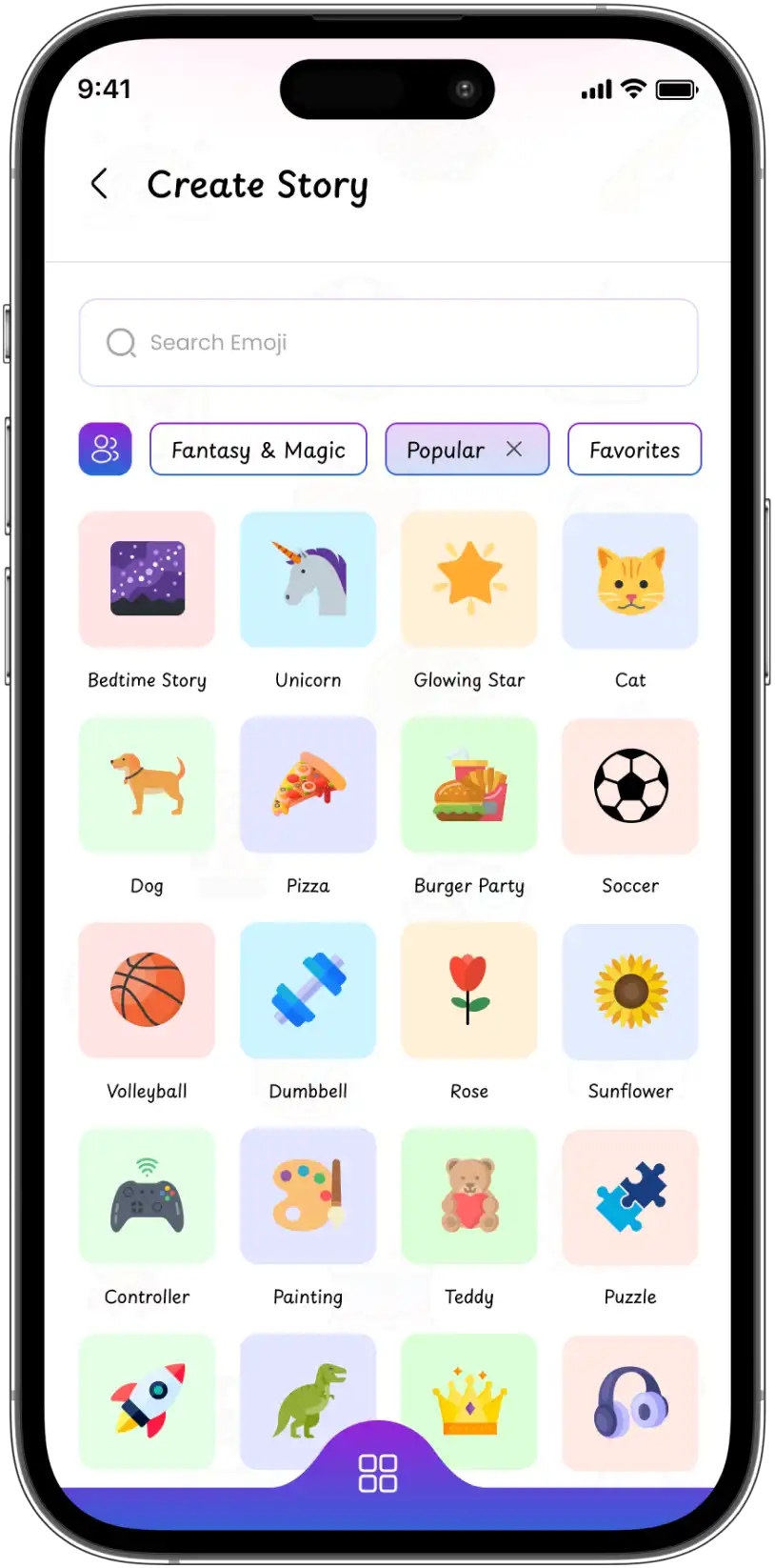
Child opens the app and lands on a colourful emoji picker — animals, food, places, objects — all categorised with large, tappable icons. They pick their favourites and hit “Make My Story!
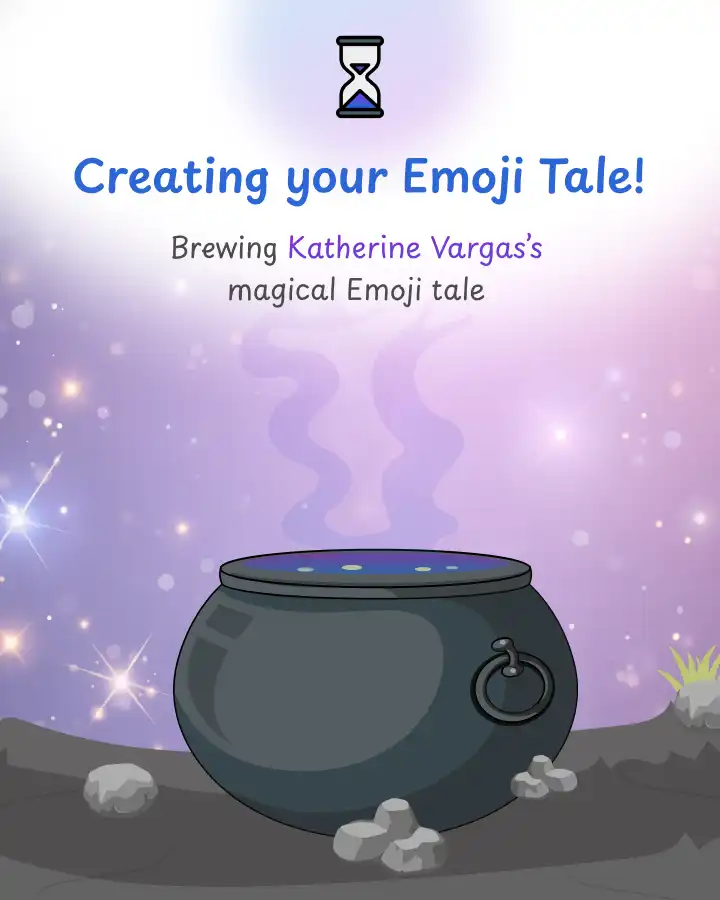
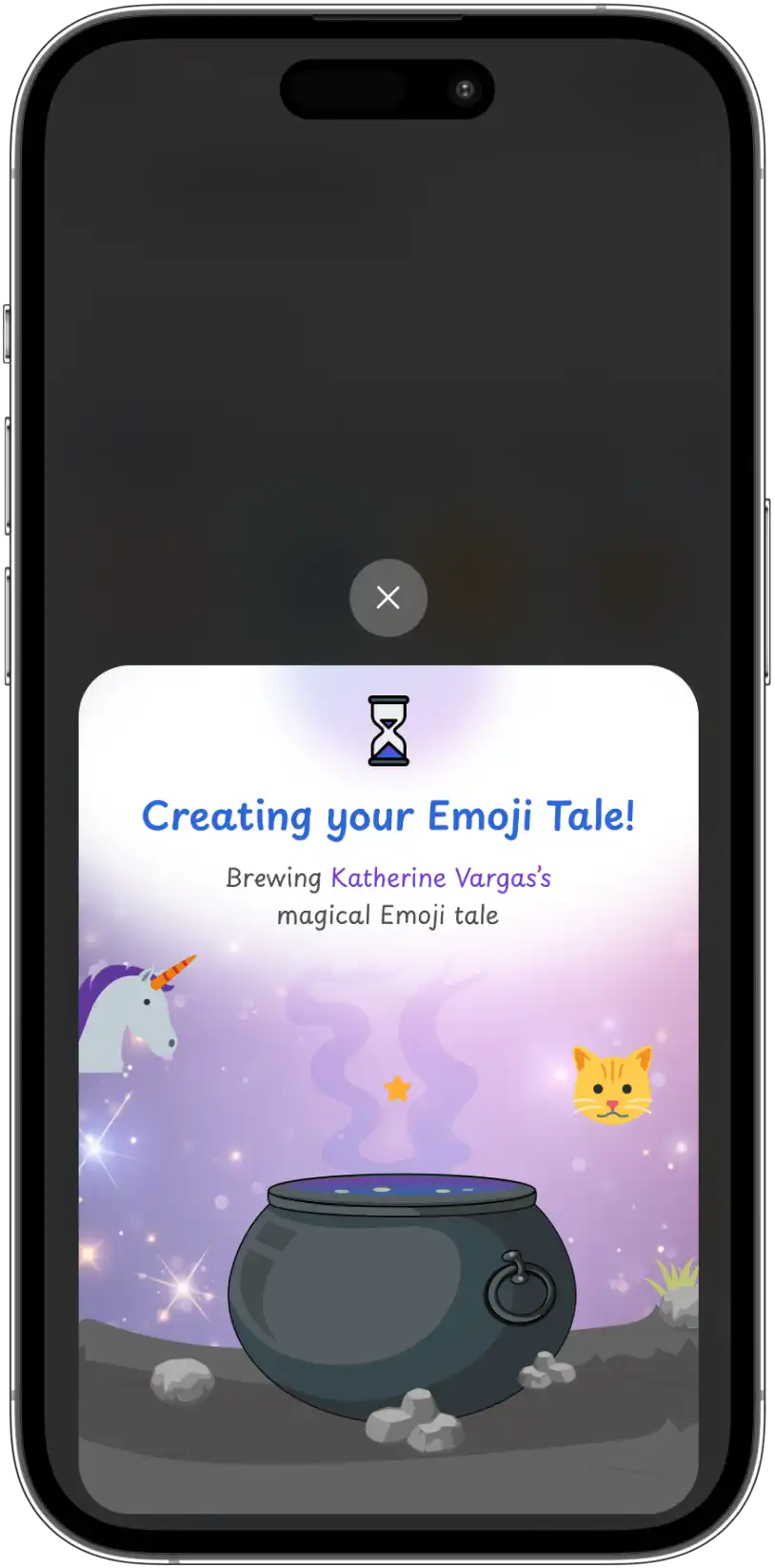
The AI generates a unique, age-appropriate story within seconds. A playful animation plays while the story loads, building anticipation. The story displays with large text and vibrant illustrations.
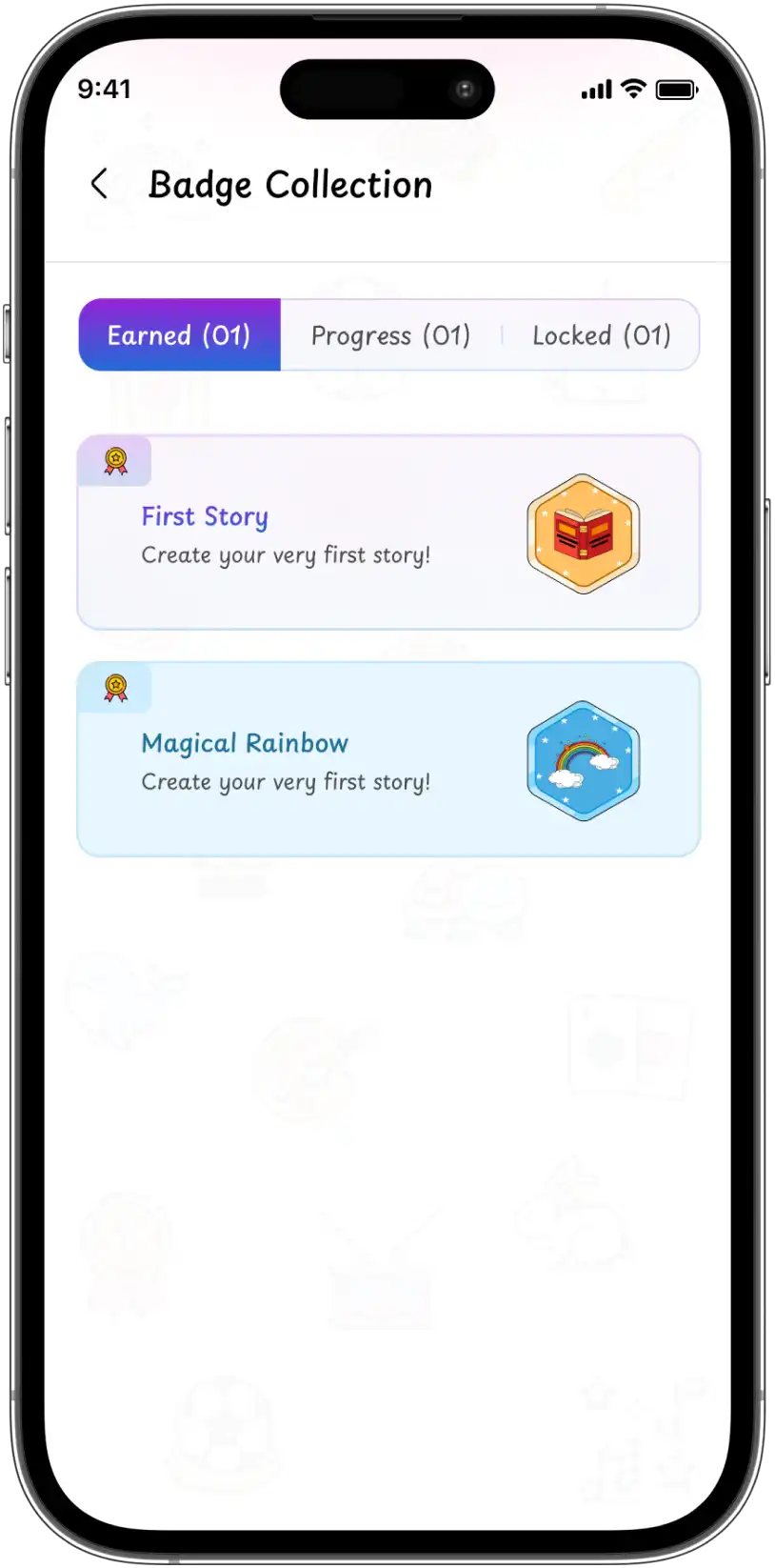
Completing a story earns XP and triggers badge checks. Daily challenge completion grants bonus rewards. Streak counters keep the excitement alive day after day.
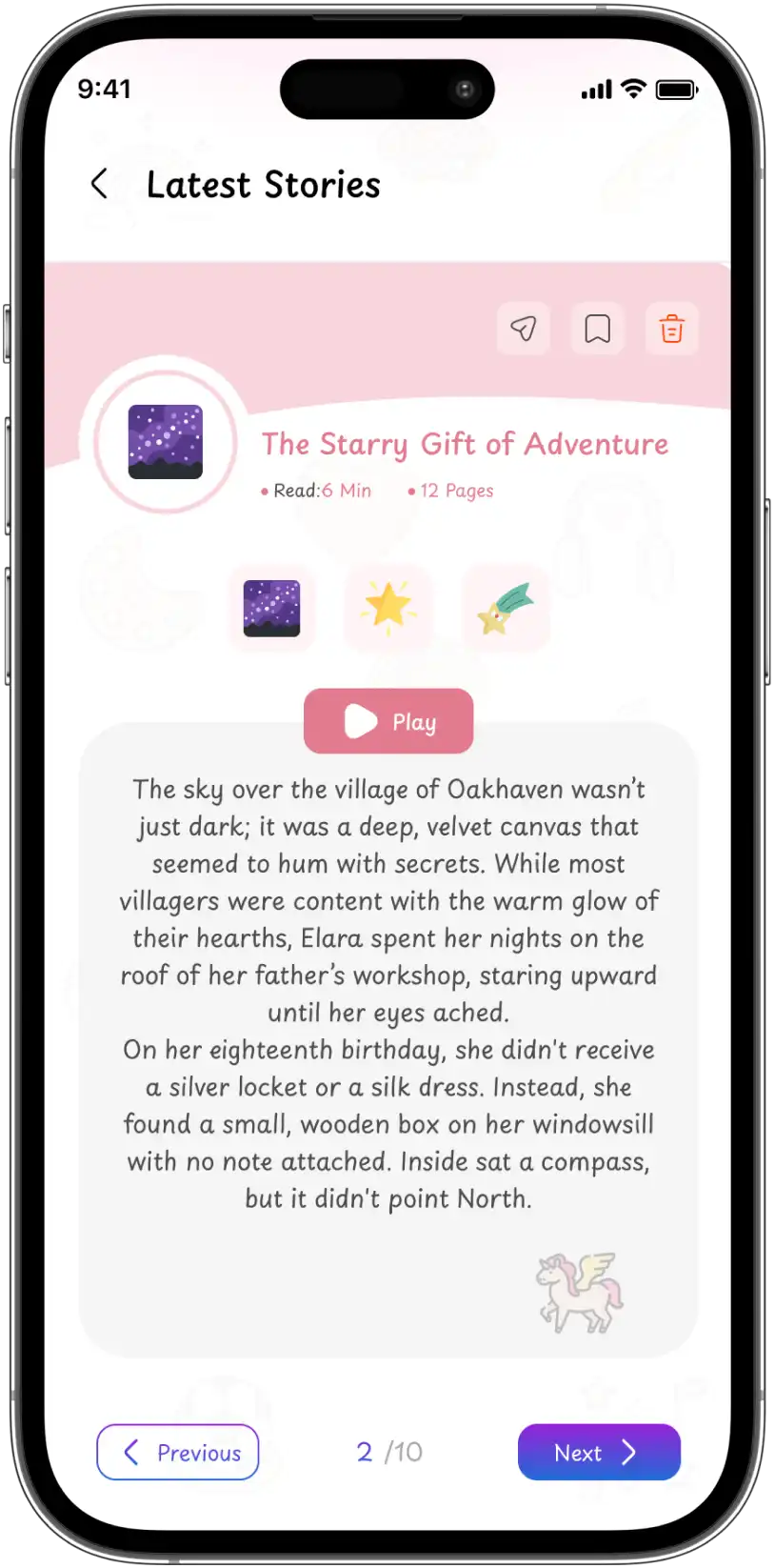
Child reads the story themselves or activates the narration button for audio playback. Highlighted word-by-word reading helps early learners follow along. Stories can be bookmarked to the library.
Push notification reminds the child of a new daily challenge. Parent gets a weekly digest email showing reading time, badges earned, and favourite themes — reinforcing subscription value.
A cohesive visual language designed to evoke trust, creativity, and modern aesthetics throughout the Emoji Tale experience.
The technology stack supports EmoTales’ mobile app, backend APIs, AI orchestration, notifications, cloud operations, and subscriptions—using only technologies actually used in the product.
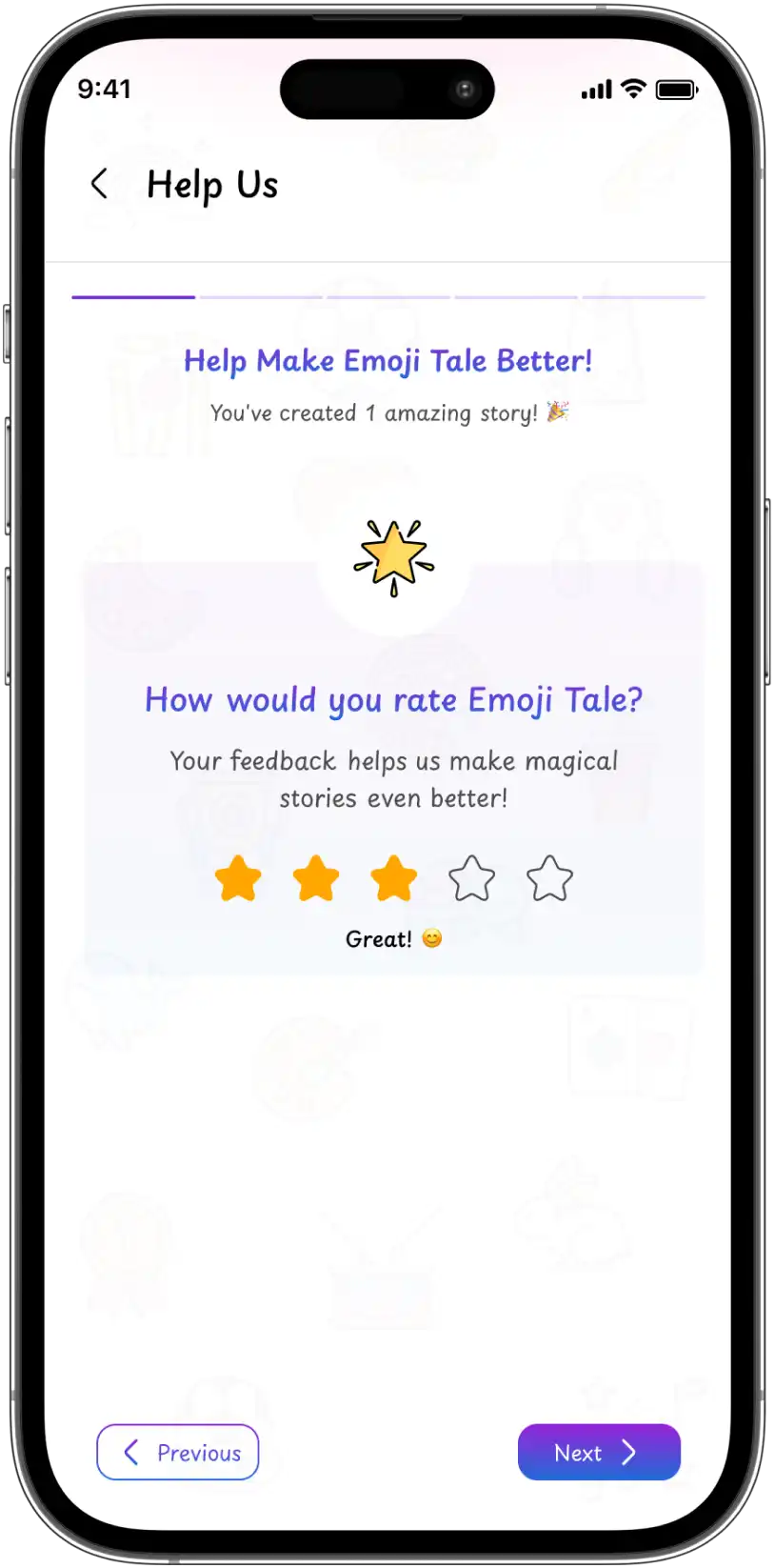
Explore the vibrant and intuitive interface of Emoji Tale through our interactive mobile screen gallery.
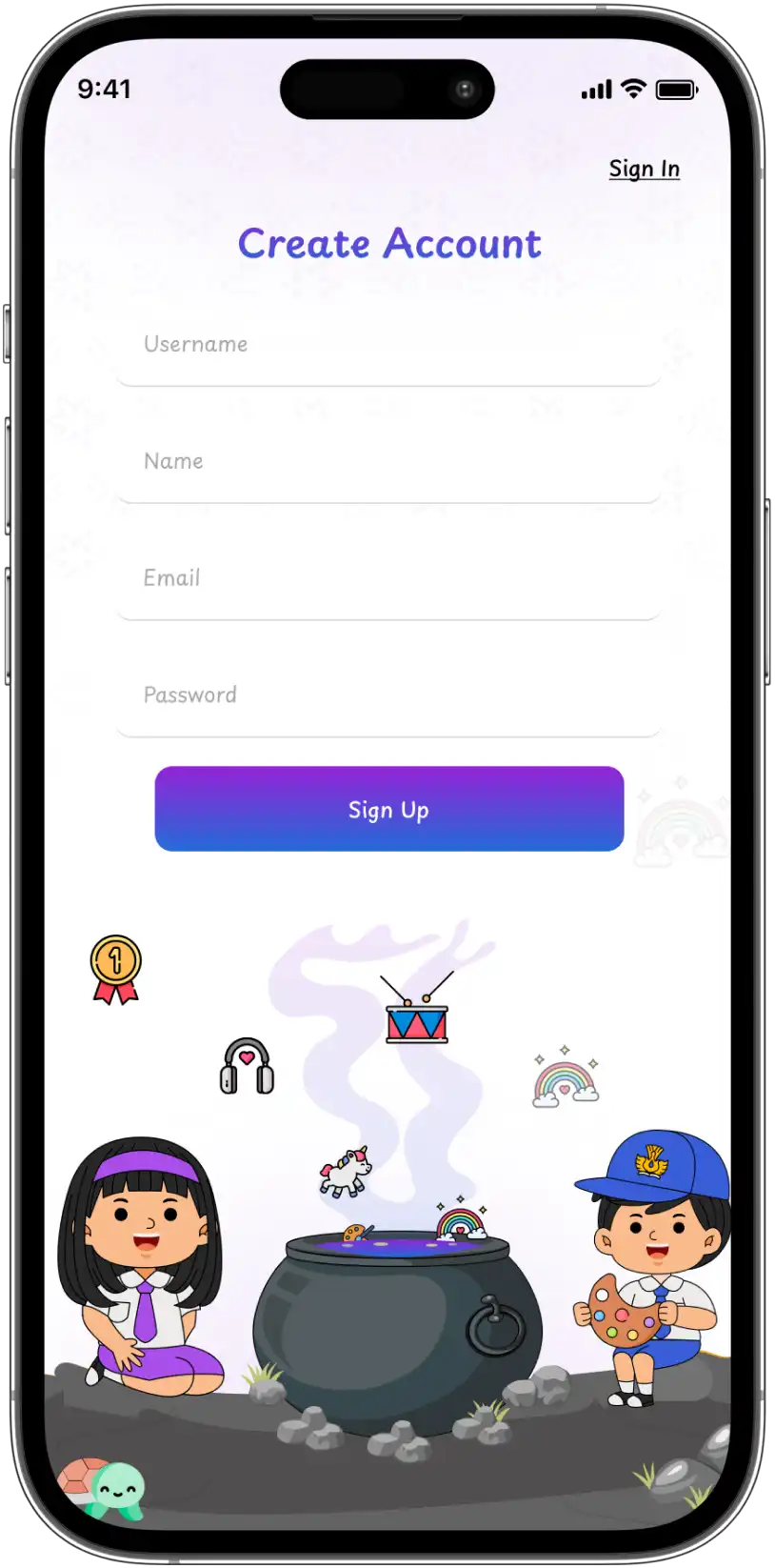
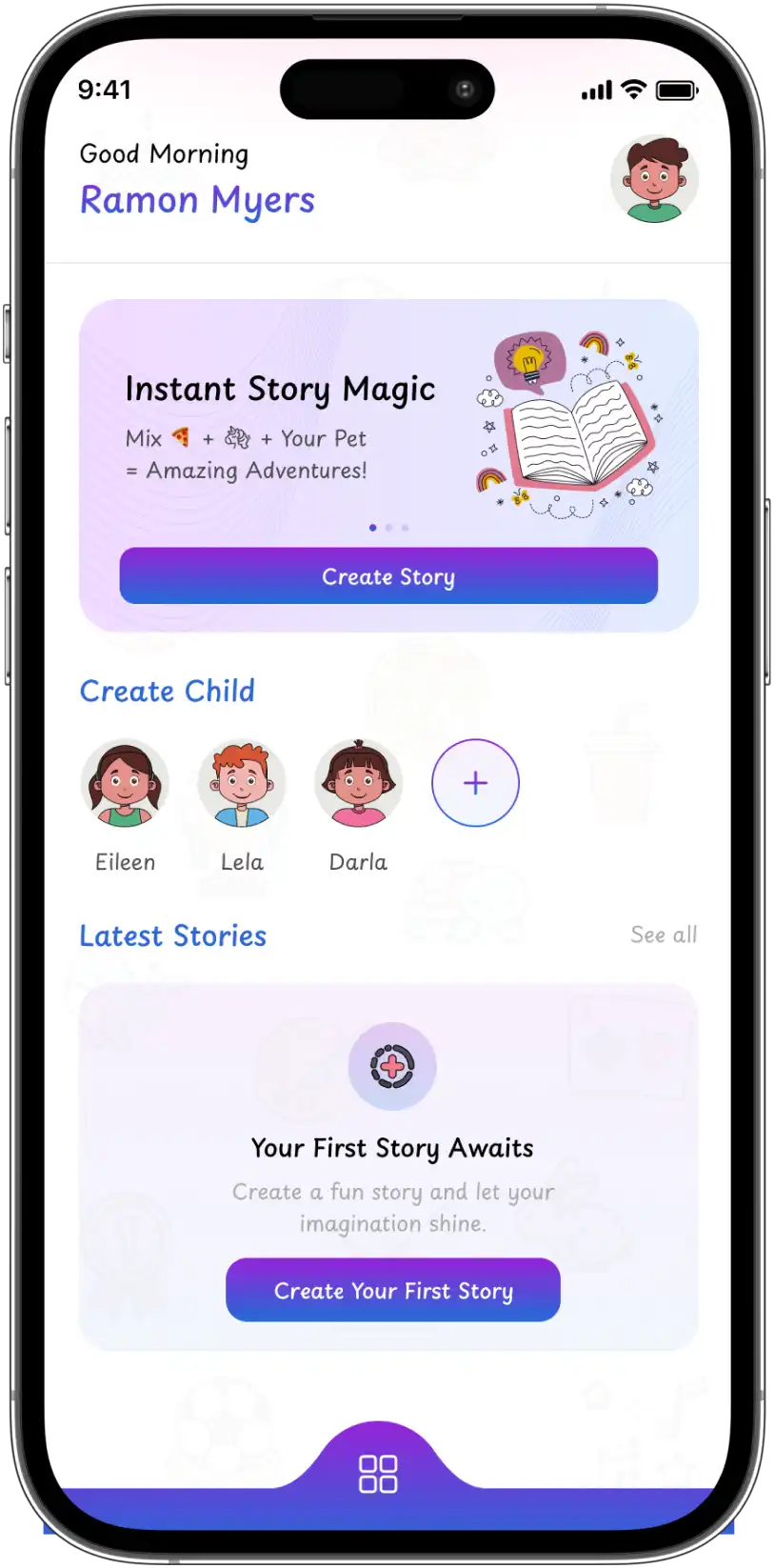
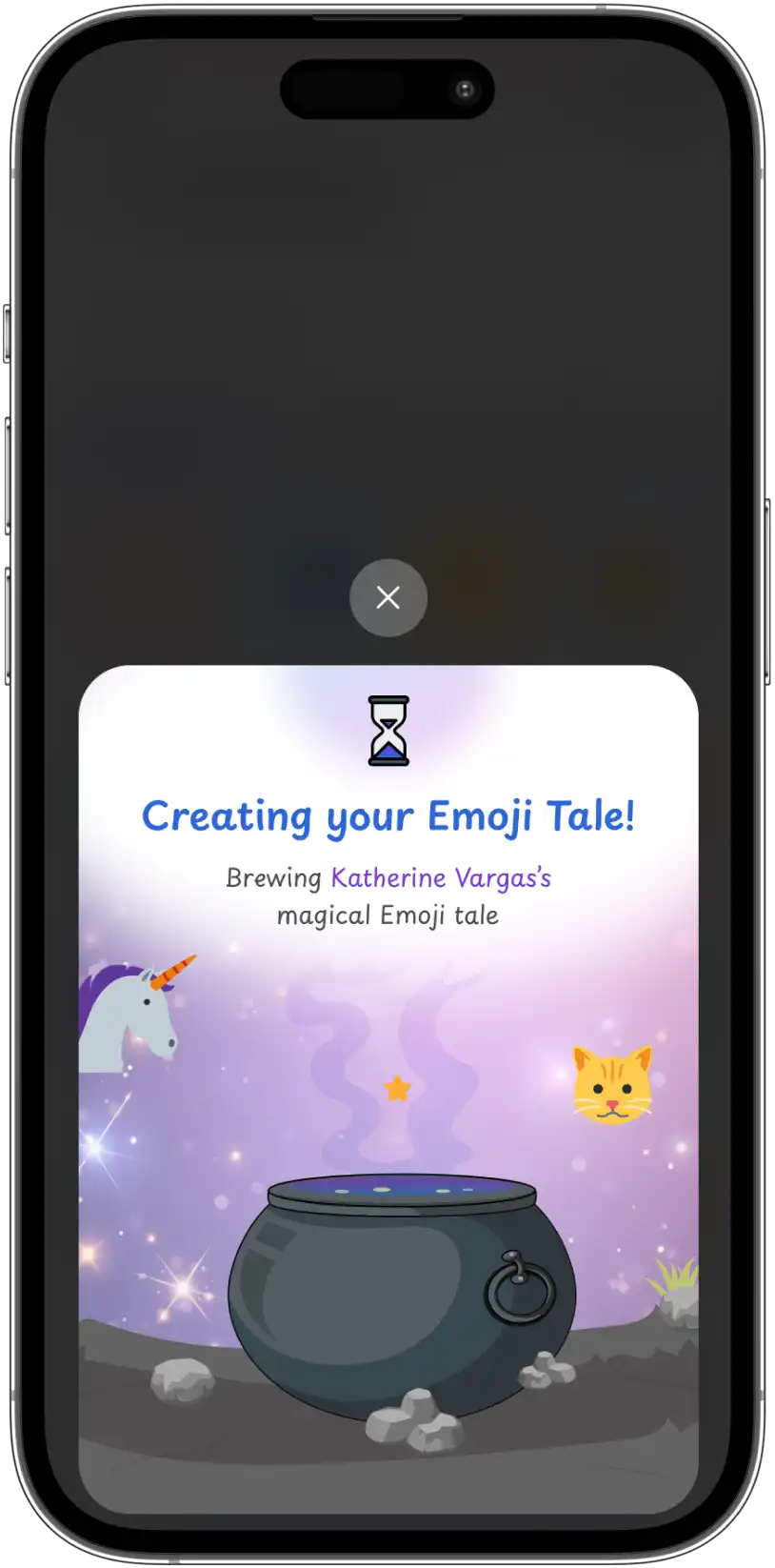
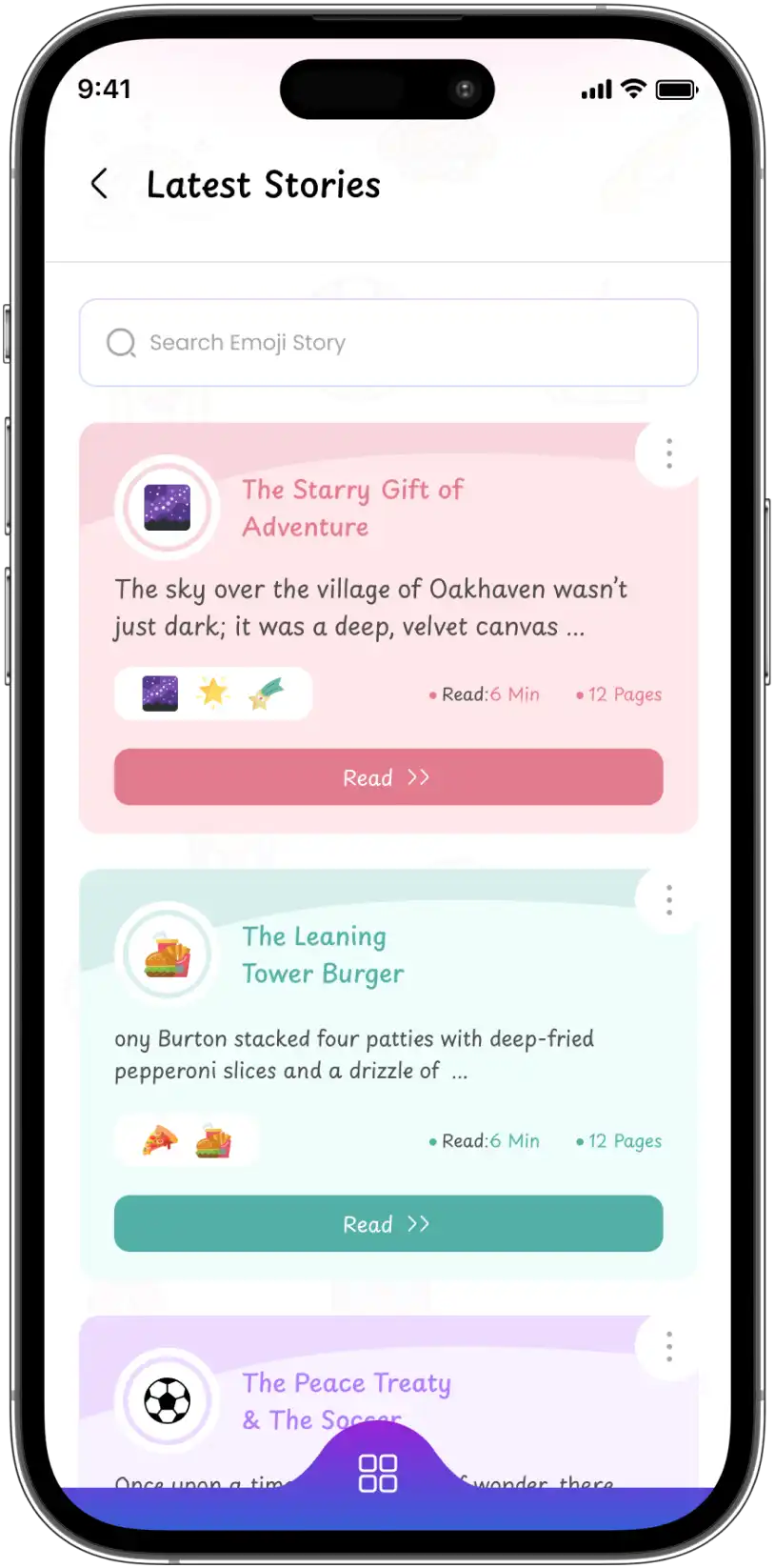
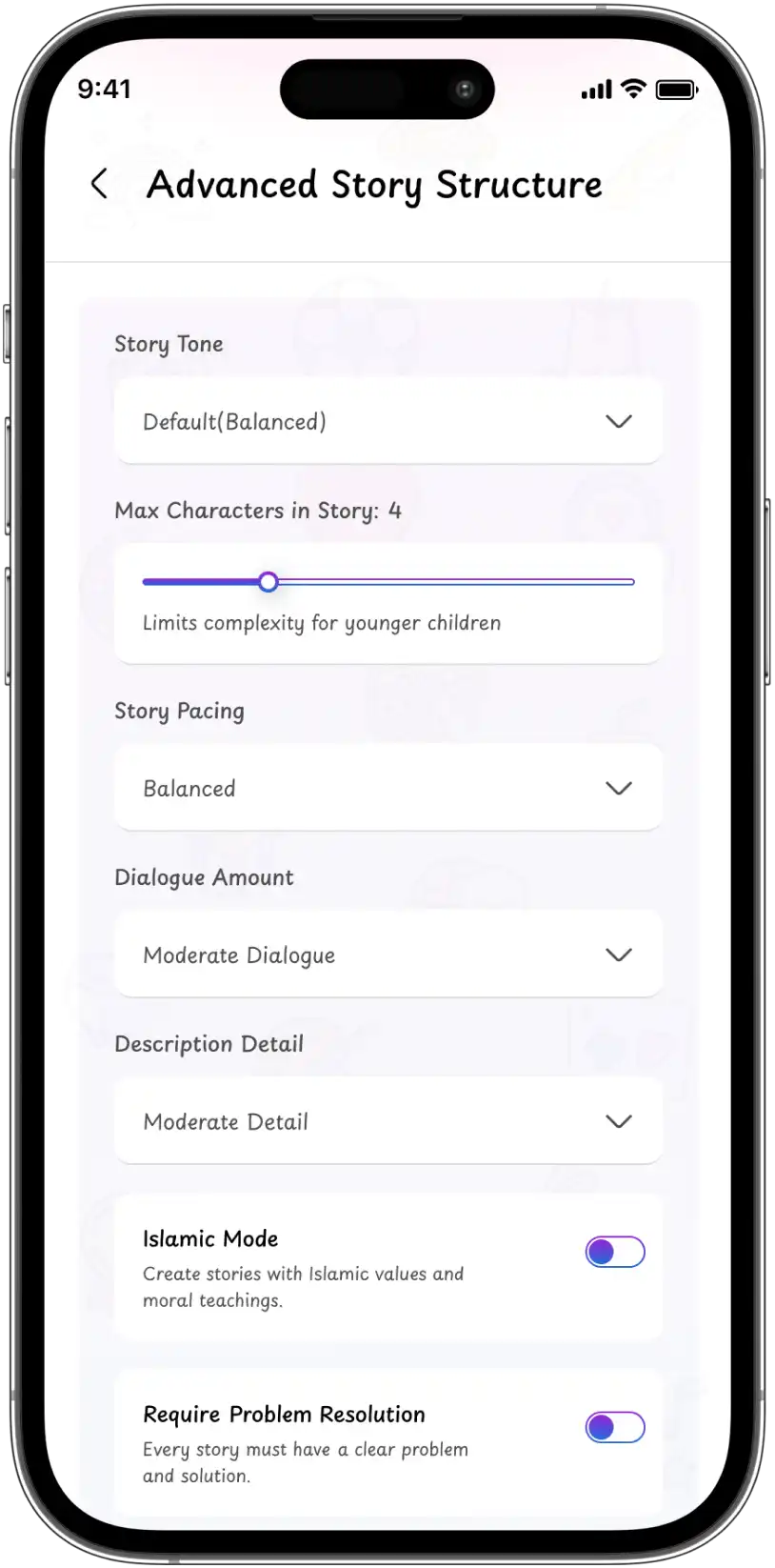
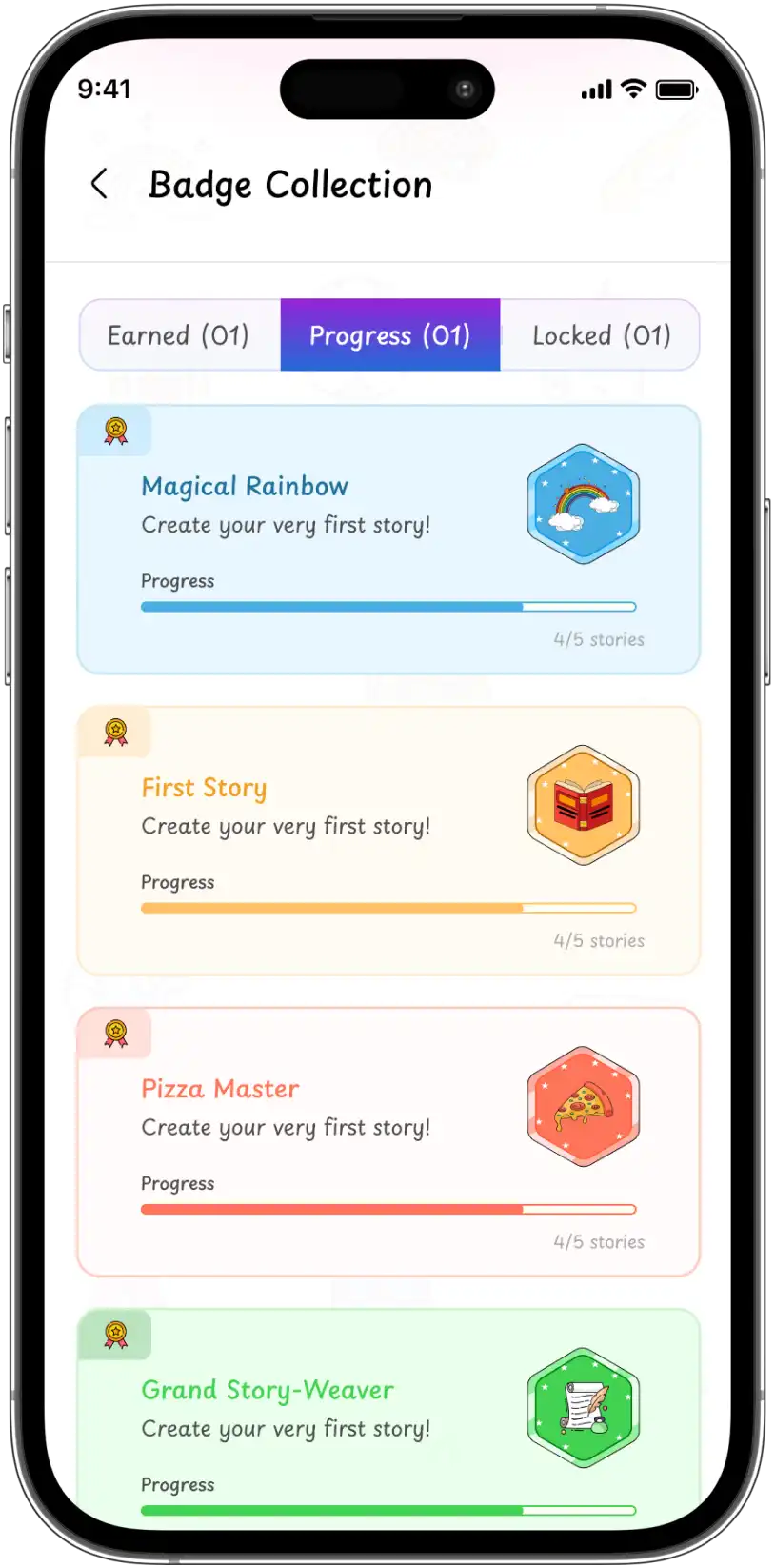
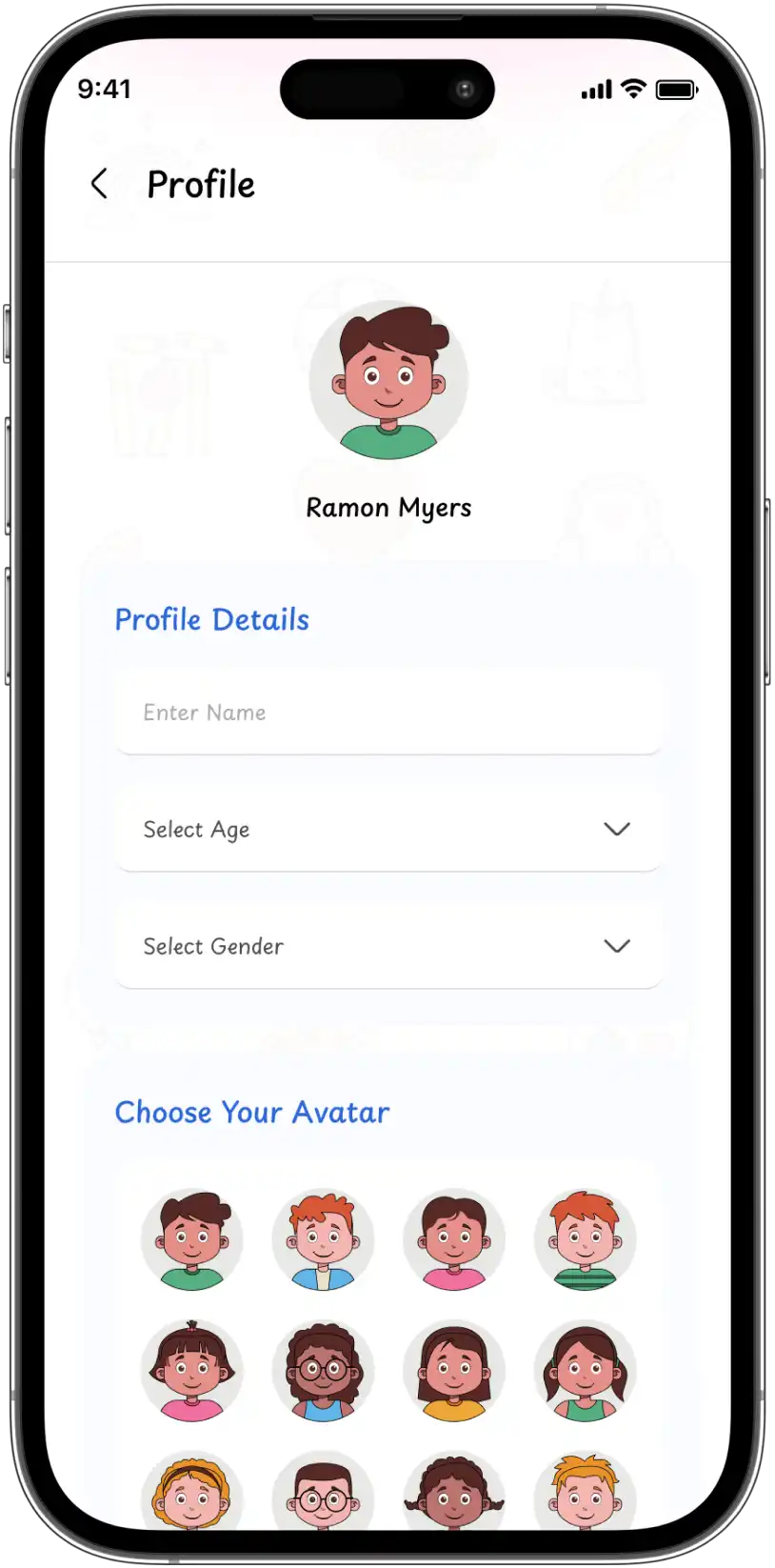
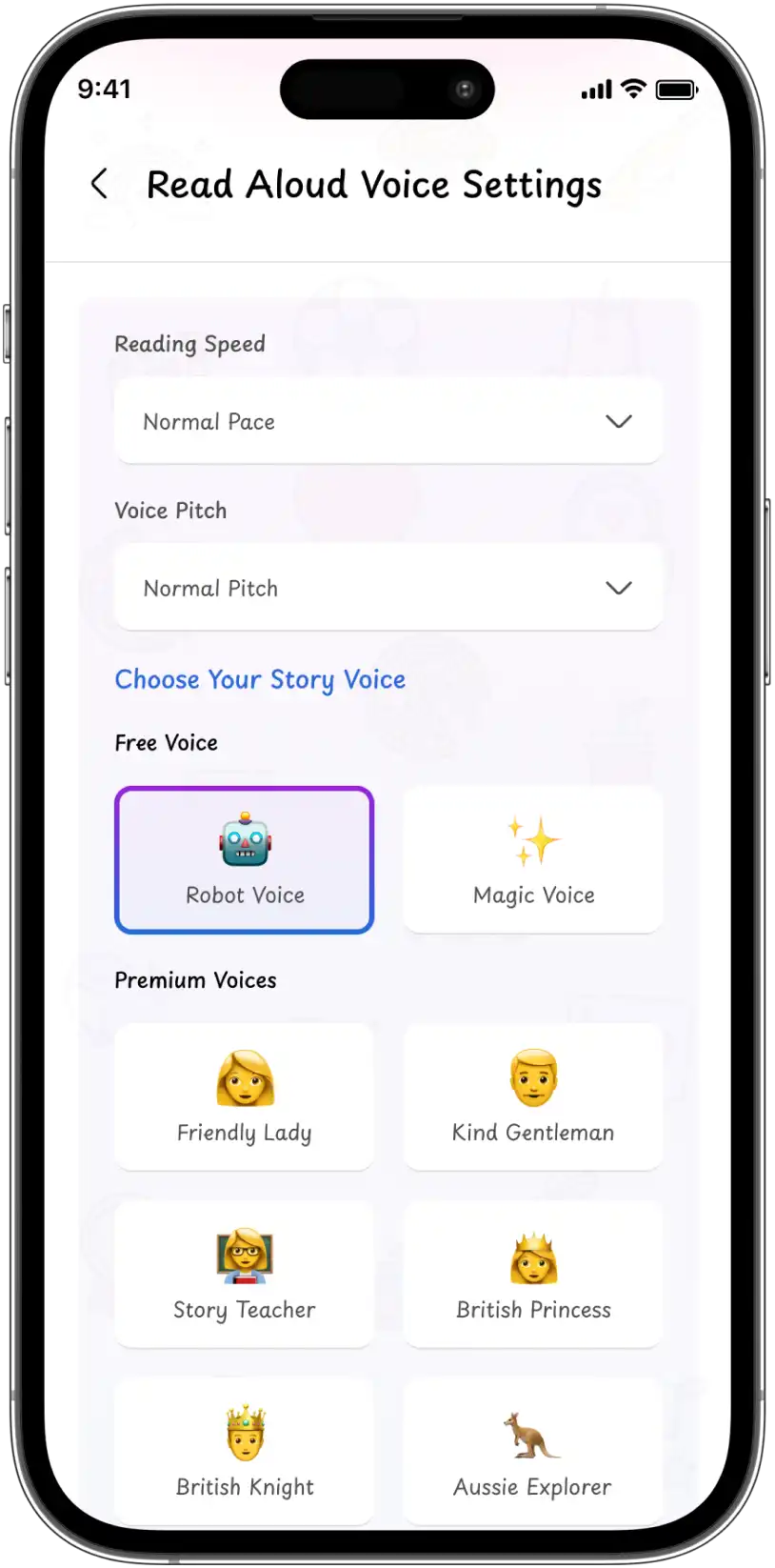
Technical decisions here follow the product model, not AI novelty. The mobile client stays simple, generation is backend-controlled, usage is measurable, and every story becomes part of a lasting product experience — not a one-time response.
The product translates a simple visual selection into the structured input required by the AI workflow.
The mobile application does not need direct access to model credentials or provider-level request logic.
Generated stories become part of the user’s product history so favorites, narration, translation and later access can work consistently.
Credit consumption and plan logic should be enforced by backend business rules rather than relying only on what the mobile screen displays.
Profiles, discovery, gamification, subscriptions and administration remain important even though AI generation is the central feature.
The child-facing application is only one side of the product. EmoTales also needs operational controls behind users, stories, subscriptions, usage rules, categories, badges and other app functions so the product team can manage a live AI application without depending on a mobile release for every change.
Family accounts and child profiles are supported through structured admin workflows, giving the product team account-level visibility and control without touching the mobile app directly.
The product team gets visibility into every generated story and the workflows behind it, making it easier to review content patterns, catch issues early, and keep quality consistent.
Admins maintain the structures that organize story discovery, letting the team adjust categories and content groupings as the library grows without needing an app update.
Operational settings behind the app’s gamification features are managed from the admin side, so badge logic and progress rules can evolve without a mobile release.
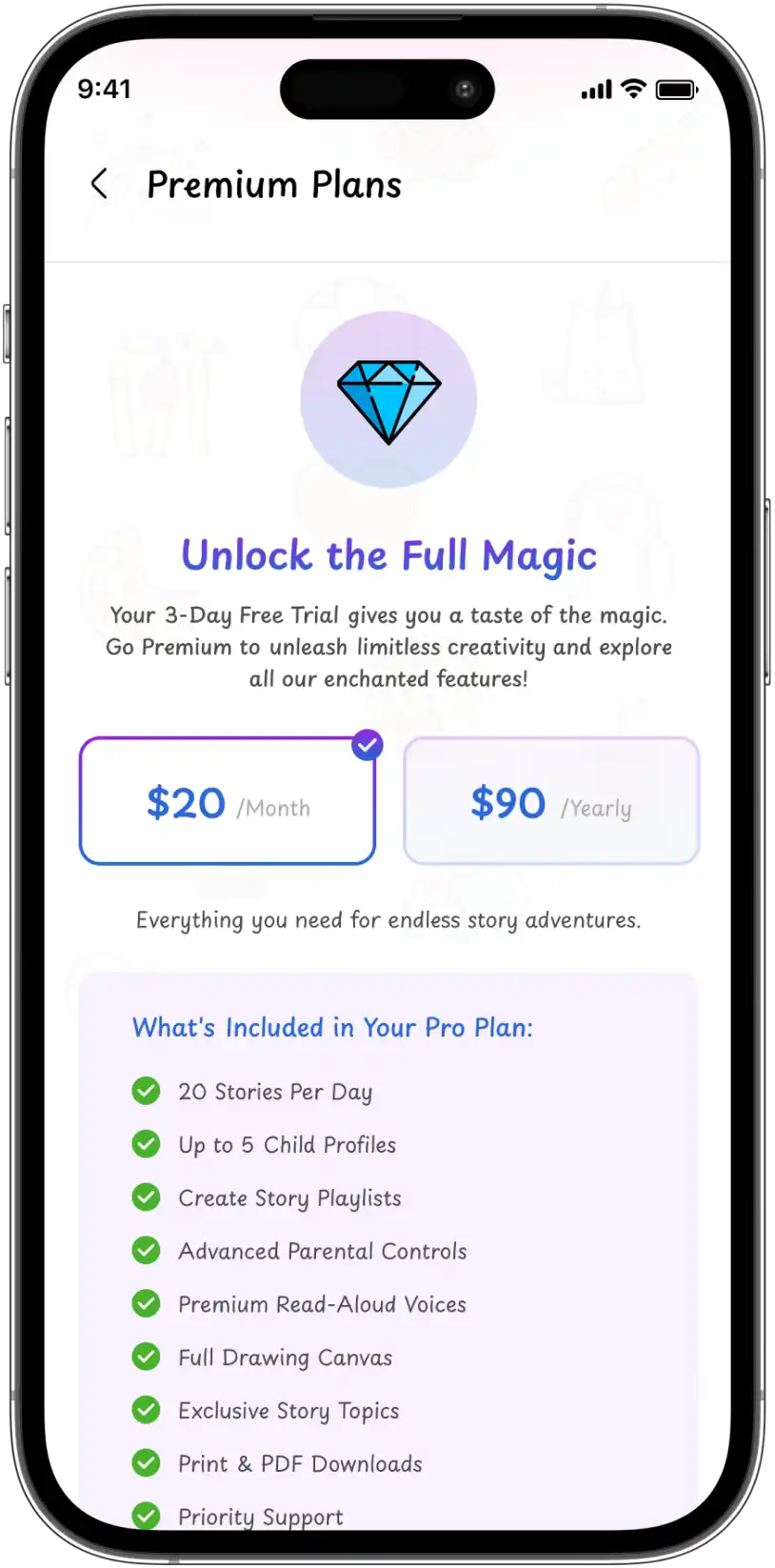
Plan access and product rules connecting AI-powered actions with available usage are managed centrally, keeping subscription behavior consistent across every family account.
Administrative controls needed to operate a live consumer AI product after launch are built in, giving the team what it needs to run EmoTales day to day with confidence.
EmoTales was delivered as a working AI-powered mobile product for iOS and Android. The finished application connects emoji-based creation, AI story generation, narration, translation, child profiles, favorites, streaks, badges and subscription-related usage into one consumer experience that Primocys continues to operate and improve.
Story generation is integrated into a complete consumer application rather than presented as a standalone AI demo.
The same product foundation supports both iOS and Android through Flutter.
Generated stories remain connected to profiles, favorites, narration, translation and progress-related features.
Subscriptions and credit rules are connected to the AI-powered actions that create ongoing product cost.
AI app cost depends on the product around the model. A simple text-generation prototype is very different from a production mobile app with child profiles, narration, translation, subscriptions, gamification, usage controls and an administrative platform.
Prompt orchestration, structured outputs, moderation, model switching and generation history affect the backend scope.
Profiles, libraries, narration, translation, offline behavior and device-level experiences add product work beyond AI generation.
Credits, plan limits, purchases and subscription lifecycle logic introduce additional business rules and testing.
Content review, users, categories, gamification, analytics and support workflows increase the operational platform scope.
Have questions? Learn how EmoTales uses AI to create personalised stories for kids — and how Primocys can build yours too.
Contact Us
Hear from our clients and why 1200+ businesses trust Primocys

"Our B2B and B2C platform helps Nigerian manufacturers sell at wholesale prices and suppliers offer competitive retail pricing, with a strong focus on Made in Africa products and easy local and international distribution. The app has received excellent user reviews for its design and unique features. Communication with the Primocys team was smooth in an agile setup, even beyond office hours when needed. Their mobile app development expertise is excellent—highly professional and reliable."

"The dating app was delivered successfully and approved by both Apple App Store and Google Play. Our users are highly impressed with the design, UI, and overall functionality. The project was well planned with clear milestones, and all modules were delivered on time. The team is talented, patient, and flexible, accommodating multiple scope revisions as requirements evolved. Their 24/7 development and support availability made the entire process smooth and reliable."

" We hired Primocys to develop a highly complex and specialized mobile application, and they delivered outstanding results. The app includes advanced features such as timeline mixers, classifieds, payments, advertisements, GPS functionality, and more. Their technical skills, timely delivery, availability, and the personal attention Arpan Sagar brings to each project truly stand out. The team stays focused and committed from start to finish—an excellent experience overall."

" Great team with excellent communication and a strong commitment to on-time delivery. They developed a fully customized mobile app for both Android and iOS, perfectly matching our requirements. The entire process was smooth and professional, with clear updates at every stage. They are reliable, skilled, and very easy to work with. We’re continuing our partnership on more projects, and choosing them has been one of the best business decisions I’ve made."

AWARDS




TRUSTED BY GLOBAL BRANDS