












Powered by Chatlivo Android App Development Company | 1200+ Apps – Primocys
Primocys Logo

Android App Development Company

We design and build native Android applications in Kotlin and Jetpack Compose — product discovery, UI/UX, backend engineering, Google Play submission, and long-term maintenance — then stay on as the team that maintains and grows them. From phones and tablets to Wear OS, Android TV, Android Auto, and foldables where your product calls for it. You own the source code, the Google Play Console account, and the signing keys — from day one.

Consult Our App Experts
Award 1
Clutch Top
App Development
Company Financial Services
Award 2
Clutch Top
App Development
Company Legal Cannabis 2026
Award 3
Clutch Top
App Development
Company Real Estate
Award 4
Clutch Top
Development
Company India 2022
Award 5
Clutch Top
Flutter Developers
2024
Award 6
Clutch Top
Flutter Developers
2026
Award 7
Clutch Top
Software Developers
Arts Entertainment Music
Award 1
Clutch Top
App Development
Company Financial Services
Award 2
Clutch Top
App Development
Company Legal Cannabis
Award 3
Clutch Top
App Development
Company Real Estate
Award 4
Clutch Top
Development
Company India 2022
Award 5
Clutch Top
Flutter Developers
2024
Award 6
Clutch Top
Flutter Developers
2026
Award 7
Clutch Top
Software Developers
Arts Entertainment Music/div>

End-to-End Android App Development Services

As a full-stack mobile app development company, we handle Android projects end to end — strategy, design, Kotlin development, Google Play submission, and post-launch support — so you’re not coordinating between a design agency, a dev shop, and a maintenance vendor.

Custom Android App Development

Custom Android App Development

Native applications built in Kotlin and Jetpack Compose around your specific business workflows. Includes backend and API integration, Google Play deployment, and an architecture built to be maintained, not just shipped once.

Wear OS App Development

Wear OS App Development

Native Wear OS companion apps — Tiles, complications, and Health Services-connected notifications — built to sync with your Android phone app rather than exist as a separate product.

Android TV App Development

Android TV App Development

10-foot UI experiences built around D-pad navigation, focus management, and media playback for streaming apps and smart-TV catalogs on Android TV and Google TV.

Android Auto Development

Android Auto Development

Android Auto experiences built around Google’s approved in-car templates and interaction rules, with features such as navigation, media, messaging, parking, or charging where supported.

Foldable & Tablet App Development >
<i class=

Foldable & Tablet App Development

Apps optimized for foldable phones and Android tablets using window size classes, multi-window support, and adaptive layouts — not a phone UI stretched across a larger screen.

Android UI/UX Design

Android UI/UX Design

Material 3 design with dynamic color, dark mode, large-screen support, and accessibility considerations including screen-reader compatibility and font scaling.

Android AI & ML Integration >
<i class=

Android AI & ML Integration

On-device AI using Google’s on-device model stack and ML Kit where device and API support exists, plus cloud AI via OpenAI, Anthropic Claude, and Gemini for chatbots, computer vision, and voice. See our broader AI integration services.

Android App Migration & Modernization >
<i class=

Android App Migration & Modernization

Migrate Java to Kotlin and legacy Views/XML to Jetpack Compose where appropriate, modernize architecture, and adopt Coroutines and Flow — scoped against your codebase’s actual size and test coverage.

When Does Native Android Make Sense?

Native Android is particularly valuable when a product depends heavily on Android-specific APIs, Wear OS, Android TV, Android Auto, foldables, background services, deep hardware integration, or platform-specific UX. Flutter or React Native may be a better commercial option when iOS and Android feature parity and shared development are more important than deep Android-specific integration. We build all three and recommend based on your product’s actual requirements — see our broader mobile app development services, or compare with our iOS app development team if you’re weighing platform priority.

Android vs iOS App Development: Which Should you Choose?

Choosing between Android and iOS affects everything — your audience, your revenue model, your tech stack, and your time-to-market. Here’s a transparent comparison of when Android-first makes sense versus when you should also build for iOS or both via Flutter .

Criterion Native Android Native iOS Cross-Platform (Flutter)
Global Market Share ~71% (3B+ devices) ~28% (1.5B+ devices) Both platforms
Best For Markets India, SE Asia, Africa, LATAM US, UK, Australia, Japan Global / dual launch
Revenue Per User Lower (volume play) Higher (premium users) Mixed
Development Language Kotlin / Java Swift / SwiftUI Dart
Device Fragmentation High (test 30+ devices) Low (limited Apple devices) Moderate
App Store Approval Time Hours (Google Play) 1–3 days (Apple) Same as native
Development Cost Similar to iOS Similar to Android 30–40% less than both
Ecosystem Reach Phones, tablets, Wear OS, TV, Auto, foldables iPhone, iPad, Watch, TV, Vision Pro Mobile + Web + Desktop
Best For Industries Mass-market apps, fintech in emerging markets, IoT, automotive Premium B2C, healthcare, productivity MVPs, startups, dual launches
When to Choose ★ Targeting volume markets, Android-first audience, deep system integrations Premium audiences, Apple ecosystem features Tight budget, fast time-to-market

How Much Does Android App Development Cost?

Android cost depends on scope — screens, backend, integrations, device coverage, security, and compliance all move the number. The tiers below are planning guides; every engagement gets a written, itemized estimate after a free discovery call.

Tier 1

Android MVP

Custom estimate based on scope
  • Phone-only, single device class
  • 5–10 core screens with standard authentication and profiles
  • Firebase or Supabase backend
  • One primary user flow
  • Google Play submission included

Best for validating an idea with real users before investing in scale.

Growth Stage Tier 2

Growth-Stage Android Product

Custom estimate based on features and integrations
  • Phone, tablet, and foldable support
  • 15–25 screens with Material 3 UI
  • Google Play, push notifications, and biometric authentication
  • Custom backend with home screen widgets
  • 3 months of post-launch support included

Best for funded startups and SMEs launching a full commercial product.

Tier 3

Enterprise Android Platform

Technical discovery required
  • Phone, with Wear OS and Android TV companions where relevant
  • On-device AI/ML features and a custom microservices backend
  • Compliance engineering (HIPAA, GDPR, PCI-DSS, SOC 2 alignment)
  • SSO, MDM, and enterprise distribution
  • SLA-backed long-term support agreement

Best for enterprises and regulated industries — scoped and quoted after a technical discovery phase.

What Actually Moves the Price

Cost decisions happen in the first two weeks of a project, before most of the code is written. Every factor below is scoped and priced individually during discovery.

Device & Form-Factor Scope

A phone-only app costs less than one that also covers tablets, foldables, Wear OS, or Android TV. Each additional form factor adds design and testing scope, sized during discovery rather than assumed upfront.

Backend Architecture

A managed backend like Firebase keeps early costs minimal. Custom microservices with authentication, payments, and analytics pipelines are a significant, separately scoped investment.

Design Complexity

Templated Material 3 UI ships fast. Custom-illustrated, animation-heavy interfaces add design and engineering time on top of the base build.

External Integrations

Standard integrations like payments, maps, and social login are quick individually. Healthcare or fintech compliance APIs carry more certification and testing overhead.

AI & Real-Time Capabilities

LLM integrations, real-time chat, video calling, and live GPS tracking each add development and ongoing infrastructure cost that scales with usage — modeled before you commit.

Regulatory Requirements

HIPAA, PCI-DSS, SOC 2, and GDPR alignment add architecture and audit work measured in weeks — non-negotiable in regulated industries, and far cheaper designed in than retrofitted.

Android App Development Timeline: How Long Does It Take?

An Android MVP typically reaches Google Play submission in 6–10 weeks; growth-stage products take 3–5 months; enterprise platforms run 6+ months depending on device scope, backend, integrations, and compliance. Discovery, feedback cycles, backend complexity, and QA all affect timing.

Phase MVP Android App Mid-Complexity Enterprise Android
Discovery & Validation 3–5 days 1–2 weeks 3–4 weeks
UI/UX Design (Material 3) 1–2 weeks 3–5 weeks 6–10 weeks
Android Dev (Kotlin / Compose) 2–3 weeks 5–8 weeks 10–14 weeks
Backend & APIs 2–3 weeks 4–8 weeks 10–14 weeks
QA & Firebase Test Lab 1 week 2–3 weeks 4–6 weeks
Google Play Submission 2–3 days 3–5 days 1 week
Total Timeline 5–7 weeks 10–14 weeks 16–22 weeks

Why Startups & Enterprises Trust Our Android Development Team

Eight-plus years, Clutch-recognized Android expertise, and a 100% Upwork Job Success score — these are real, shipped products live on Google Play, several still maintained by our team today, not portfolio filler.

ecofon communication - Primocys Emoji Tale - Primocys Only Singles -Primocys Orbis Elite -Primocys ZIBA Driver -Primocys MatchMums -Primocys apek electronic restoration -Primocys BURPOUT - Primocys WasaaChat - Primocys Prendi iL - Primocys Chat App - Primocys Batpay - Primocys Earnify - Primocys ZIO Gram - Primocys PROHUNTER - Primocys Lika Real Estate - Primocys ZIO Gram - Primocys ecofon communication - Primocys Emoji Tale - Primocys Only Singles -Primocys Orbis Elite -Primocys ZIBA Driver -Primocys MatchMums -Primocys apek electronic restoration -Primocys BURPOUT - Primocys WasaaChat - Primocys Prendi iL - Primocys Chat App - Primocys Batpay - Primocys Earnify - Primocys ZIO Gram - Primocys PROHUNTER - Primocys Lika Real Estate - Primocys ZIO Gram - Primocys
1200+
Platforms, Products, and Enterprise Systems Delivered
150+
Industry Recognitions and Technology Excellence Awards
650+
Enterprises and High-Growth Companies Served Globally
8+
Years Building Enterprise-Grade Systems
50+
Cross-Functional Experts in AI, Cloud & Platform Engineering

Modern Android Features We Build

We build with current Android platform capabilities so your app feels native to the OS today and stays current as Google ships new releases.

01

On-Device AI

Where supported, on-device models like Gemini Nano can reduce latency and keep selected workloads — chat, summarization, smart replies — on the device; cloud models are used when broader reasoning or model capability is required. Device and API support varies.

02

Material You & Dynamic Color

Wallpaper-driven dynamic colors and Material 3 components for an Android experience that feels personalized to each user’s device.

03

Home Screen Widgets & Tiles

Glanceable home screen widgets, Wear OS Tiles, and Quick Settings tiles for real-time updates without opening the app.

04

Predictive Back Gesture

Modern back-navigation animations and custom back handlers for smoother transitions, on devices and OS versions that support the feature.

05

Biometric & Passkey Authentication

Fingerprint and face unlock, passkeys via Credential Manager, Sign in with Google, and Android Keystore-backed secure storage for sensitive data.

06

Google Pay & In-App Billing

Google Pay checkout and Google Play Billing for subscription management, free trials, and promotional offers, built to current Play policy.

07

Health Connect & Wearables

Health Connect for unified health data, plus Wear OS Health Services for heart rate and fitness tracking across supported watches.

08

AR & Camera APIs

ARCore for augmented reality, CameraX for advanced camera features, and ML Kit for real-time image and pose detection.

Android App Development Across Key Industries

Android’s device breadth and platform depth make it a particularly strong fit in these categories.

Social Media & Content Social Media & Content
On-Demand Application On-Demand Application
Local Business & Directory Local Business & Directory
Automotive & Fleet Management Automotive & Fleet Management
Real Estate Real Estate
Education Education
Healthcare & Fitness Healthcare & Fitness
Ecommerce & Shopping Ecommerce & Shopping
Banking & Finance Banking & Finance
Food & Restaurant Food & Restaurant
Media & Social Media & Social
Hotel Booking Hotel Booking
Sports & Fantasy Gaming Sports & Fantasy Gaming

Our Android App Development Process

Agile Scrum, two-week sprints, regular demos, and testable builds throughout development — so progress is something you can review and experience, not just read about.

Discovery & Validation

What We Do:

We audit your business goals, target users, and competitor apps, then run a feasibility pass on your Android concept before any code is written.

What you get:

A validated concept, defined scope document, and a signed SOW with a fixed price and timeline — typically within 5–7 days.

Strategy & Planning

What We Do:

We lock the tech stack (Kotlin, Jetpack Compose, backend choice), break features into sprints, and map dependencies to a real delivery calendar.

What you get:

A sprint-by-sprint roadmap with named milestones, resource allocation, and a timeline you can hold us to.

UI/UX Design

What We Do:

Our designers build wireframes and clickable Figma prototypes using Material 3, tested against real user flows before development starts.

What you get:

A full clickable prototype you can test and sign off on, so nothing gets built on unvalidated screens.

Development

What We Do:

We build in Kotlin with Jetpack Compose, wire up your backend and APIs, and push code through weekly sprint demos so you see progress live.

What you get:

Working builds you can test every sprint, clean version-controlled code, and full visibility — no black-box development.

Quality Assurance

What We Do:

We run functional, performance, and security testing across our device matrix, plus regression passes before every release candidate.

What you get:

A bug-tracked QA report and a release candidate tested across your target devices — not just the one it was built on.

Deployment & Support

What We Do:

We handle Play Store submission and policy compliance, configure production servers, and monitor crash and performance data post-launch.

What you get:

A live app on the Play Store, plus a defined support window for fixes, updates, and monitoring after launch.

Modern Android App Development Tech Stack

Google’s modern Android toolchain paired with battle-tested architecture patterns — chosen to keep the app fast in production and easy to maintain as Android evolves, so you’re never stuck maintaining a stack no other developer can pick up.

Languages & UI

  • Kotlin
  • Jetpack Compose
  • Views/XML
  • Java

Android Jetpack

  • ViewModel
  • Flow
  • WorkManager
  • Navigation Component

Data & Storage

  • Room
  • DataStore
  • Android Keystore
  • Firebase

AI & ML on Android

  • Google On-Device AI
  • ML Kit
  • Cloud AI APIs

Networking & APIs

  • Retrofit
  • OkHttp
  • Ktor
  • GraphQL
  • WebSockets

Architecture & Patterns

  • Clean Architecture
  • MVVM / MVI
  • Repository Pattern
  • Gradle Version Catalogs

Testing & QA

  • JUnit / Kotest
  • Compose/UI Testing
  • Firebase Test Lab
  • Crash Reporting

CI/CD & DevOps

  • GitHub Actions
  • Fastlane
  • Google Play Console

Android Engagement Models

Four ways to bring our Android team onto your project — pick the one that matches how defined your scope is.

Fixed-Price Project

  • Best for: Clearly defined scope — MVPs and well-specified builds
  • Billing: Milestone-based, against an itemized quote confirmed after discovery
  • Your involvement: Sprint demos and milestone approvals
  • Flexibility: Change requests quoted and approved in writing before build; timeline is confirmed once scope is fixed, not before

Time & Material

  • Best for: Exploratory work where scope will evolve
  • Billing: Hourly with transparent time logs, invoiced weekly
  • Your involvement: Sprint-by-sprint prioritization
  • Flexibility: Highest — adjust scope and team size each sprint

Staff Augmentation / Hire Android Developers

  • Best for: In-house teams missing Android-specific skills
  • Billing: Monthly per developer
  • Your involvement: Full — they join your processes, attend your standups, and report to your manager
  • Flexibility: Add vetted Kotlin developers on demand

Why Choose Primocys as Your Android App Development Company

As specialists within the broader mobile app development practice, we know when Android-first makes sense and when to ship both Android and iOS via Flutter. Here’s what that means in practice:

Book a Discovery Call arrow
01

Native Kotlin & Jetpack Compose Expertise

Projects are built in Kotlin and Jetpack Compose by engineers who work directly with Android’s current libraries and Compose features rather than legacy View-based patterns carried over unnecessarily.

02

Direct Access to Experienced Engineers

Projects are led by experienced Android engineers who work directly with clients throughout discovery, implementation, and release — not through an account layer.

03

Multi-Device Android Experience

Phones, tablets, Wear OS, Android TV, and foldables — we build for the form factor your product actually needs, not just the phone screen.

04

Product Discovery Before Development

Every engagement starts with discovery that produces scope, flows, and an architecture recommendation you own — so budget goes to a validated plan, not assumptions.

05

Google Play Submission Support

Our team prepares Google Play listings, app signing, Data Safety disclosures, policy requirements, and release artifacts, and helps address review feedback. Final approval and review timing are controlled by Google.
06

Source Code & IP Ownership

Source code, designs, and agreed intellectual property are transferred according to the project contract. Wherever practical, your Google Play Console account, signing configuration, and repositories remain under your ownership from the start.

07

Transparent Project Reporting

Weekly demos, a shared project board, and milestone-based billing. When something takes longer than planned, you hear it from us first — with a revised plan, not an excuse.
08

Long-Term Android Maintenance & Modernization

Annual Android OS upgrades, Kotlin and Gradle migrations, and dependency updates handled on an ongoing basis, plus takeovers of existing codebases starting with an honest audit before quoting anything.
Android App Development Client Reviews & Testimonials

Real feedback from founders and CTOs who’ve shipped Android apps with us — read the full, unedited reviews on Clutch (16 reviews), Google (30+ reviews), and Upwork (100% Job Success).

Our Client
Reviews

Adegbuyi Oduguwa Gregor Skerl Revanth K Dorian Çoçka

Customer experiences that speak for themselves

Contact Us arrow

Our B2B and B2C platform helps Nigerian manufacturers sell at wholesale prices and suppliers offer competitive retail pricing, with a strong focus on Made in Africa products and easy local and international distribution. The app has received excellent user reviews for its design and unique features. Communication with the Primocys team was smooth in an agile setup, even beyond office hours when needed. Their mobile app development expertise is excellent—highly professional and reliable.

We hired Primocys to develop a highly complex and specialized mobile application, and they delivered outstanding results. The app includes advanced features such as timeline mixers, classifieds, payments, advertisements, GPS functionality, and more. Their technical skills, timely delivery, availability, and the personal attention Arpan Sagar brings to each project truly stand out. The team stays focused and committed from start to finish—an excellent experience overall.

”

The dating app was delivered successfully and approved by both Apple App Store and Google Play. Our users are highly impressed with the design, UI, and overall functionality. The project was well planned with clear milestones, and all modules were delivered on time. The team is talented, patient, and flexible, accommodating multiple scope revisions as requirements evolved. Their 24/7 development and support availability made the entire process smooth and reliable.

Great team with excellent communication and a strong commitment to on-time delivery. They developed a fully customized mobile app for both Android and iOS, perfectly matching our requirements. The entire process was smooth and professional, with clear updates at every stage. They are reliable, skilled, and very easy to work with. We’re continuing our partnership on more projects, and choosing them has been one of the best business decisions I’ve made.

From Idea to Launch — Google Play Case Studies

The products below reached Google Play through our team’s product engineering, though built on Flutter rather than native Kotlin — shown here as evidence of successful Google Play delivery, not native Android architecture.

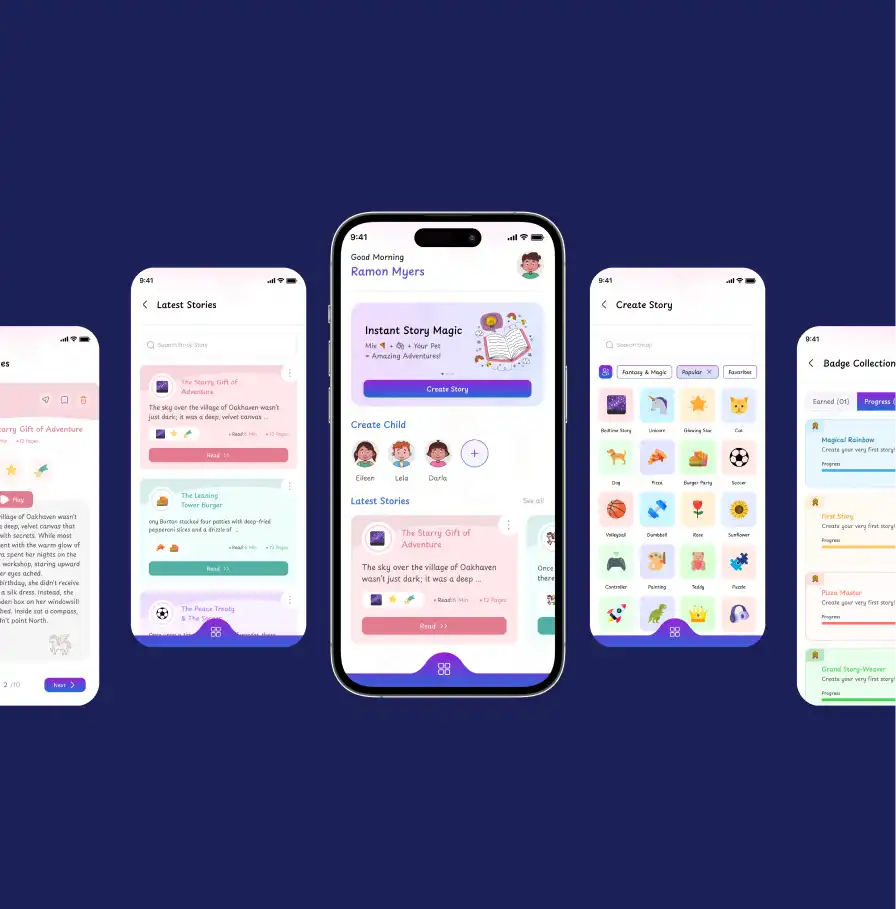
AI Development • Mobile App Development • Kids Education

AI Story Generator for Kids (EmoTales)

500K+ Stories

Generated by Kids Worldwide

60 Sec Story

AI Creation Time

AI-Powered

Instant Story Personalization

Cross-Platform

iOS & Android Ready

AI bedtime stories
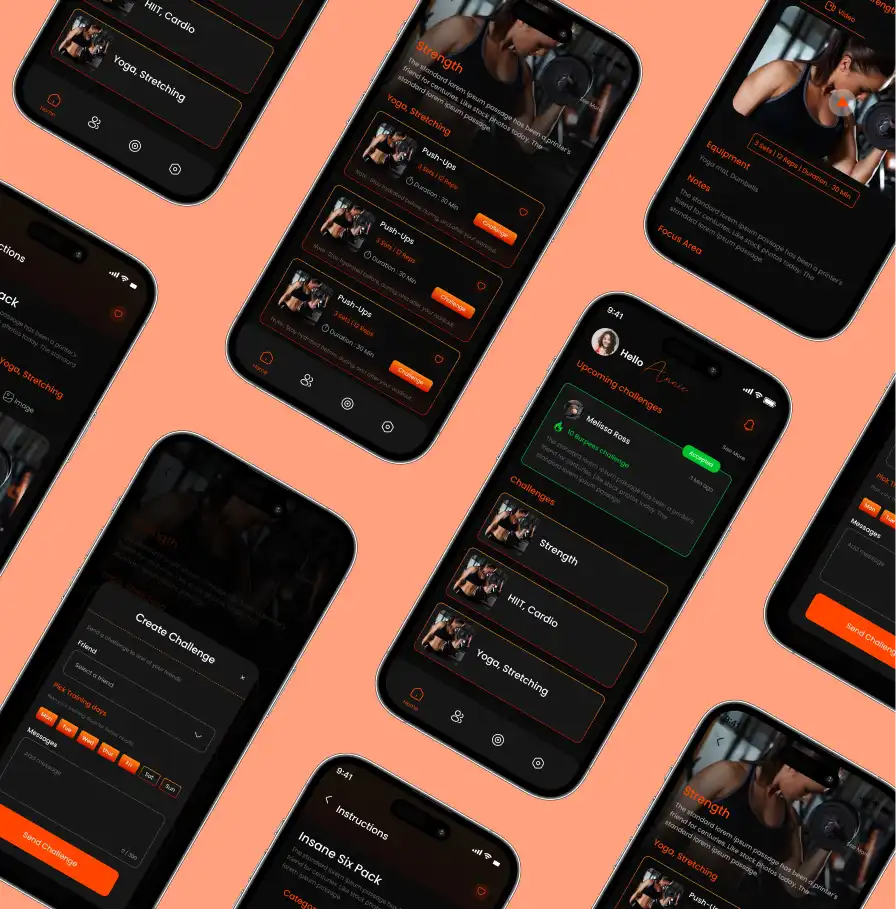
Fitness App Development • Mobile App Development • Health & Wellness

AI-Powered Fitness Coaching App (Burpout)

25K+ Workouts

Completed by Users

30 Sec Plan

AI Generation Time

AI-Powered

Smart Coaching Engine

Cross-Platform

iOS & Android Ready

mobile fitness app

How Android Apps Drive Business Growth

Android’s reach and platform depth change how a business connects with customers. Here’s what that means in practice.

Benefits of Mobile App Development

Better Customer Engagement

  • Firebase Cloud Messaging push notifications, personalized offers, and in-app messaging keep customers coming back to your app instead of a browser tab.
  • Home screen widgets and quick-access features put your brand a single tap away, without needing the app to be open.

Improved Business Efficiency

  • WorkManager-driven background jobs and API integrations automate workflows that your team currently does manually.
  • Real-time data sync with your existing systems means decisions get made on current numbers, not yesterday’s spreadsheet.

Stronger Brand Visibility

  • A Material 3 app with your brand’s design language sits on the user’s home screen — visibility no website or social page gives you.
  • Consistent UI, fast load times, and a bug-free release build the trust that turns first-time users into repeat ones.

Scalable & High-Performance Solutions

  • Clean Architecture and a modular Kotlin codebase mean new features ship without rewriting what’s already live.
  • Cloud backends built to autoscale handle traffic spikes — launch day or a viral moment — without the app slowing down.

Ready to ship an Android app that scales?

Get a free 30-minute consultation with a senior Android architect. We’ll review your idea, propose a tech stack, and give you a fixed price + timeline within 24 hours.

Book a Free Strategy Call →

Advanced Technologies We Integrate Into Your Android App

Every technology below is chosen to solve a specific business problem, matched to your product’s actual requirements.

Real-Time Features & Live Data

WebSockets, Socket.io, and Firebase Realtime Database power live chat, real-time notifications, live tracking, and instant data sync.

Blockchain & Secure Transactions

Where a use case genuinely requires decentralized trust or immutable records, we integrate blockchain via Ethereum, Solana, or Hyperledger.

AR & Immersive Experiences

ARCore-based augmented reality for virtual try-ons, 3D product viewers, and interactive real estate tours.

AI & Machine Learning

On-device ML models and ML Kit for image recognition, natural language processing, recommendation engines, and predictive analytics.

IoT & Hardware Connectivity

Bluetooth, BLE, Wi-Fi Direct, and MQTT protocols connecting Android apps to smart home devices, wearables, and industrial sensor dashboards.

Cloud Infrastructure & Scalability

Android backends on AWS, Google Cloud, or Firebase, sized and engineered around expected traffic, availability requirements, and growth plans.

Need Assistance? We’re Here to Help

Get expert guidance and support for your project. Our team is ready to help you succeed.

Contact Us arrow

Frequently Asked Questions About Android App Development

The questions we hear from serious buyers every week. Don’t see yours? Ask us directly .

What Android app development services does Primocys provide?

Full-cycle Android development: custom app development, UI/UX design, Wear OS and Android TV companion apps, Android Auto integration, foldable and tablet support, AI integration, enterprise Android development, app migration and modernization, and ongoing maintenance — as part of our broader mobile development services.

How much does Android app development cost?

It depends on scope: screen count, business workflows, backend architecture, API integrations, device scope (phone, tablet, foldable, Wear OS, Android TV, Android Auto), payments, real-time functionality, AI, security, and compliance. An Android MVP, a growth-stage product, and an enterprise Android platform sit at distinctly different price points — the tiers on this page show what each typically includes. After a free discovery call you receive an itemized quote.

How long does it take to build an Android app?

An Android MVP typically takes 6–10 weeks from kickoff to Google Play submission, a growth-stage product 3–5 months, and an enterprise platform 6+ months depending on device scope, backend, integrations, and compliance. Google Play review timing is controlled by Google.

When should I choose native Android development?

Native Android is particularly valuable when a product depends heavily on Android-specific APIs, Wear OS, Android TV, Android Auto, foldables, background services, deep hardware integration, or platform-specific UX. Flutter or React Native may be a better commercial option when iOS and Android feature parity and shared development are more important than deep Android-specific integration.

Should I choose Kotlin or Flutter for my app?

Native Kotlin makes sense when you need deep Android-specific integrations — Android Auto, Wear OS, custom system services — or the latest Android APIs the day they ship. Flutter makes sense when shipping to iOS and Android simultaneously matters more than platform-specific edge cases. We build both and recommend based on your product’s actual requirements.

Can you build apps for Wear OS, Android TV, and Android Auto?

Yes. We build for Wear OS smartwatches (Tiles, complications, and Health Services), Android TV (10-foot UI with D-pad navigation and media playback), and Android Auto (templated in-car apps built to Google’s approved interaction rules). Companion experiences are scoped to sync with your core Android phone app.

Can AI be integrated into an Android app?

Yes. Where supported, we use on-device models like Gemini Nano and ML Kit to reduce latency on selected workloads, and integrate cloud LLMs — OpenAI, Anthropic Claude, and Google Gemini — for chatbots, content generation, and more complex reasoning. On-device model availability varies by device, OS version, and API, and we scope accordingly.

Can Primocys modernize an existing Java Android app?

Yes. We modernize legacy Android apps including Java to Kotlin migration, XML layouts to Jetpack Compose where appropriate, AsyncTask to Coroutines, and MVC to MVVM or MVI architecture. Migration timelines depend on codebase size, test coverage, and dependencies — we scope this with a code audit before quoting.

Do you handle Google Play submission?

Yes. Our team prepares Google Play listings, app signing, Data Safety disclosures, policy requirements, and release artifacts, and helps address review feedback. Final approval and review timing are controlled by Google.

Who owns the Android source code and Play Console account?

You do. Source code, designs, and agreed IP transfer to you under contract, developed in your own private GitHub or GitLab repository from day one. Wherever practical, your Google Play Console account, signing configuration, and repositories remain under your ownership from the start, rather than being handed over later.

Do you provide long-term Android maintenance?

Yes. Growth-stage and enterprise projects can include a post-launch support window, and clients can continue with an ongoing maintenance plan covering Android OS upgrades, Kotlin and Gradle migrations, dependency updates, bug fixes, and performance monitoring.

How do I get an Android app estimate?

Use our app cost calculator for an instant ballpark, or book a free consultation to speak with a senior Android engineer. You’ll receive a written, itemized proposal covering scope, recommended architecture, estimated cost, and timeline — no obligation.

Our Latest ARTICLE

Explore More arrow

Services to help businesses establish and enhance their online presence.

Let’s Talk Business

Email Address:

[email protected]

Contact Number:

+91-9879595948

Contact Number:

+91-9824614016

Follow Us:

Choose files
✅ Your message has been sent successfully!
Talk to an Expert