Excel used as an operational database, with formulas nobody wants to touch.
01
 DapkeSocial video app with live streaming and PK battles.
 Lika Real EstateProperty discovery platform for listings and leads.
 BurpoutSocial fitness challenges that keep people moving.
 ChatLivoConnected customer communication SaaS workspace.
 EmoTalesAI storytelling adventures designed for children.
 EarnifyTrack Income from Multiple Sources with Analytics & Tax Planning.
Build custom Microsoft Power Apps around your real workflows, users, data, and permissions. Primocys helps businesses replace spreadsheets, modernize internal tools, and improve existing apps with scalable Power Apps built for reliable daily use.
Discuss My Power Apps Project




This is where a focused business application can make more sense than adding another spreadsheet, form, or disconnected tool.
From quick canvas apps to structured, Dataverse-backed systems, here’s where we focus our Power Apps development — built around your actual process, not a generic template.
Applications designed around your specific process, not a generic template stretched to fit.
Flexible, custom-designed interfaces for operational, field, or process-specific apps.
Structured, data-first applications built on Dataverse for record-heavy business processes.
Applications built on a proper data model, with relationships, security roles, and business rules.
Refactoring, performance fixes, and UX improvement for apps that already exist but need real engineering.
Connecting your Power App to SharePoint, SQL, existing APIs, and other business systems.
Canvas Apps give you control over layout and user experience, which matters for operational apps, inspection apps, field apps, request forms, employee applications, and dashboards that combine multiple data sources.
Full layouts designed for larger screens and detailed operational workflows.
Adjusted layouts that hold up for field and inspection use on mid-sized screens.
Purpose-built mobile layouts, not a shrunk-down desktop screen.
Model-driven apps are particularly appropriate when the experience is driven by structured business data, forms, views, and processes — case management, CRM-style applications, service operations, request tracking, asset management, compliance workflows, and relationship-heavy business data.
Model-driven apps start with the data model, not the screen — the structure comes first, and the interface follows from it.
Common Power Apps use cases — not client case studies, illustrative examples of what the platform is genuinely good at.
The right choice depends on how structured your data is, how much UX flexibility you need, and whether your solution combines both approaches.
Custom interface, flexible layouts, mobile-focused experiences, multiple data sources, process-specific UX.
Data-first architecture, structured records, relationships, forms/views, Dataverse-centric business processes.
Some solutions combine model-driven capabilities with custom pages or other Power Platform components where appropriate.
The focus stays practical: the Power App needs access to this system.
 Microsoft 365
 SharePoint
 Teams
Teams Outlook
 Excel
Excel SQL
SQL Dataverse
 REST APIs
 ERP / CRM Systems
Standard connectors cover most common integrations; custom integration work is scoped when a system isn’t adequately covered by one.
Power Apps handles the user experience; Power Automate can handle the workflow and orchestration when the app needs approvals, notifications, record updates, document actions, or scheduled processes.
This page stays focused on the app itself — for deeper workflow-automation architecture, see Microsoft Power Platform Development Services.
From startups to global enterprises, Primocys delivers innovative technology solutions with strategic clarity, strong governance, and measurable business results.

















Common starting points: an internal prototype, a citizen-developed app, AI-generated formulas, a slow Canvas App, difficult Power Fx, broken flows, poor data architecture, permission issues, an app built directly in production, difficult deployment, unfinished integration, or poor mobile/responsive UX.
We fix what’s broken, not start from zero.
Real engineering for apps we didn’t originally build.
Assess data structure, relationships, and app design decisions.
Clean up difficult formulas, including AI-generated Power Fx.
Fix poor mobile/responsive UX and clunky screens.
Resolve poor data architecture and permission issues.
Diagnose and fix a slow Canvas App or broken flows.
Finish unfinished integration work with existing systems.
Fix permission issues and apps built directly in production.
Simplify difficult deployment and support long-term development.
Low-code doesn’t mean UX should be an afterthought. We don’t promise unrealistic performance — data query behavior and delegation limits are real constraints we plan around, not ignore.
Talk to Our Power Platform Team
designing screens that adapt cleanly instead of stretching a fixed layout across devices.
clear input rules, inline validation, and forms that guide users instead of confusing them.
intuitive screen flow with proper loading and progress indicators throughout the app.
error handling that tells users what went wrong and how to fix it, not a generic failure.
working within delegation limits so apps stay reliable as data volume grows.
shared components and patterns that keep the app consistent and easier to maintain.
touch-friendly interfaces built for real mobile and tablet use, not a shrunk desktop screen.
readable contrast, keyboard navigation, and screen-reader friendly components where it matters.
Microsoft Entra ID, Dataverse security roles, app sharing, record/data access, environment permissions, connector access, and least-privilege thinking from the start.
Who should be allowed to use the app? Who should see which specific records?
Who can edit records, and who has final approval authority over changes?
Which systems can the app connect to? Who owns the application after launch?
Power Apps does not automatically make an application compliant — security and governance are configured around your specific tenant, licensing, and data requirements.
Our Power Apps development process turns business processes into reliable, production-ready applications that reduce manual work, improve data accuracy, and scale with your organization.
For existing Power Apps, the process is: audit → performance and architecture review → improvement plan → implementation → regression testing → production redeployment.
See how businesses use Power Apps, Power Automate, and Dataverse to streamline operations, automate workflows, and achieve measurable business results.
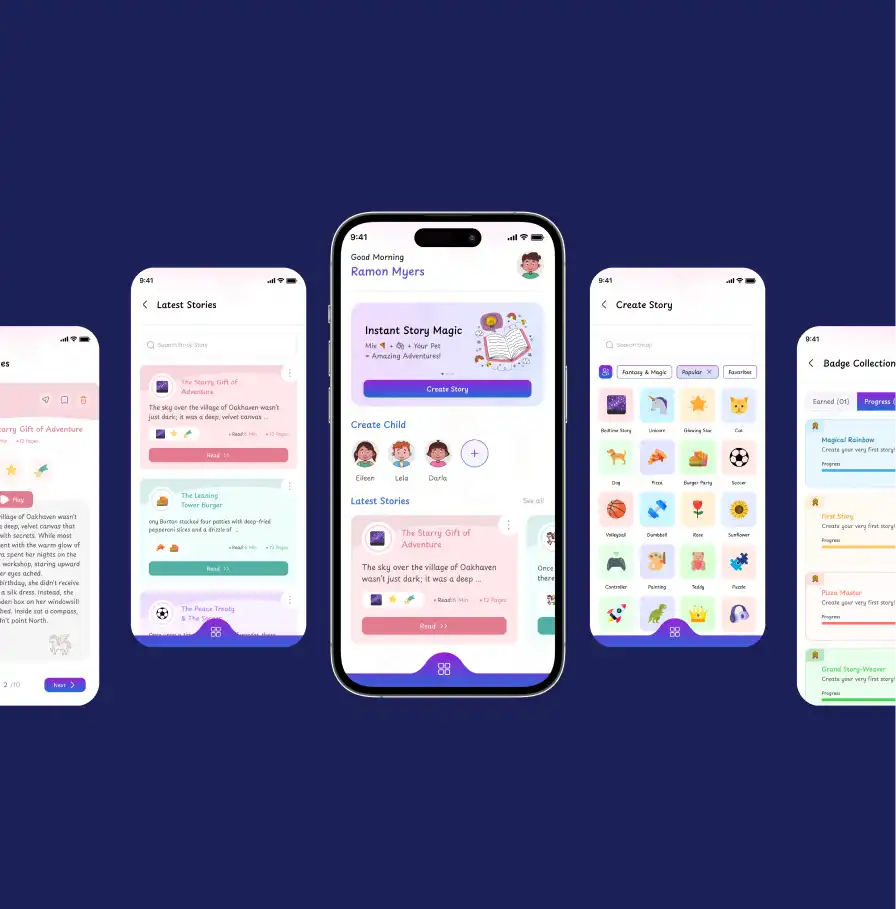
Generated by Kids Worldwide
AI Creation Time
Instant Story Personalization
iOS & Android Ready
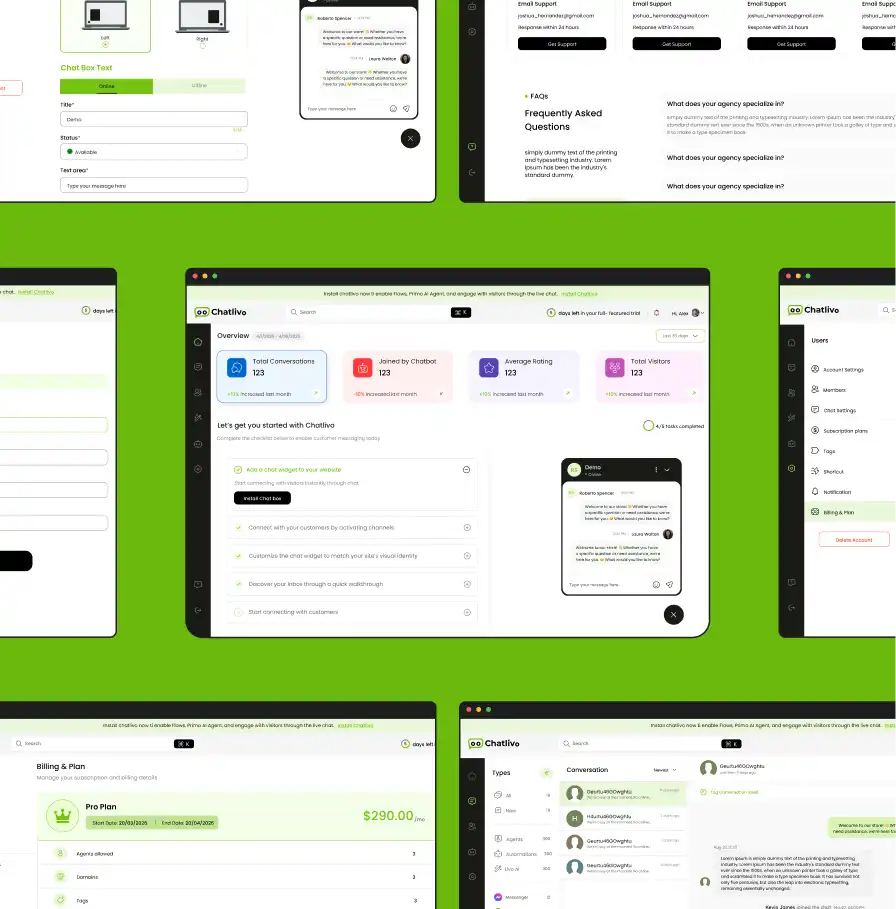
Automated Lead Engagement
Multi-Flow Chatbot Automation
Live Chat & Handoff
Built & Run by Primocys
Microsoft currently recommends at minimum development and production environments for healthy ALM, and at least development, test, and production for new projects.
Power Platform solutions, environment variables, connection references, managed deployments where appropriate, and source control/CI-CD where project complexity warrants it — scoped to what the specific app needs, not a generic pipeline applied to every project.
From finance to healthcare, we build Power Platform solutions that automate workflows, unify business data, and help teams work smarter and scale faster.
 Photo & Video Sharing App
 On-Demand Application
 Business Listing App
 Automotive
 Real Estate
 Education
 Healthcare & Fitness
 Ecommerce & Shopping
 Banking & Finance
 Food & Restaurant
Media & Social
Food & Restaurant
Media & Social
 Hotel Booking
 Sports
The application is primarily internal, the organization already uses the Microsoft ecosystem, the business process is structured, rapid business app delivery matters, and available connectors/data architecture fit the requirements.
The public/customer-facing product is complex, highly specialized UX is essential, very high performance/scale requirements exist, deep platform independence is required, or licensing economics don’t make sense. See Custom Software Development →
We’ll recommend the architecture that fits the application rather than forcing every project into Power Apps.




Our B2B and B2C platform helps Nigerian manufacturers sell at wholesale prices and suppliers offer competitive retail pricing, with a strong focus on Made in Africa products and easy local and international distribution. The app has received excellent user reviews for its design and unique features. Communication with the Primocys team was smooth in an agile setup, even beyond office hours when needed. Their mobile app development expertise is excellent—highly professional and reliable.
We hired Primocys to develop a highly complex and specialized mobile application, and they delivered outstanding results. The app includes advanced features such as timeline mixers, classifieds, payments, advertisements, GPS functionality, and more. Their technical skills, timely delivery, availability, and the personal attention Arpan Sagar brings to each project truly stand out. The team stays focused and committed from start to finish—an excellent experience overall.
The dating app was delivered successfully and approved by both Apple App Store and Google Play. Our users are highly impressed with the design, UI, and overall functionality. The project was well planned with clear milestones, and all modules were delivered on time. The team is talented, patient, and flexible, accommodating multiple scope revisions as requirements evolved. Their 24/7 development and support availability made the entire process smooth and reliable.
Great team with excellent communication and a strong commitment to on-time delivery. They developed a fully customized mobile app for both Android and iOS, perfectly matching our requirements. The entire process was smooth and professional, with clear updates at every stage. They are reliable, skilled, and very easy to work with. We’re continuing our partnership on more projects, and choosing them has been one of the best business decisions I’ve made.
Primocys works across both Microsoft low-code and custom software/API engineering. That matters when a Power App eventually needs custom APIs, backend services, complex integrations, external systems, middleware, or custom business logic that low-code alone doesn’t cover.
Also available: Ongoing Support & Maintenance. Note: Primocys is not claiming Microsoft Partner status or Power Apps certifications unless separately verified and confirmed.
Have a project in mind? Get straight answers on our Power Apps process, architecture choices, timelines, and pricing — then book a free discovery call .
Share your business challenges and goals. Our Power Platform experts will recommend the right apps, automations, and data solutions to improve efficiency and accelerate growth.
Discuss My Power Apps Project →
Services to help businesses establish and enhance their online presence.
Contact Us
Hear from our clients and why 1200+ businesses trust Primocys

"Our B2B and B2C platform helps Nigerian manufacturers sell at wholesale prices and suppliers offer competitive retail pricing, with a strong focus on Made in Africa products and easy local and international distribution. The app has received excellent user reviews for its design and unique features. Communication with the Primocys team was smooth in an agile setup, even beyond office hours when needed. Their mobile app development expertise is excellent—highly professional and reliable."
"The dating app was delivered successfully and approved by both Apple App Store and Google Play. Our users are highly impressed with the design, UI, and overall functionality. The project was well planned with clear milestones, and all modules were delivered on time. The team is talented, patient, and flexible, accommodating multiple scope revisions as requirements evolved. Their 24/7 development and support availability made the entire process smooth and reliable."
" We hired Primocys to develop a highly complex and specialized mobile application, and they delivered outstanding results. The app includes advanced features such as timeline mixers, classifieds, payments, advertisements, GPS functionality, and more. Their technical skills, timely delivery, availability, and the personal attention Arpan Sagar brings to each project truly stand out. The team stays focused and committed from start to finish—an excellent experience overall."
" Great team with excellent communication and a strong commitment to on-time delivery. They developed a fully customized mobile app for both Android and iOS, perfectly matching our requirements. The entire process was smooth and professional, with clear updates at every stage. They are reliable, skilled, and very easy to work with. We’re continuing our partnership on more projects, and choosing them has been one of the best business decisions I’ve made."
AWARDS
TRUSTED BY GLOBAL BRANDS