Founded in
2018
Since 2018, Primocys has built SaaS platforms, mobile apps, backend systems, APIs, and AI-powered products. That experience gives us the engineering foundation to build complete AI agent systems from idea to production.
 DapkeSocial video app with live streaming and PK battles.
 Lika Real EstateProperty discovery platform for listings and leads.
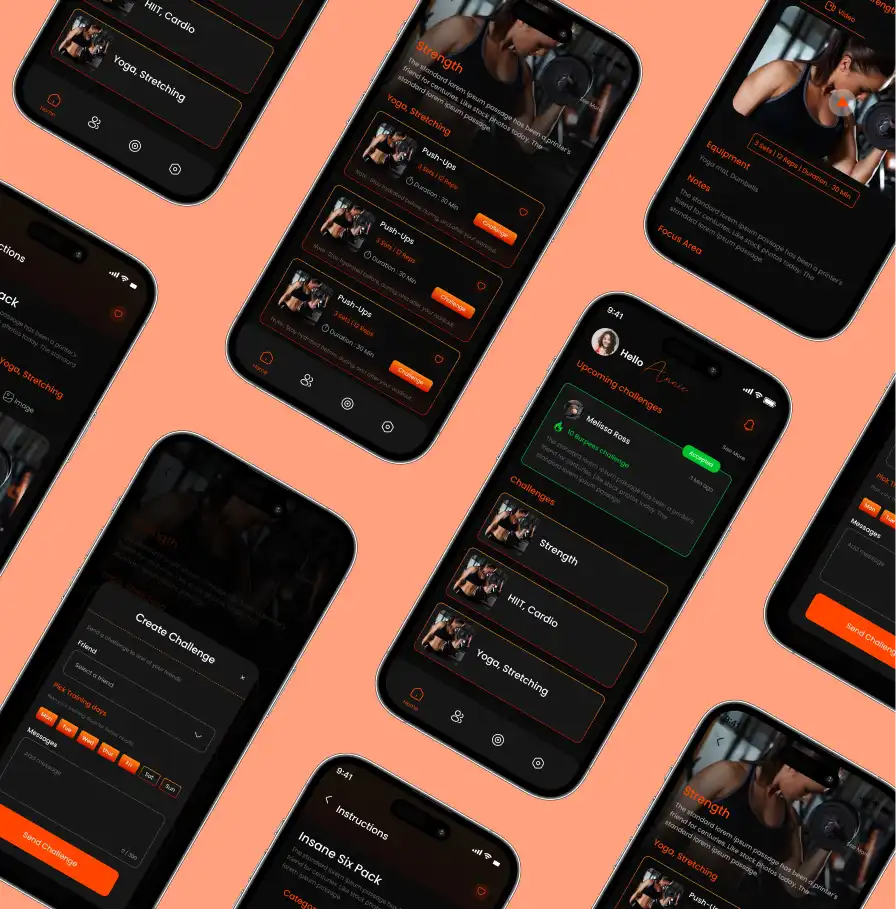
 BurpoutSocial fitness challenges that keep people moving.
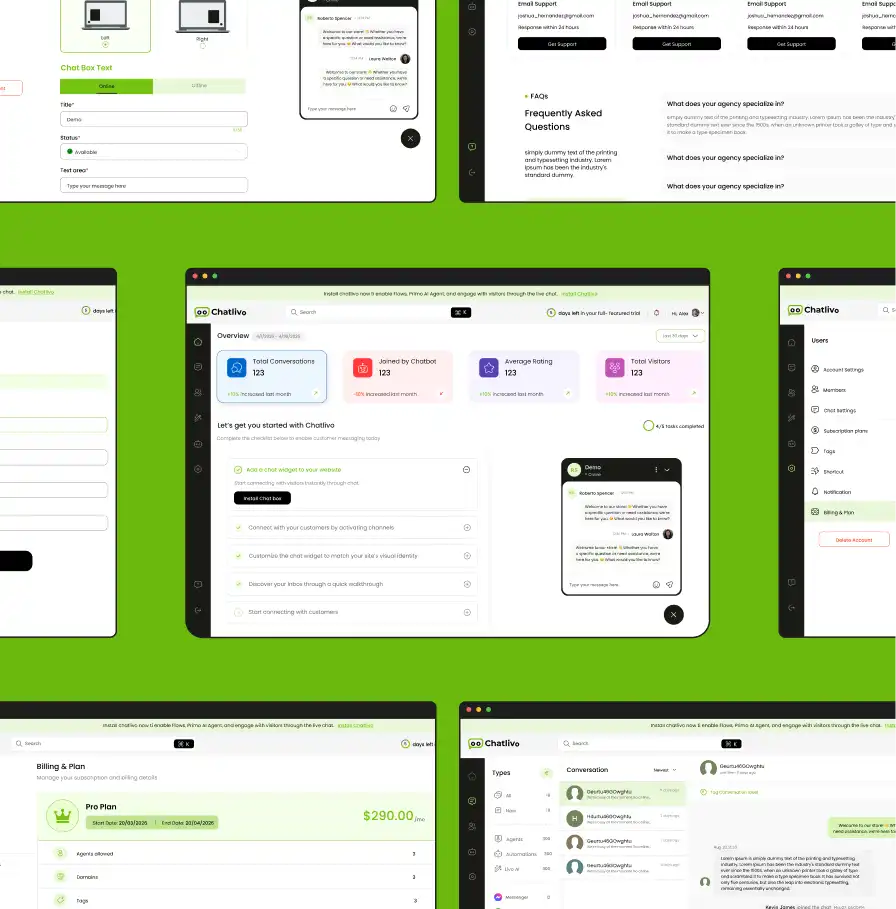
 ChatLivoConnected customer communication SaaS workspace.
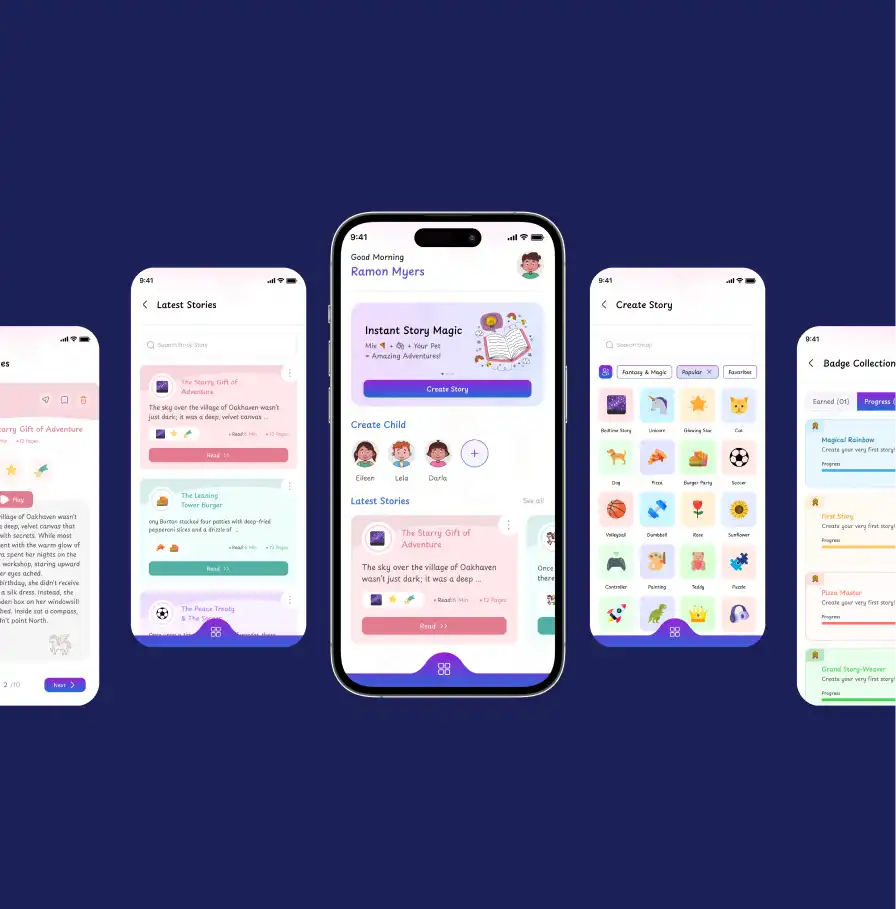
 EmoTalesAI storytelling adventures designed for children.
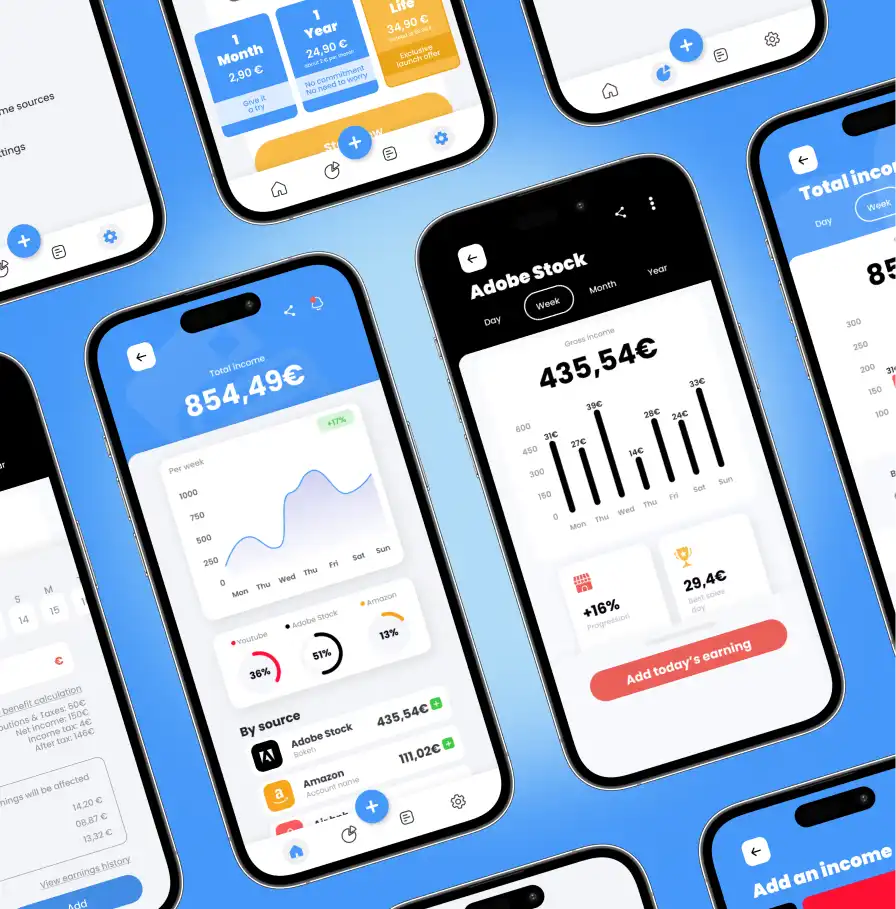
 EarnifyTrack Income from Multiple Sources with Analytics & Tax Planning.
Primocys designs and develops custom AI agents for business workflows that need more than a chatbot response. We engineer planning logic, tool integrations, memory and state management, knowledge retrieval, business systems, permission controls, approval workflows, evaluation, and production infrastructure—so AI agents can reliably complete real work, not just generate answers.



Building an AI agent takes more than choosing an LLM. These engineering capabilities make AI agents reliable, secure, and production-ready—from planning logic and tool integrations to memory, permissions, evaluation, and orchestration for real business workflows.
Designing multi-step execution paths where the agent can interpret a goal, maintain workflow state, decide what should happen next and stop when completion criteria are met.
Connecting agents to approved APIs, databases and business systems through structured tools with validated inputs, typed outputs, retry rules and explicit action boundaries.
Separating session context, durable workflow state and retrieved business knowledge so the agent remembers what matters without carrying unnecessary or unauthorized information forward.
Designing read/write permissions, role-aware access and approval gates around higher-impact actions such as sending messages, changing records, issuing refunds or triggering downstream workflows.
Testing task completion, tool selection, retrieval quality and failure scenarios with traces, logs, representative evaluation sets, retry policies and clear fallbacks for uncertain outputs.
Choosing when one agent is enough, when specialist components should coordinate, and which model or deterministic step should handle each part of a workflow based on quality, latency and cost.
Building AI agents requires more than prompting an LLM. Our team combines AI engineering, backend systems, integrations, deployment, and production operations to deliver AI agents that work reliably in real business environments.
2018
Since 2018, Primocys has built SaaS platforms, mobile apps, backend systems, APIs, and AI-powered products. That experience gives us the engineering foundation to build complete AI agent systems from idea to production.
We build and operate our own AI products—not just client projects. That gives our engineers real production experience with AI agents, subscriptions, knowledge retrieval, workflows, permissions, and continuous product operations.

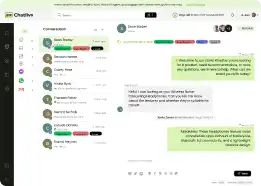
AI Customer Support Agent for Businesses

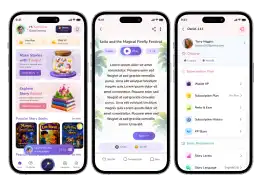
AI Storytelling & Learning Companion
One engineering team delivers the complete AI agent stack—from LLM orchestration and backend APIs to frontend applications, cloud deployment, business integrations, and production monitoring.
Every AI agent project follows a structured delivery process—from discovery and workflow design to knowledge integration, evaluation, production deployment, monitoring, and continuous improvement based on real business usage.
We build, deploy, and manage production-ready AI agents for customer support, workflow automation, and business operations that deliver real results.

















These are the commercial services a client can engage Primocys for. Each service can use the core agent capabilities above, but the final architecture depends on the workflow, systems, permissions and level of autonomy required.
01
Purpose-built agents designed around a specific business workflow, including orchestration, tools, state, permissions, evaluation and deployment.
02
Agents that coordinate multi-step operational work across internal systems while routing exceptions and approval-required actions to humans.
03
Support agents that use approved business knowledge, retrieve account information through allowed tools and hand conversations to human teams when needed.
04
Agents for lead research, enrichment, qualification support, CRM preparation, follow-up drafting and other controlled revenue workflows.
05
Agents that combine private knowledge retrieval with approved actions, allowing the system to use context before deciding what tool or workflow step comes next.
06
Coordinated specialist agents for workflows that genuinely benefit from separated responsibilities, shared state and controlled handoffs rather than one oversized prompt.
Every product below was designed, built and is operated by our own team — not a proof-of-concept slide deck. See how our AI engineering holds up in live, everyday use.
Businesses had two bad options: pricey enterprise chat suites with shallow AI, or free widgets with none at all. Meanwhile, conversations were splintered across the site and several channel plugins — five separate inboxes and zero shared context. None of these tools could genuinely understand a question; they could only forward it to a human.
We consolidated five channels into a single omnichannel inbox. The built-in AI assistant is trained directly on the business’s own site content and custom FAQs, so every answer stays grounded in what the company actually says — accessible from both web and mobile so no message slips through.
Parents wanted a bedtime story built for their own child, not the same recycled template night after night — but writing something original after a long day is tough. Add in apps that only speak one language, and most families still couldn’t find stories that felt genuinely personal.
EmoTales runs on a simple mechanic: a child taps a handful of emojis, and AI turns that selection into a fully illustrated bedtime story in under a minute, complete with narration in the family’s own language and a choice of AI voices — English, Hindi, Spanish and beyond.
Most fitness apps hand every user the same generic workout, with no regard for fitness level, goals or the equipment actually on hand. Plans that don’t fit the person kill motivation fast, and real adaptive coaching was locked behind pricey personal trainers.
Burpout runs on an AI coaching engine that generates a fully personalized workout in under 30 seconds, tailored to the user’s goals, fitness level and available equipment. It’s cross-platform on iOS and Android so training isn’t tied to one device.
Property platforms with large catalogs tend to slow to a crawl as listings pile up — heavy imagery, sluggish search, weak mobile speed — driving away serious buyers before they ever schedule a viewing. Lika needed to scale past 100K listings without any of that drag.
We engineered a real estate app built for scale: optimized image delivery, fast search and filtering, and a lightweight mobile front end that keeps listings loading in under 3 seconds even against a catalog of 100K+ properties.

Creators wanted a live-streaming platform where broadcasting actually paid off, not just racked up views. Most social apps bolt on live video with no monetization loop behind it, and real-time interaction between creators often lags too much to feel truly live.
Dapke is a high-performance social app with sub-2-second live streaming latency, head-to-head PK battles between creators, and virtual gifts that convert straight into real earnings — all running cross-platform on iOS and Android.

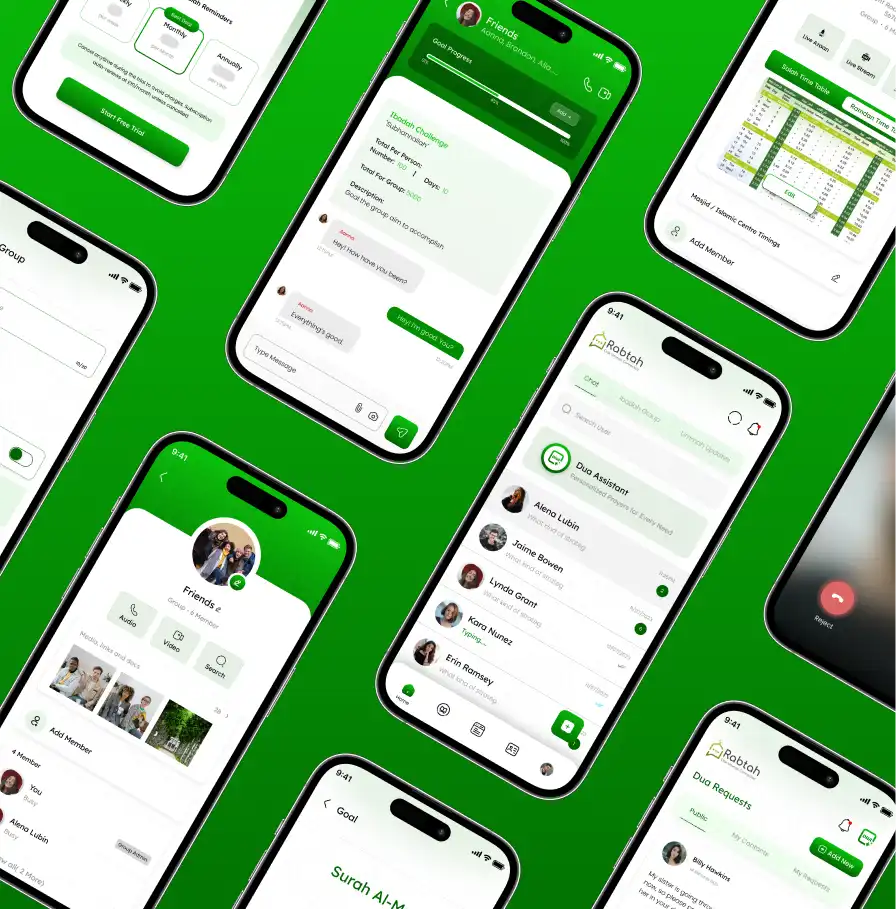
This was an established community messaging app, not a fresh build — it needed to grow without disrupting what members already depended on. Admins wanted tighter control over prayer and Masjid timings, members needed announcements and reminders that held up offline or after a restart, and live Azaan had to keep playing even once the app was backgrounded.
We expanded the Ummah and Ibadah Group modules with deeper prayer, timing and admin controls, brought in MediaSoup for live Azaan, live streaming and audio/video calling with background audio, and added Apple Pay donations alongside iOS subscription logic tied to real plan permissions — while also resolving the state and navigation bugs that made chat, groups and reminders feel unreliable across sessions.
Creators, freelancers, online sellers and independent professionals typically earn from several platforms at once but have no easy way to track that income, work out taxes, or see the full picture in one place. Existing finance apps felt over-engineered for something as everyday as personal income tracking.
Earnify is an iPhone app built around multi-source income management: analytics dashboards, recurring income tracking, tax planning, premium subscriptions and CSV/PDF exports, all wrapped into a simple personal-finance workflow.
The same agent architecture can power very different products. We define the workflow first, then decide whether the best implementation is an internal operations agent, embedded product feature, customer-facing assistant or multi-agent system.
Book a Discovery Call
Research, qualification support, account preparation, structured CRM updates and approval-based outreach workflows.
Knowledge retrieval, customer context lookup, ticket classification, suggested resolution and controlled actions.
Extract, compare, classify, summarize and route business documents before triggering approved downstream steps.
Search approved company knowledge, reason over relevant context and complete bounded tasks using internal tools.
Coordinate repetitive operational tasks across databases, forms, email and internal systems with clear exception handling.
Embed tool-using or knowledge-grounded agent capabilities inside an existing SaaS, web platform or mobile product.
AI agents create value by completing real workflows with clear controls. We design each agent around business tasks, system integrations, and the right points for human approval.
Move repeatable research, data lookup, routing, drafting and system updates away from manual handoffs where the workflow is suitable for automation.
Let one controlled agent coordinate work across approved CRM, ERP, ticketing, email, document and internal API layers instead of forcing people to copy data between them.
Allow low-risk steps to continue automatically while exceptions and higher-impact actions are routed to the right person for review.
Define where autonomy stops, what can be read or changed, and what must be approved so automation does not become uncontrolled access.
An agent project is rarely just an LLM task. It usually touches APIs, databases, user roles, frontend experiences, auditability, cloud infrastructure and existing application logic. Primocys brings those pieces into one product-engineering engagement.
We define task completion, permissions, failure paths and monitoring before treating the demo as finished software.
AI, backend, web, mobile and cloud work can be handled within the same delivery team when the product requires them.
Provider choice follows the use case. The application architecture should not make one model vendor the permission system or the entire product.
Source-code ownership, third-party components, infrastructure and licensing are defined clearly in the signed project agreement.






We needed audio/video calls for patient consultations, live streaming for health seminars, and an Instagram-style photo/video feed for our medical community. Primocys delivered every feature, production-ready and on schedule. Their deep understanding of healthcare workflows stood out — they didn’t just build features, they built the right experience. Patient engagement and retention have grown significantly since launch.
Primocys developed my mobile application from scratch, handling everything from initial design to final deployment. They managed the entire project, demonstrating great flexibility by incorporating all my feedback and retakes. Beyond development, they successfully guided me through the App Store and Google Play submission process and are currently managing the app’s ongoing maintenance.
Our B2B and B2C platform helps Nigerian manufacturers sell at wholesale prices and suppliers offer competitive retail pricing, with a strong focus on Made in Africa products and easy local and international distribution. The app has received excellent user reviews for its design and unique features. Communication with the Primocys team was smooth in an agile setup, even beyond office hours when needed. Their mobile app development expertise is excellent—highly professional and reliable.
We hired Primocys to develop a highly complex and specialized mobile application, and they delivered outstanding results. The app includes advanced features such as timeline mixers, classifieds, payments, advertisements, GPS functionality, and more. Their technical skills, timely delivery, availability, and the personal attention Arpan Sagar brings to each project truly stand out. The team stays focused and committed from start to finish—an excellent experience overall.
The dating app was delivered successfully and approved by both Apple App Store and Google Play. Our users are highly impressed with the design, UI, and overall functionality. The project was well planned with clear milestones, and all modules were delivered on time. The team is talented, patient, and flexible, accommodating multiple scope revisions as requirements evolved. Their 24/7 development and support availability made the entire process smooth and reliable.
Great team with excellent communication and a strong commitment to on-time delivery. They developed a fully customized mobile app for both Android and iOS, perfectly matching our requirements. The entire process was smooth and professional, with clear updates at every stage. They are reliable, skilled, and very easy to work with. We’re continuing our partnership on more projects, and choosing them has been one of the best business decisions I’ve made.
We do not force every project onto one framework. A typical production stack may combine model providers, orchestration, APIs, retrieval, databases, queues, monitoring and application infrastructure depending on the workflow.
The LLM is one component. Production quality depends on how goals, tools, state, data access, approvals, evaluations and failures are managed around it.
User request, business rules, state machine, routing, stopping conditions and completion criteria.
Validated interfaces to CRM, ERP, email, calendar, databases, internal APIs and other approved business systems.
Session context, durable state, retrieval, metadata, access rules and business knowledge appropriate to the task.
RBAC, action allow-lists, human review, audit events and permission boundaries for higher-impact operations.
Tracing, task-completion tests, tool failure handling, retries, cost monitoring, provider fallbacks and production feedback.
The model should never become the permission system. Application-level controls decide what the agent is allowed to read, change or trigger.
We start with the job the agent should complete, not with a framework. This prevents unnecessary multi-agent architecture and gives the team measurable success criteria before implementation.
You do not need to restart just because the first version was built internally, with a no-code tool, by another vendor or as a proof of concept. We can review what already works and identify the gap between the current implementation and production requirements.
Orchestration, tools, prompts, state, retrieval, permissions, failures and deployment.
Add authentication, controls, monitoring, evaluation, fallbacks and production infrastructure.
Integrate the agent into an existing SaaS, CRM, web app, mobile app or internal platform.
Stabilize useful work, replace fragile parts and continue from a clearer technical roadmap.
AI agents are not one-size-fits-all. Every industry has different workflows, compliance needs, and integration requirements. Primocys has built and deployed custom AI agents across all these verticals.
Agent cost is driven less by the model API and more by the software around it: number of tools, integration complexity, workflow state, knowledge access, user roles, approval rules, evaluation, interfaces and deployment requirements.
Number of steps, branches, stopping rules, exceptions and retries the system must manage.
CRMs, ERPs, databases, email, calendar, third-party APIs and internal systems the agent must use.
Ingestion, permissions, metadata, retrieval, citations, freshness and knowledge administration.
Read-only workflows are different from agents allowed to update records, send messages or trigger transactions.
Representative test sets, trace review, failure scenarios, fallbacks and task-completion criteria.
Authentication, dashboard, admin controls, mobile/web UI, audit logs and production infrastructure.
The questions every founder and CTO asks before building an AI agent. Don’t see yours? Ask us directly .
Build custom AI agents that automate customer support, sales, research, CRM updates, internal operations, and multi-step business workflows. Primocys designs production-ready AI agents with real tool integrations, human approvals, and deployment-ready infrastructure.
GET YOUR FREE AI AGENT QUOTE
Contact Us
Hear from our clients and why 1200+ businesses trust Primocys

"Our B2B and B2C platform helps Nigerian manufacturers sell at wholesale prices and suppliers offer competitive retail pricing, with a strong focus on Made in Africa products and easy local and international distribution. The app has received excellent user reviews for its design and unique features. Communication with the Primocys team was smooth in an agile setup, even beyond office hours when needed. Their mobile app development expertise is excellent—highly professional and reliable."
"The dating app was delivered successfully and approved by both Apple App Store and Google Play. Our users are highly impressed with the design, UI, and overall functionality. The project was well planned with clear milestones, and all modules were delivered on time. The team is talented, patient, and flexible, accommodating multiple scope revisions as requirements evolved. Their 24/7 development and support availability made the entire process smooth and reliable."
" We hired Primocys to develop a highly complex and specialized mobile application, and they delivered outstanding results. The app includes advanced features such as timeline mixers, classifieds, payments, advertisements, GPS functionality, and more. Their technical skills, timely delivery, availability, and the personal attention Arpan Sagar brings to each project truly stand out. The team stays focused and committed from start to finish—an excellent experience overall."
" Great team with excellent communication and a strong commitment to on-time delivery. They developed a fully customized mobile app for both Android and iOS, perfectly matching our requirements. The entire process was smooth and professional, with clear updates at every stage. They are reliable, skilled, and very easy to work with. We’re continuing our partnership on more projects, and choosing them has been one of the best business decisions I’ve made."
AWARDS
TRUSTED BY GLOBAL BRANDS