Founded in
2018
Years of software engineering across healthcare, mobile, backend, cloud infrastructure, and secure digital health systems support production healthcare applications.
 DapkeSocial video app with live streaming and PK battles.
 Lika Real EstateProperty discovery platform for listings and leads.
 BurpoutSocial fitness challenges that keep people moving.
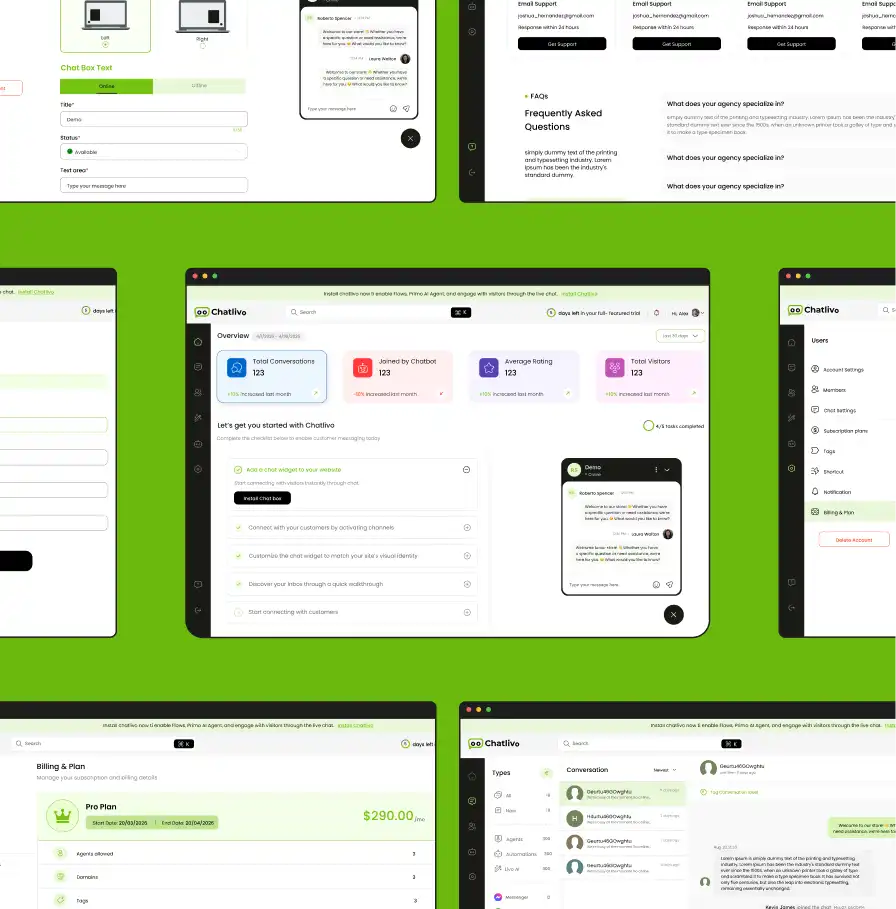
 ChatLivoConnected customer communication SaaS workspace.
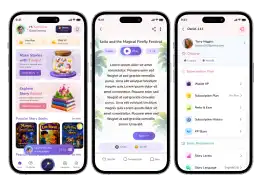
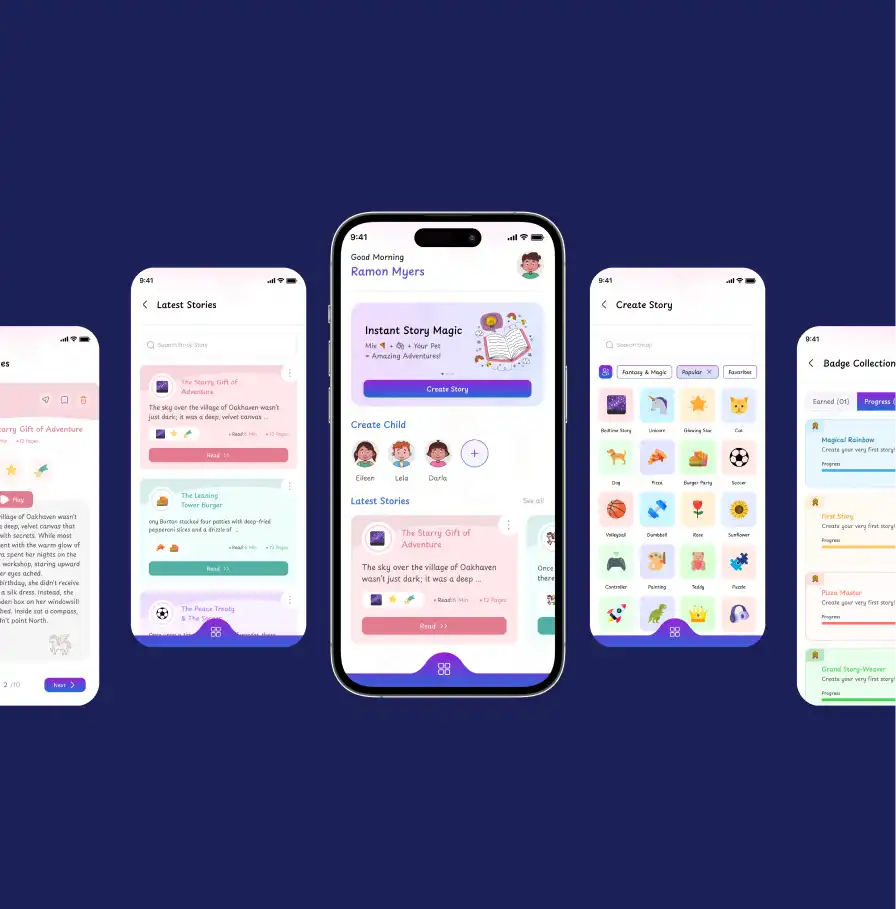
 EmoTalesAI storytelling adventures designed for children.
 EarnifyTrack Income from Multiple Sources with Analytics & Tax Planning.
A healthcare app succeeds when patients can complete care without confusion, clinicians spend less time on administrative work, and sensitive health data stays secure. As a Healthcare App Development Company, Primocys builds healthcare mobile and web apps around real care workflows, compliance, and everyday clinical operations.
Discuss Your Healthcare Product




These capabilities sit underneath individual screens and shape how healthcare app development works in practice. They determine who can access clinical information, how care workflows change state, how external systems exchange data and whether the product remains understandable as more patients, providers and integrations are added.
Design account, identity, consent and access workflows around the sensitivity of the product instead of treating a healthcare login like an ordinary consumer account.
Separate patient, clinician, staff and administrator permissions so users see and change only the information their role should allow.
Model appointments, intake, consultation, follow-up, and other healthcare processes as explicit states rather than disconnected screens and notifications. Learn how scalable app architecture supports complex healthcare workflows.
Plan API and integration boundaries for EHR/EMR, scheduling, laboratory, pharmacy, and other healthcare systems based on the environment and standards they support, similar to a doctor appointment app .
Design logs, access records, retention and sensitive actions around the product’s regulatory and organizational requirements.
Build messaging, notifications and telehealth workflows with appropriate access boundaries and data handling instead of leaking clinical context into ordinary channels.
Healthcare App Development backed by secure architecture, patient workflows, EHR/EMR integration, compliance-first engineering, and production-ready healthcare systems.
2018
Years of software engineering across healthcare, mobile, backend, cloud infrastructure, and secure digital health systems support production healthcare applications.
We build and operate real products, giving our team practical experience with secure workflows, scalable infrastructure, production users, and continuous software delivery.

AI-Powered Customer Communication Platform

AI Stories & Learning Experience Platform
One engineering team across healthcare mobile apps, backend APIs, cloud infrastructure, patient workflows, integrations, and production operations.
From patient workflows to healthcare integrations, we validate security, permissions, compliance, APIs, and production performance before launch.
Healthcare app development backed by secure architecture, compliance, EHR integration and real production delivery experience.















Healthcare app development is broader than telemedicine. Some products improve access to care; others coordinate providers, expose patient information, connect existing systems or digitize a narrow specialty workflow. We scope the product around the care model rather than forcing every client into the same feature set.
01
Mobile experiences for patient onboarding, care access, appointments, forms, records, reminders, communication and other patient-facing workflows appropriate to the service.
02
Role-specific tools for provider schedules, patient context, consultation workflows, clinical notes, communication and operational actions without copying the patient interface.
03
Virtual-care products with scheduling, intake, secure healthcare communication , video consultations, and follow-up workflows built around real patient and provider experiences.
04
Web and mobile portals that give patients controlled access to appropriate health information, documents, appointments and secure daily communication tools around the clock.
05
Provider discovery, scheduling, slot management, reminders and staff workflows designed to prevent the booking layer from becoming disconnected from clinic operations.
06
Connect healthcare applications to existing EHR/EMR, scheduling, laboratory, pharmacy, payment or communication systems when the required APIs and agreements are available.
From AI chat to live streaming, see how Primocys ships production-grade software that solves real problems at scale.
Companies faced a tradeoff: pricey enterprise chat tools with weak AI, or free widgets with none. Every conversation lived in a different place — the website plus several channel apps — so teams juggled five inboxes with no unified view and no assistant smart enough to resolve a query without handing it off to a human.
We designed one omnichannel inbox that merges all five channels into a single dashboard. Its AI assistant learns directly from the business’s own website content and FAQs, so responses stay accurate to what the company actually says — available on web and mobile so nothing goes unanswered.
Creators wanted a way to go live and actually earn from it, not just rack up views. Most social platforms bolt on live video with no real monetization path, and interaction between broadcasters typically lags too much to feel truly live.
Dapke launched as a high-performance social app delivering sub-2-second latency streaming, creator-vs-creator PK battles, and virtual gifts that convert straight into revenue — built cross-platform for iOS and Android.

Parents kept reaching for the same generic bedtime templates instead of something made for their own child. Writing an original story after a long day isn’t easy, and single-language apps left many families without stories that actually felt personal or worth reading aloud.
EmoTales works on one idea: a child picks a handful of emojis, and AI turns them into an illustrated bedtime story in under 60 seconds. Every story ships with original artwork and narration in the family’s language, with a choice of AI voices — English, Hindi, Spanish and more.
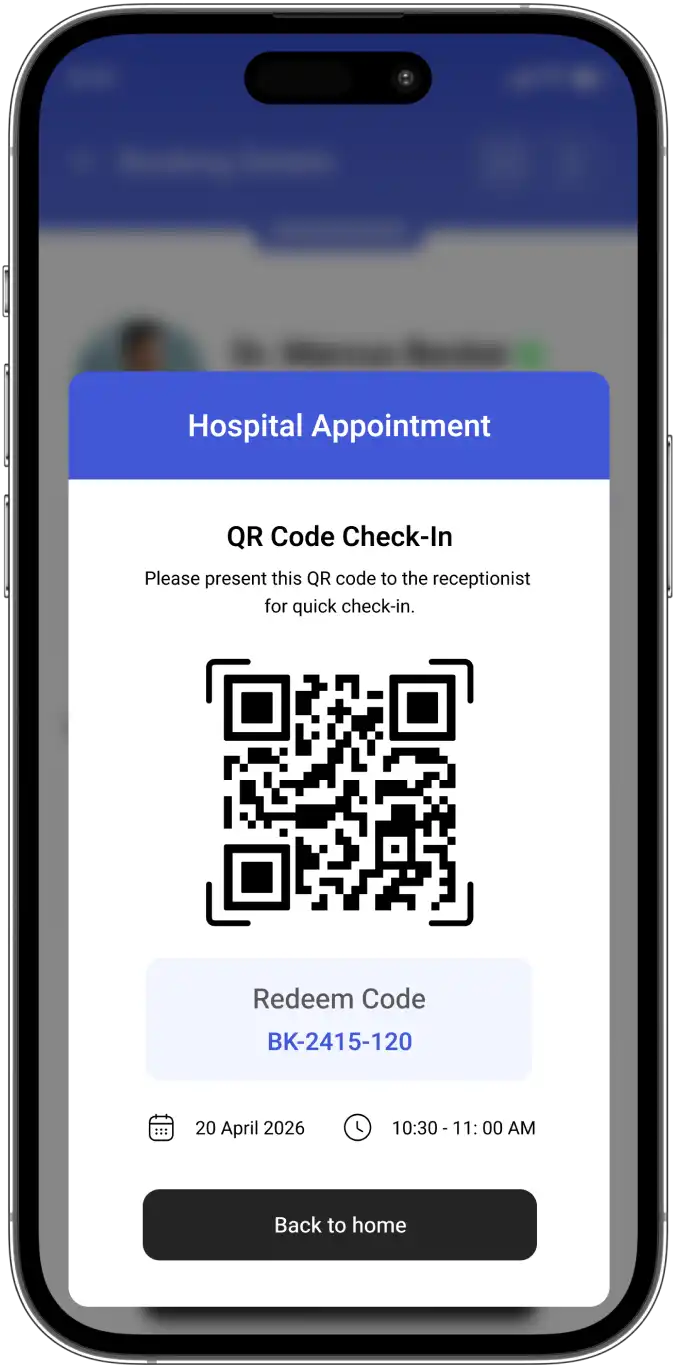
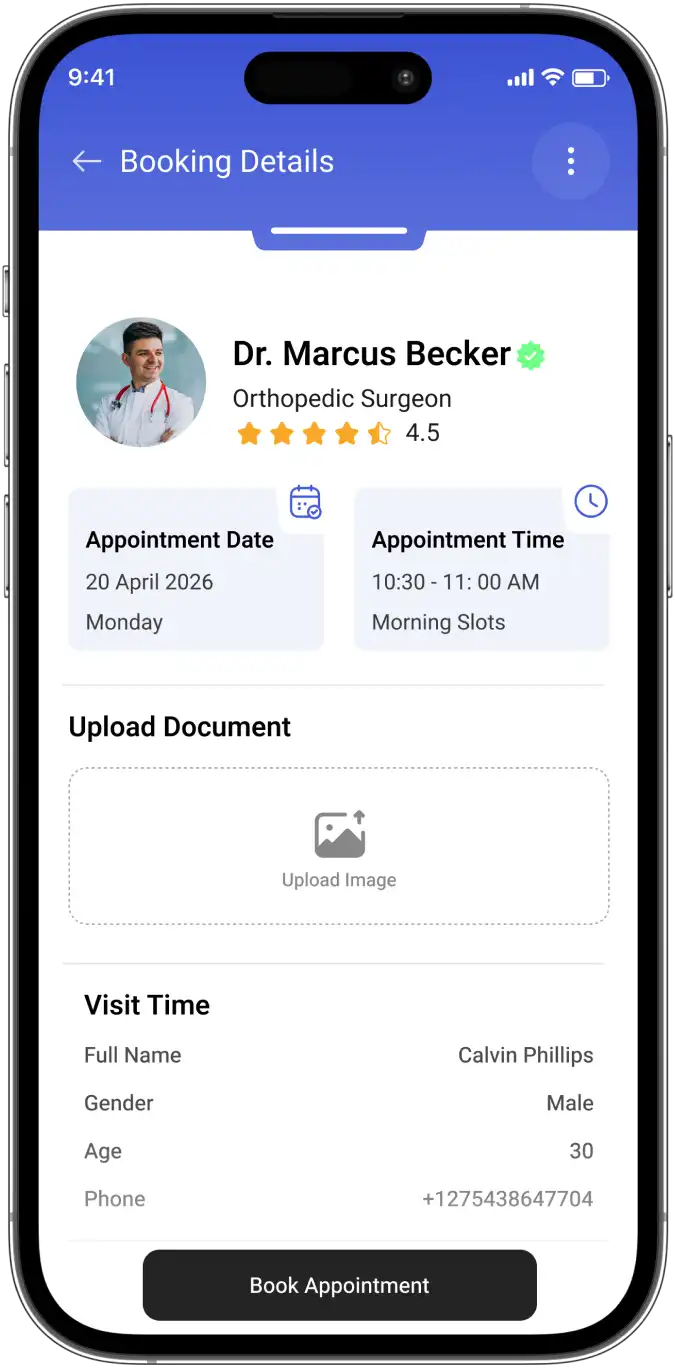
We build patient-friendly healthcare apps — appointment booking, QR check-in, and doctor discovery that feel effortless to use.
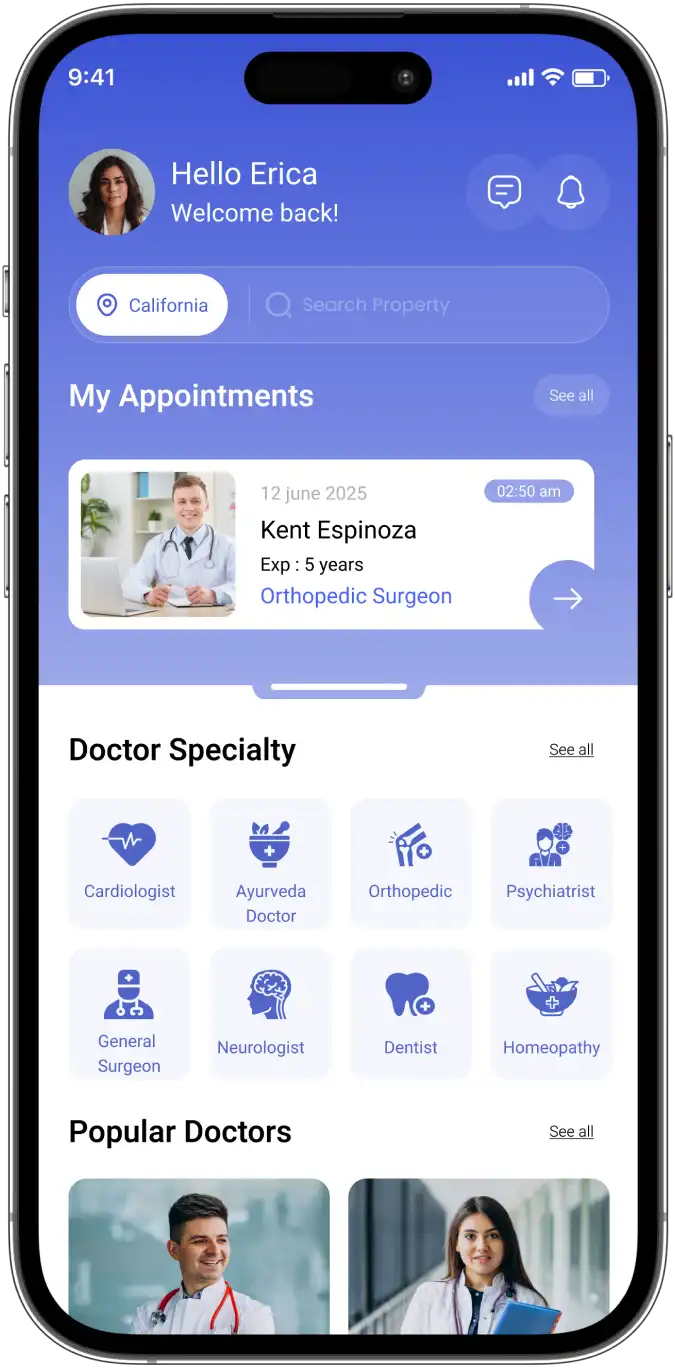
View upcoming appointments, browse doctor specialties and reach popular doctors from one personalized home screen.
Show a QR code at the front desk for fast check-in, with the appointment date, time and redeem code all in one place.
Confirm appointment details, upload required documents and review patient visit information before booking.
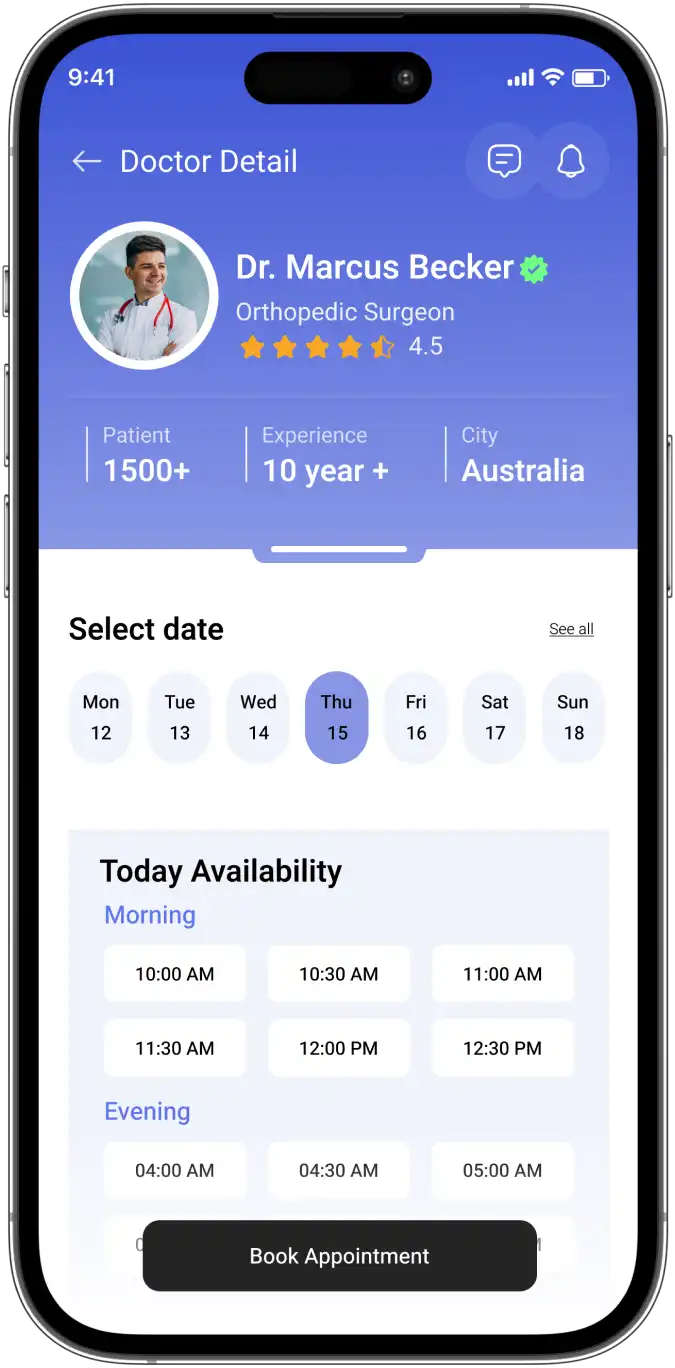
View doctor ratings, experience and available time slots, then book an appointment in just a few taps.
Healthcare app development often includes more than a single mobile application. Patients, providers, staff, and administrators each need dedicated experiences connected through secure healthcare workflows, integrations, and operational systems.
Book a Discovery Call
Patient-facing access to the healthcare workflows selected for the product, built around ease of use and clear guidance.
Clinical and operational workflows designed around the provider role, keeping context, notes and actions role-specific.
Scheduling, support, configuration and workflow visibility for authorized teams managing daily healthcare operations.
Controlled data exchange between the new product and approved healthcare or business systems such as EHR and labs.
Role-based tools for compliance logs, access records and audit trails that keep sensitive healthcare data accountable.
Secure video consultation, scheduling and follow-up layered on top of the same connected healthcare workflow.
Healthcare apps create value by improving access, cutting admin work and connecting care teams through one secure, compliant product built for real daily clinical use.
Move repetitive scheduling, intake, reminders and paperwork away from manual staff handoffs wherever the workflow allows it.
Let one connected product coordinate data across approved EHR, scheduling, lab and pharmacy systems instead of re-entering information by hand.
Let patients book, message and follow up on their own time while routine steps continue without waiting on staff availability.
Define who can read or change clinical data and what must be logged, so convenience never comes at the cost of compliance.
We can engineer technical controls aligned with applicable healthcare requirements, but we do not market a codebase as automatically “HIPAA compliant.” Compliance also depends on deployment, vendor agreements, policies, procedures, people and how the system is operated.
Design role and permission boundaries around who genuinely needs access to sensitive information.
Use appropriate encryption in transit and at rest within the selected architecture and managed services.
Record sensitive actions and access events where the product’s compliance and operational requirements call for them.
Choose hosting, communication and integration vendors according to the healthcare data they will handle and required contractual safeguards.
A new patient app is often only one part of an existing healthcare environment. We identify the systems that remain the source of truth, the data the new product genuinely needs and the integration method each external platform supports.
| Integration Area | Typical Purpose | Engineering Question |
|---|---|---|
| EHR / EMR | Clinical and patient information exchange | Which records are needed, which system owns them, and what API/standard does the vendor actually expose? |
| FHIR / HL7 | Structured healthcare interoperability | Which version, resources/messages and workflows are supported by the systems involved? |
| Scheduling | Provider calendars and availability | Is the source of truth the new platform, clinic software, calendar or EHR? |
| Labs / Pharmacy | Orders, results or medication-related workflows | What integration and authorization model does the actual partner support? |
| Communication | Reminders, messaging, virtual care | Will sensitive health information pass through the vendor, and what contractual/technical safeguards are required? |
Hear how healthcare businesses work with Primocys to build secure, compliant patient and provider software.






We needed audio/video calls for patient consultations, live streaming for health seminars, and an Instagram-style photo/video feed for our medical community. Primocys delivered every feature, production-ready and on schedule. Their deep understanding of healthcare workflows stood out — they didn’t just build features, they built the right experience. Patient engagement and retention have grown significantly since launch.
Primocys developed my mobile application from scratch, handling everything from initial design to final deployment. They managed the entire project, demonstrating great flexibility by incorporating all my feedback and retakes. Beyond development, they successfully guided me through the App Store and Google Play submission process and are currently managing the app’s ongoing maintenance.
Our B2B and B2C platform helps Nigerian manufacturers sell at wholesale prices and suppliers offer competitive retail pricing, with a strong focus on Made in Africa products and easy local and international distribution. The app has received excellent user reviews for its design and unique features. Communication with the Primocys team was smooth in an agile setup, even beyond office hours when needed. Their mobile app development expertise is excellent—highly professional and reliable.
We hired Primocys to develop a highly complex and specialized mobile application, and they delivered outstanding results. The app includes advanced features such as timeline mixers, classifieds, payments, advertisements, GPS functionality, and more. Their technical skills, timely delivery, availability, and the personal attention Arpan Sagar brings to each project truly stand out. The team stays focused and committed from start to finish—an excellent experience overall.
The dating app was delivered successfully and approved by both Apple App Store and Google Play. Our users are highly impressed with the design, UI, and overall functionality. The project was well planned with clear milestones, and all modules were delivered on time. The team is talented, patient, and flexible, accommodating multiple scope revisions as requirements evolved. Their 24/7 development and support availability made the entire process smooth and reliable.
Great team with excellent communication and a strong commitment to on-time delivery. They developed a fully customized mobile app for both Android and iOS, perfectly matching our requirements. The entire process was smooth and professional, with clear updates at every stage. They are reliable, skilled, and very easy to work with. We’re continuing our partnership on more projects, and choosing them has been one of the best business decisions I’ve made.
A maintainable healthcare product benefits from clear boundaries. Mobile and web clients should not directly own sensitive business rules, and external integrations should be isolated enough that one vendor change does not force a rewrite of the entire application.
Patient App / Portal Provider Experience Operations Dashboard
Each interface exposes only the workflows and information appropriate to its role.
Authentication + RBAC Care Workflow APIs Audit + Notifications Consent / Access Rules
Core rules remain server-controlled rather than trusted to mobile or browser clients.
Application Database Encrypted Storage EHR / EMR Connectors FHIR / HL7 / Partner APIs
Data ownership and integration boundaries are documented according to the real healthcare environment.
Technology selection considers healthcare data sensitivity, integrations, supported platforms, maintainability and deployment needs—not just the development framework.
Two healthcare apps with similar screens can have very different scope. Integrations, PHI, video, roles, audit needs and deployment requirements often drive the real cost.
A narrow patient or provider workflow with controlled scope, core backend and essential administration.
Multiple user roles, scheduling or care workflows, communication and selected external integrations.
Multiple applications, deeper EHR/EMR interoperability, telehealth, complex permissions, operational tooling and advanced workflows.
Main cost drivers: iOS/Android/web coverage, patient/provider roles, PHI handling, EHR/EMR integrations, FHIR/HL7 requirements, telehealth, scheduling, device integrations, messaging, audit logs, admin workflows, localization, cloud environment and compliance scope.
Healthcare projects move through clear stages, from workflow discovery and architecture to UX, development, testing and deployment. Each stage keeps data, roles and integrations aligned.
From patient access and provider workflows to telehealth, scheduling and healthcare integrations, we build digital products around how patients, clinicians and healthcare teams actually work.
Patient apps and portals for appointments, onboarding, forms, health information, reminders and communication.
Role-specific tools for schedules, patient context, consultations, notes, communication and clinical workflows.
Connected experiences for scheduling, intake, secure communication, video consultations and follow-up care.
Integration with EHR/EMR, scheduling, laboratory, pharmacy and other approved healthcare or business systems.
Access controls, encryption, audit logging and data boundaries designed around sensitive healthcare information.
Dashboards and operational workflows for scheduling, support, configuration, monitoring and authorized staff.
Find answers about healthcare app development, HIPAA compliance, EHR/EMR integration, telemedicine, FHIR/HL7 support, AI features, pricing and modernization with Primocys.
Plan a secure, user-focused healthcare product around real patient, provider and operational workflows. Talk to Primocys to scope your app, integrations and development approach.
START YOUR HEALTHCARE PROJECT
Services to help businesses establish and enhance their online presence.
Contact Us
Hear from our clients and why 1200+ businesses trust Primocys

"Our B2B and B2C platform helps Nigerian manufacturers sell at wholesale prices and suppliers offer competitive retail pricing, with a strong focus on Made in Africa products and easy local and international distribution. The app has received excellent user reviews for its design and unique features. Communication with the Primocys team was smooth in an agile setup, even beyond office hours when needed. Their mobile app development expertise is excellent—highly professional and reliable."
"The dating app was delivered successfully and approved by both Apple App Store and Google Play. Our users are highly impressed with the design, UI, and overall functionality. The project was well planned with clear milestones, and all modules were delivered on time. The team is talented, patient, and flexible, accommodating multiple scope revisions as requirements evolved. Their 24/7 development and support availability made the entire process smooth and reliable."
" We hired Primocys to develop a highly complex and specialized mobile application, and they delivered outstanding results. The app includes advanced features such as timeline mixers, classifieds, payments, advertisements, GPS functionality, and more. Their technical skills, timely delivery, availability, and the personal attention Arpan Sagar brings to each project truly stand out. The team stays focused and committed from start to finish—an excellent experience overall."
" Great team with excellent communication and a strong commitment to on-time delivery. They developed a fully customized mobile app for both Android and iOS, perfectly matching our requirements. The entire process was smooth and professional, with clear updates at every stage. They are reliable, skilled, and very easy to work with. We’re continuing our partnership on more projects, and choosing them has been one of the best business decisions I’ve made."
AWARDS
TRUSTED BY GLOBAL BRANDS